Get Full Government Meeting Transcripts, Videos, & Alerts Forever!
Get email alerts on the Mobile Food Vendors topic
No spam. Unsubscribe anytime.
Council reviews downtown food-truck buffer and definition of “restaurant” after vendor complaint
Summary
A vendor and staff argued the current 200-foot buffer around restaurants leaves few legal locations downtown; staff will return with alternative maps and options for amending the mobile food-vendor ordinance.
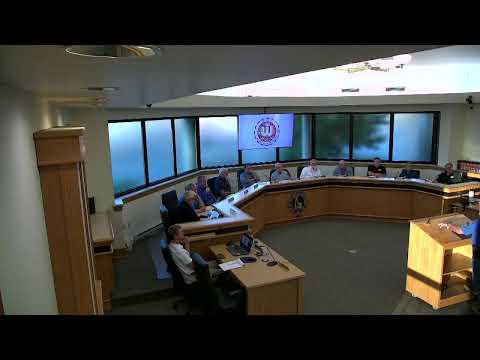
Councilmembers reviewed the city’s mobile food-vendor rules on Sept. 2, 2025, after a permit-holder who operates under the name Tribal Crunch said the ordinance’s 200-foot buffer from restaurants effectively prevents most downtown vending and that the rule’s undefined term “restaurant” complicates enforcement.
Josh McDowell, who said he represents his wife's business Tribal Crunch, told the workshop that his trailer sells popcorn and lemonade and that a strict reading of the ordinance leaves “nowhere she can go” in the downtown vending district. “I don't agree with the definition of what a restaurant is,” McDowell said. “My wife is a concession trailer. She is not a restaurant.”
Staff showed a map created by Aaron, the city planner, that marked downtown restaurants and applied the 200-foot buffer measured from parcel corners; the map left very few permissible spaces inside the vending district. Darren (city staff) confirmed that the current ordinance has no local definition of “restaurant” and that, without a local definition, the city is defaulting to the Missouri Food Code’s broad definition of a food establishment. Darren said the Missouri code treats as a food establishment any business that sells food or beverages intended for human consumption, which could include ice cream shops and similar vendors.
Vendors and some councilmembers asked about several practical issues: the generator-distance rules that may be impractical on narrow downtown streets; whether special-event exceptions should allow vendors inside the buffer when invited to official downtown events; how the 2-hour parking enforcement for on-street spaces would interact with vendors who need to set up for several hours; and whether the distance should be reduced to 25–50 feet to create workable locations.
Council discussion noted that the ordinance was adopted in 2023 and that only a small number of permits had been used downtown. One councilmember described the current text as potentially so restrictive that it “doesn't mean anything for the guys that wanna put a food truck in town.” No amendments or formal waivers were approved. Staff committed to bring back a set of maps showing alternative buffer measurements and a set of draft code edits for council consideration at a future meeting, and to consider options such as redefining “restaurant,” reducing the buffer distance, adding event exceptions, and clarifying how to measure distance (parcel corner vs. building doorway).
McDowell urged cooperation with downtown organizations and asked that enforcement interactions be handled respectfully. “We are better wielded as a resource,” he said, “in cooperation rather than trying to go to war with each other.”