
Astoria council rejects ordinance to create enhanced enforcement zones after hours of debate
Get AI-powered insights, summaries, and transcripts
Subscribe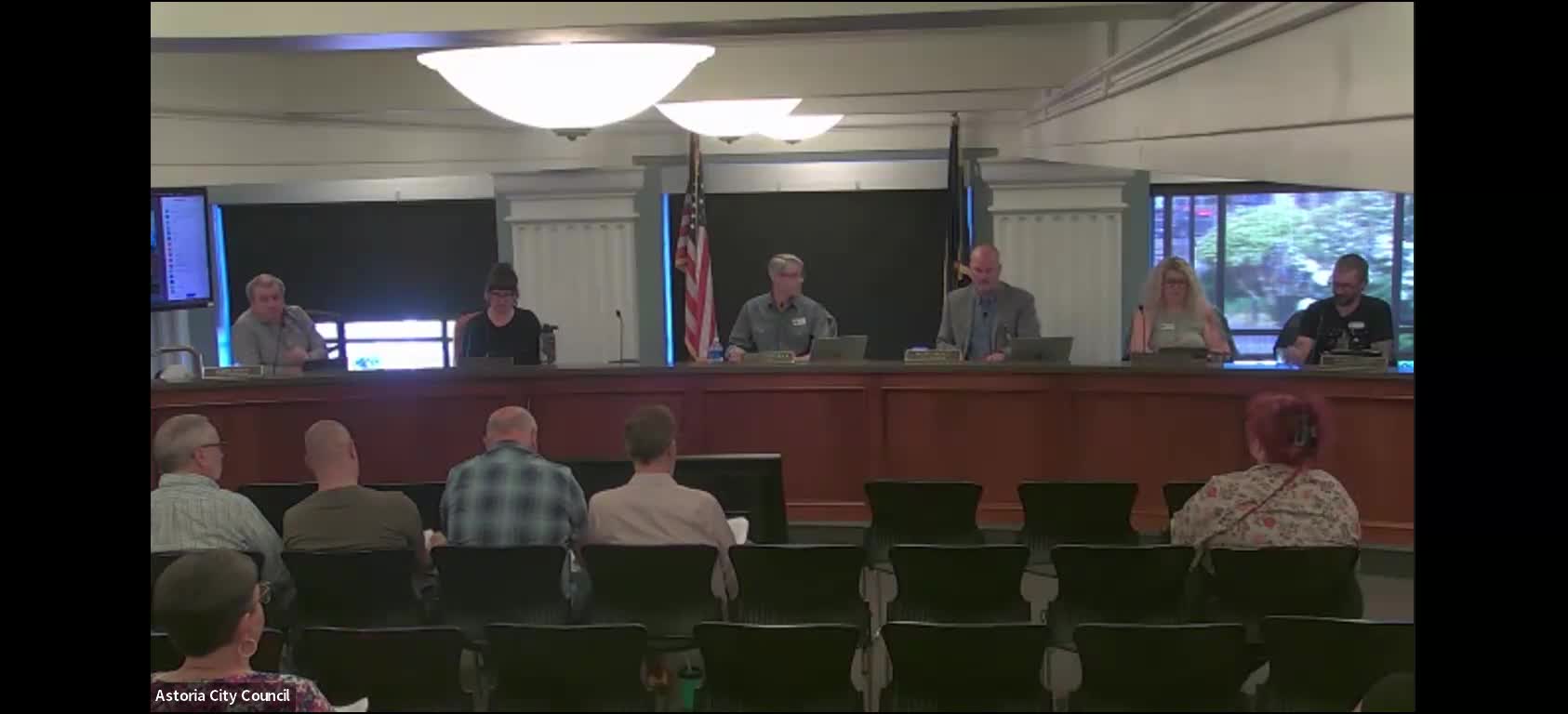
Summary
A proposed ordinance that would have allowed the city to restrict access to small groups of people defined as repeat offenders failed on a 3-2 vote after a months-long review and a lengthy council debate that split members over effectiveness and equity.
The Astoria City Council voted down a proposed ordinance to establish “enhanced enforcement zones” and limited-access orders after a contentious council debate and months of public input.
The motion to hold a first reading of the ordinance was made by Councilor Adams and seconded by Mayor Fitzpatrick; the roll call vote was Davis, Mazzarella and Lum voting no and Adams and Mayor Fitzpatrick voting yes, and the motion failed.
The ordinance would have allowed the city to limit access to defined downtown areas for people found to have committed listed offenses. Supporters said the measure was narrowly targeted at a small number of “bad actors” whose behavior — including repeated violent and nuisance acts — has harmed other unhoused residents, seniors and downtown visitors. Mayor Fitzpatrick said the ordinance was “a small step” that gives law enforcement tools to protect public safety and to encourage people to accept services. “We have to give them the opportunity, and the best way to do that is limiting access to the bad actors,” the mayor said.
Opponents said the ordinance would punish people for being unhoused and risked pushing problems into other neighborhoods without addressing root causes like housing supply, treatment and court-system capacity. Councilor Lum told colleagues that homelessness is “caused by a lack of access to housing that everyone can afford,” and urged the city to try alternatives such as city-supported camping sites or tiny-home villages before restricting public access. “Passing this ordinance is a decision for our community — do we want to blame those that are struggling the most?” Lum said.
Councilor Davis and Councilor Mazzarella both expressed moral and practical reservations. Davis warned the council that fines and short jail stays often fail to change behavior when the broader criminal-justice and housing systems do not provide consistent alternatives; he recommended the city focus instead on court resourcing, designated camping locations and expanding services. Mazzarella said the measure felt divisive and questioned whether the police and courts could enforce the ordinance effectively.
Council debate traced the ordinance’s evolution: the council first discussed the concept on April 7, held an extensive work session on April 28, and took public testimony for more than five hours on June 16, according to staff. City Manager Scott Spence told the council the item before them was council deliberation and decision after those hearings.
Supporters cited local outreach and service capacity, pointing to several housing projects and service providers working in Astoria (including Copeland Commons, Lifeboat, CBH and other programs discussed at council meetings) as reasons the city should try targeted enforcement. Opponents said many people who sleep outdoors decline shelter because shelters and day-centers are not a good fit, and that the community has not resolved underlying housing shortages.
The failed motion was procedural — to begin the ordinance’s first reading — and not a final adoption vote, but the defeat effectively halted the ordinance’s immediate progress. Mayor Fitzpatrick asked colleagues afterward what would make them comfortable with the ordinance; councilors asked for further work on enforcement pathways, municipal-court resources, and designated camping alternatives.
Councilors agreed to continue related work: several members asked staff to schedule a work session to review the city’s camping/place rules and to confer with the municipal judge and police about roadblocks to prosecution and enforcement, with the stated goal of identifying alternatives or fixes to the issues raised during the debate.
The failure of the motion means the proposed enhanced enforcement measure will not move forward on the council’s agenda unless reintroduced or substantially revised and reauthorized for a new reading.