
City hears GeoPacific findings: Hemlock Street built on deep landslide mass, engineers urge fast action
Get AI-powered insights, summaries, and transcripts
Subscribe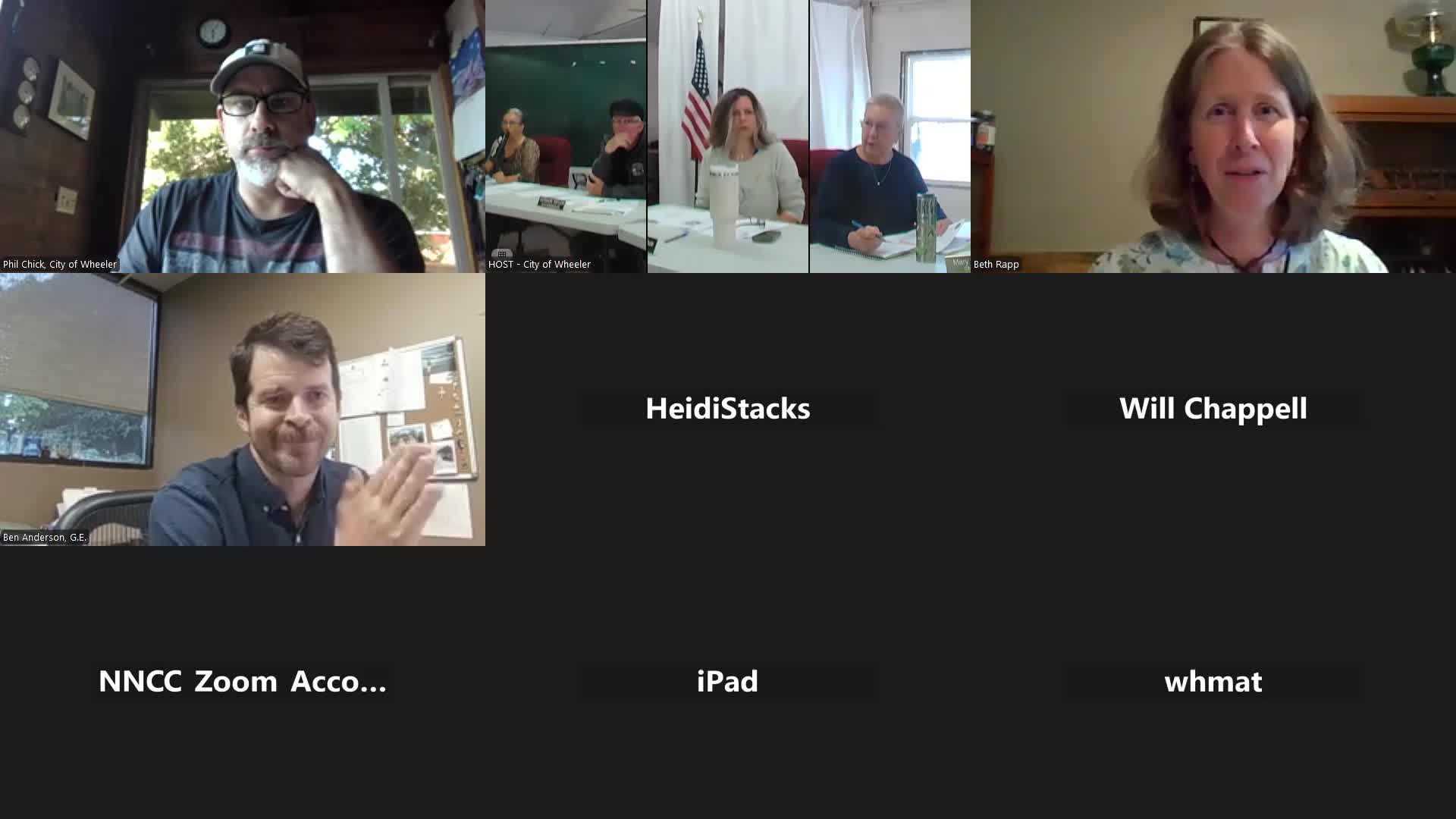
Summary
GeoPacific Engineering told the Wheeler City Council that Hemlock Street sits on a deep, prehistoric landslide and recommended immediate further study and interim drainage work; city staff were directed to obtain cost estimates and a proposal for additional borings and horizontal drains ahead of the rainy season.
GeoPacific Engineering told the Wheeler City Council on July 15 that Hemlock Street sits atop a deep, prehistoric landslide and recommended immediate, targeted work to reduce groundwater and slow movement.
The firm’s engineering geologist, Beth Rapp, said borings and monitoring show landslide debris extending roughly 35 to 45 feet below the roadway, with about "7 or 8 feet of roadway fill" above that material. Geotechnical engineer Ben Anderson said the firm believes movement is likely to continue “unless something is done to improve the conditions out there,” and that lowering groundwater in the slide mass would help.
The council heard that GeoPacific drilled two borings to 50 feet this winter and installed inclinometer pipes to measure slope movement. Readings taken in November, February and April showed measurable movement down in the deeper landslide debris — a pattern the consultants said is consistent with groundwater-driven slope instability. The firm identified possible fixes including horizontal (subsurface) drains to remove water, removal of roadway fill to reduce loading, utility-pipe replacement where leaks exist, and, for a longer-term fix, a soldier-pile retaining wall.
Why it matters: Hemlock Street instability threatens pavement, sidewalks and potentially nearby private property. Consultants warned some cracks in the street are aligned toward private lots and said additional movement could begin to affect houses in the area if conditions worsen. Councilors and staff framed the issue as urgent because winter groundwater and surface runoff tend to accelerate slide movement.
Council questions focused on timing, cost and logistics. Anderson said horizontal drain systems collect water in a small manhole structure and pipe it to outfall (likely Zimmerman Creek) and that the volume of water such a system would produce was “not known” without further testing. The consultants estimated groundwater encountered in the borings at depths that varied by location (Ben Anderson cited about 14 feet at one boring and about 25 feet at another), and stressed that drains and other fixes can have long design lives but may need periodic cleaning.
City public works director Phil (last name on file) told the council staff would seek cost estimates and reach back to the contractor who worked on Hemlock in 2006 to clarify what work was performed then. He committed to bringing an estimate on horizontal drains and a GeoPacific proposal for additional exploratory borings and testing in August. He also said staff may call a special meeting if needed to approve emergency work ahead of fall rains.
Discussion points: consultants flagged utility leaks and surface cracks as failure accelerants; GeoPacific recommended an initial package of additional borings (the team discussed roughly six total) and possible near-term installation of horizontal drains; longer-term options include a soldier-pile wall that would be designed to a 50-plus year life.
Direction and next steps: Council directed staff to obtain cost estimates for installation of horizontal drains and to request a GeoPacific proposal for additional exploratory borings and analysis, with the goal of having numbers and a recommendation in August. Staff also was directed to contact the contractor that did prior work in 2006 to clarify past actions and to explore whether available Clean Water State Revolving Fund (CWSRF) money or other grants could be used for study or repair.
What’s next: GeoPacific and city staff will return with price estimates and a proposed work scope; councilors discussed moving quickly so work could begin before the next wet season.
Quotes used in this article are from GeoPacific engineers Beth Rapp and Ben Anderson and city public works staff Phil, as heard on the record at the July 15 Wheeler City Council meeting.