
Champaign Township says Strides shelter may cut daytime services or staff without new funding
Get AI-powered insights, summaries, and transcripts
Subscribe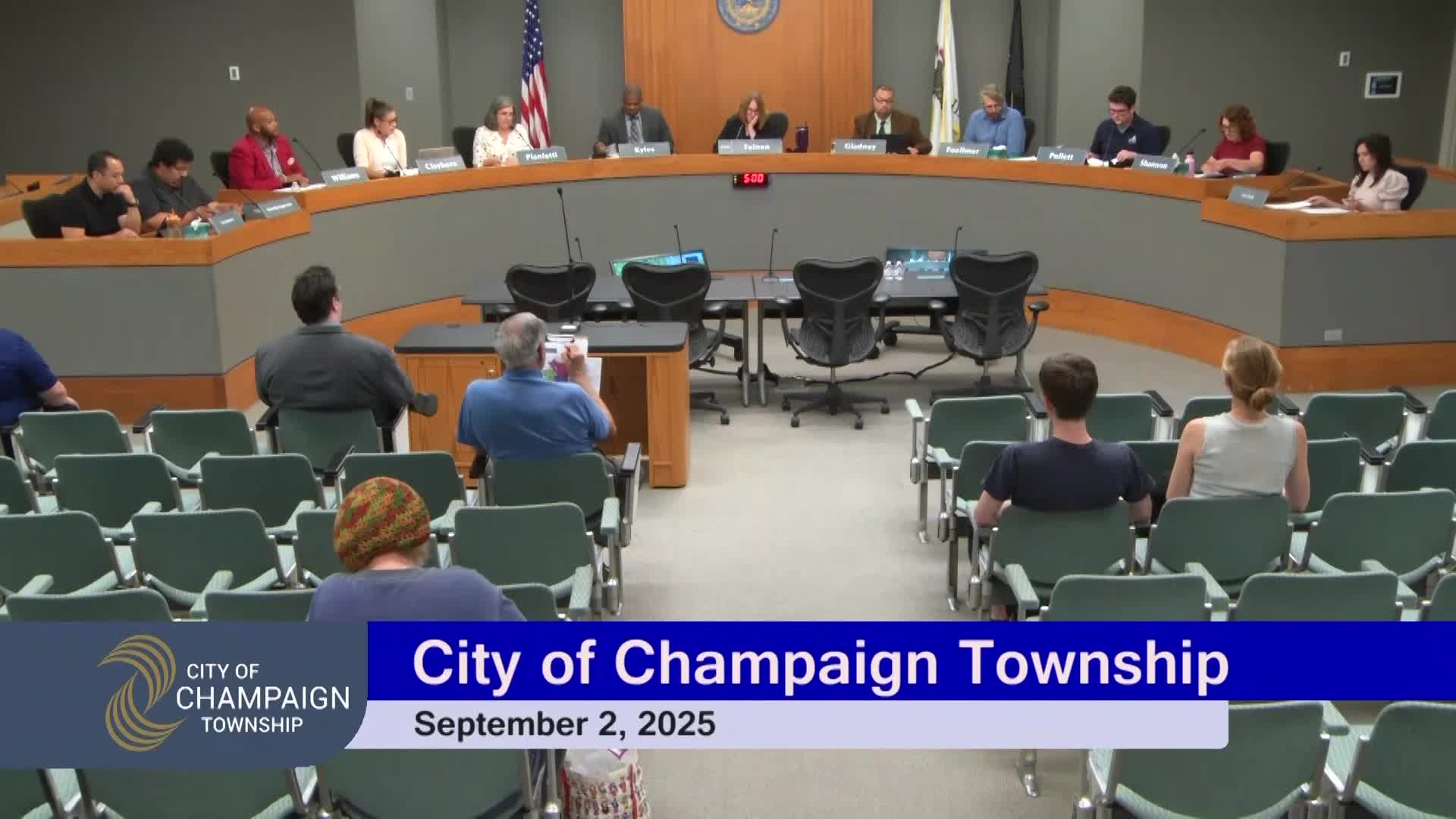
Summary
Township officials told the board Sept. 2 that the Strides homeless shelter is at capacity, has a wait list and faces funding limits that could force service reductions by February or March unless new funds arrive; board members pressed for more detailed data and faster billing controls.
Champaign Township supervisors and town board members discussed funding and operational risks for the Strides homeless shelter at the Sept. 2 township meeting, including a funding shortfall that could force a cut of one staffing shift and the closure of most daytime services if additional funds are not secured. "If no other funds become available ... that will get us to, February or March, or possibly, reducing staffing by 1 shift and, closing most of our daytime services," the supervisor said. The supervisor said staff are meeting with United Way and housing partners and that the township applied for a housing-authority grant "we are able to apply for about $205,000," money that must be spent by the end of 2025. A response on the grant application is expected within about two weeks. The meeting put several operational details on the record: Strides is at capacity, the shelter had 186 laundry loads in August, and there are 31 individuals on the shelter wait list currently. The supervisor said a state-funded rapid rehousing program has three households placed and four participants still seeking housing. Board members repeatedly asked for more granular, timely data to guide planning. Town board member Shannon said the board still lacks information needed to evaluate shelter demand and use, asking whether the board knows how many residents have long stays versus short stays. The supervisor provided a case-management snapshot: of 64 permanent guests eligible for case management, 11 have refused case management (about 17 percent); some guests were referred to a refugee center because of immigration status and two or three residents who are employed do not take case management. Board members also raised financial-process concerns after reviewing monthly financials. Council member Shannon and others pointed to late fees, duplicate or two-month charges on invoices, and unclear invoice categorization that make it difficult to assess the true monthly cost of operating Strides. Board members asked that shelter invoices be mailed directly to the township office (rather than routed through shelter staff) and asked for clearer, event-specific expense categories going forward. The supervisor said staff are transitioning to the WellSky case‑management system, which is compatible with the Homeless Management Information System (HMIS) and could improve counts and grant eligibility, and that leadership meetings have increased to twice weekly to address urgent issues. Board members requested that the supervisor attach the requested data and financial documents to future agendas so the public can review them in advance; the supervisor said the materials have been added to the meeting documents on the city website. During public comment a resident called for the supervisor to resign, saying community confidence has eroded; other board members and residents urged more transparency and a study session to present visuals and options. The board scheduled a special meeting and indicated a study session is being developed to provide more detailed scenario planning ahead of the township's budget timeline. "We're gonna be working on topics for a study session to bring more clarity and, you know, have transparency around this endeavor we're taking on to to try to keep the shelter open," the supervisor said. The board set a follow-up meeting for Sept. 30, 2025.