Get Full Government Meeting Transcripts, Videos, & Alerts Forever!
Get email alerts on the Small Cities Advocacy topic
No spam. Unsubscribe anytime.
Former SMAC lobbyist outlines small-city priorities and a stalled bill to ease grant matches
Summary
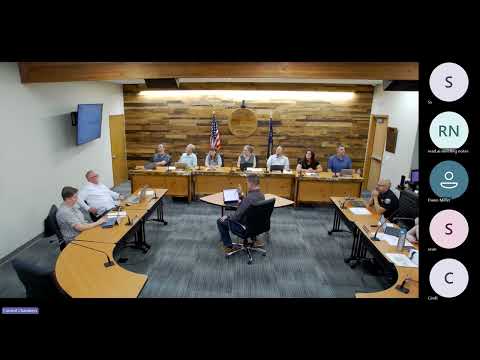
At a Sweet Home council meeting, Sean Tate summarized the goals of House Bill 36 54 to reduce grant-match burdens for small cities and described why it stalled in the Senate.
Sean Tate, former lobbyist for the Small Municipalities Advocacy Coalition, told the Sweet Home City Council that small cities make up the majority of municipalities in Oregon and face unique barriers to municipal infrastructure grants. "Of the 241 [cities], 211 have populations under 20,000," Tate said, adding that "the average city in the state of Oregon is less than 7,000 people." Tate described House Bill 36 54, introduced last legislative session, as a nonpolitical, tiered approach that would have lowered required matching funds for small cities — reducing some matches to a maximum of about 12 percent from prior requirements of 20 to 50 percent depending on the program. Tate said the bill passed the Oregon House 48–1 but did not make it through the Senate, in part because of timing, budget uncertainty and ways-and-means concerns. Tate also said the bill carried no fiscal note because it would have changed allocation formulas rather than create a new funding bucket. He urged small cities to publish legislative priorities, engage with neighboring municipalities, and show up in Salem in person when possible. Councilors asked one question about whether a fiscal analysis existed; Tate responded there was no fiscal note for the bill. Tate said roughly 57 or 58 small cities signed on in support of the proposal during the legislative run. He characterized the work as unfinished but said the conversation raised awareness about grant affordability for small municipalities.