Get Full Government Meeting Transcripts, Videos, & Alerts Forever!
Get email alerts on the Zoning topic
No spam. Unsubscribe anytime.
Keene planners clarify 'build‑to' rules, add 'principal' to definition after zoning interpretation
Summary
The Planning Board and PLD workshop advanced an amendment to the Land Development Code to clarify that build‑to lines and setbacks apply to all principal buildings or structures on a lot; the board voted to add the word "principal" to two sections and sent the revised text toward public hearing.
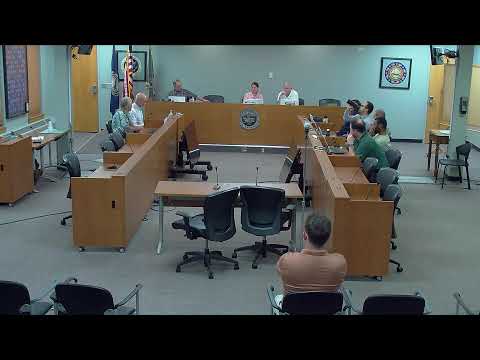
The City of Keene Planning Board and the City’s PLD committee met in a joint workshop to consider Ordinance O‑2025‑20, a staff proposal to clarify how setbacks and build‑to dimensions apply to buildings and structures on a lot. Mary Brenner, Senior Planner for the City of Keene Community Development Department, said the ordinance was drafted after “an interpretation by the Zoning Board of Adjustment regarding the definitions for build to zone and front setback,” and that staff revised the language to refer to “all buildings or structures.”
The amendment aims to eliminate ambiguity that previously arose from wording that used the phrase “a building,” which some interpreted to mean the rules applied to only one building on a lot. Brenner explained staff changed the draft to read that the build‑to zone “applies to all principal buildings or structures, with carve‑outs where existing or proposed buildings cannot be located within the build‑to zone.” That change, she said, explicitly excludes accessory structures from counting as the principal building for the build‑to requirement.
Public comment and board members focused on two points: whether the term “proposed” could be gamed by developers who propose a front building but then build only a rear building, and whether the code should require a developer to provide financial assurance or sequencing so that front‑facing elements are actually constructed. Jared Goodell, 160 Emerald Street, asked about the term proposed, noting it could allow someone to “propose something and abandon it.” Members discussed practical enforcement limits and noted the Planning Board typically requires securities only for items the city could complete directly, such as landscaping or stormwater infrastructure, not for construction of buildings.
After discussion, Mayor Jay Khan moved to amend sections c and e of the draft to insert the word “principal” before “structures.” The motion passed with unanimous consent. The board also agreed to keep the provision that accessory structures not be located in the build‑to zone. The committee treated the workshop changes as an "A" version of the ordinance and then advanced the item to the public hearing process so the public and PLD can take additional comment.
What remains discussion only: several members and public commenters urged clearer language about the word “proposed” and whether permit sequencing, securities or site‑plan conditions should be used to reduce the risk that a project proceeds only in the rear of a lot. Staff said some of those issues are better handled through Planning Board policy or site‑plan conditions rather than by further complicating the text of the Land Development Code.
The Planning Board will return a final recommendation after the public hearing and any PLD or council amendments. For now, the code change clarifies city intent that the build‑to zone applies to principal building(s) on a lot and expressly excludes accessory buildings from meeting the build‑to requirement.