
Union Pacific details safety investments and hazardous‑materials training, urges grade separations at Santa Teresa
Get AI-powered insights, summaries, and transcripts
Subscribe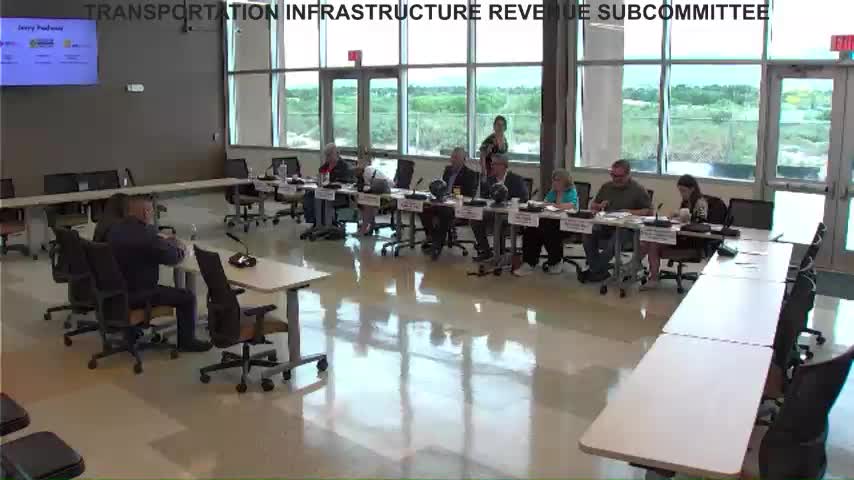
Summary
Union Pacific public affairs and hazardous‑materials managers briefed the committee on rail investments, safety technology, an intermodal terminal at Santa Teresa and the company’s community training programs; they urged public funding for grade separations to reduce blocked crossings.
Raquel Espinosa, director of public affairs for Union Pacific, and Raymundo Vasquez, the railroad’s hazardous‑materials and safety manager for the Southwest, briefed the Transportation Infrastructure Revenue Subcommittee on rail investments, safety technology and community preparedness at the Santa Teresa industrial gateway.
Espinosa said Union Pacific operates 32,000 miles of track across 23 states and is investing about $3.4 billion systemwide this year in track, ties and technology. In New Mexico she said UP operates roughly 600 miles of track, employed about 400 people in‑state and invested tens of millions locally in recent years; she noted the Santa Teresa Intermodal Terminal opened in 2014 after a state locomotive fuel tax deduction helped site the facility.
Safety and technology: Espinosa described investments in positive train control (PTC), machine‑vision inspections, drones for bridge inspection and continuous‑rail monitoring that aim to detect defects without stopping trains. "Nothing is more important to Union Pacific than the safety of our employees and the communities that we serve," she said.
Hazardous‑materials preparedness: Raymundo Vasquez described a four‑pillar approach — prevention, preparedness, response and recovery — and summarized classroom and hands‑on training the company provides with Dona Ana Community College and local fire departments. He said responders receive realistic drills with full‑size tank cars, and that Union Pacific offers a mobile app (referenced in the briefing) that lets certified first responders access train consist and commodity information on scene.
Blocked crossings and grade separations: Union Pacific told the committee that growth at Santa Teresa has increased deliveries to on‑site spurs, which can temporarily block crossings while cars are placed. The railroad urged investment in overpasses or other infrastructure to avoid recurring traffic blockages. Espinosa said the county had secured about $37 million in federal funding for an overpass at Industrial Road and that the county was proceeding with design work to advance that grade separation. She suggested states consider targeted grade‑separation funding programs similar to a recently enacted Texas program.
Environmental and mobility benefits: UP framed rail freight as a fuel‑efficient, lower‑emission alternative to truck movement, noting a single train can replace some 300 truckloads and is roughly four times more fuel‑efficient per ton mile.
Committee members asked about cross‑border crew operations, long‑term plans for intermodal traffic and Port of Long Beach impacts: Espinosa said Union Pacific serves all six major gateways to Mexico but does not operate trains inside Mexico; she also said operational innovations — including limited cross‑border crew arrangements at specific bridges — can reduce delays when permitted by CBP and other agencies.
Ending: Railroad officials reiterated an ask for public investment in grade separations and for continued partnership on hazmat training and port modernization planning to keep the corridor safe and efficient.