
Luna County officials urge state help to finish berm, citing flooding that halts port activity and school buses
Get AI-powered insights, summaries, and transcripts
Subscribe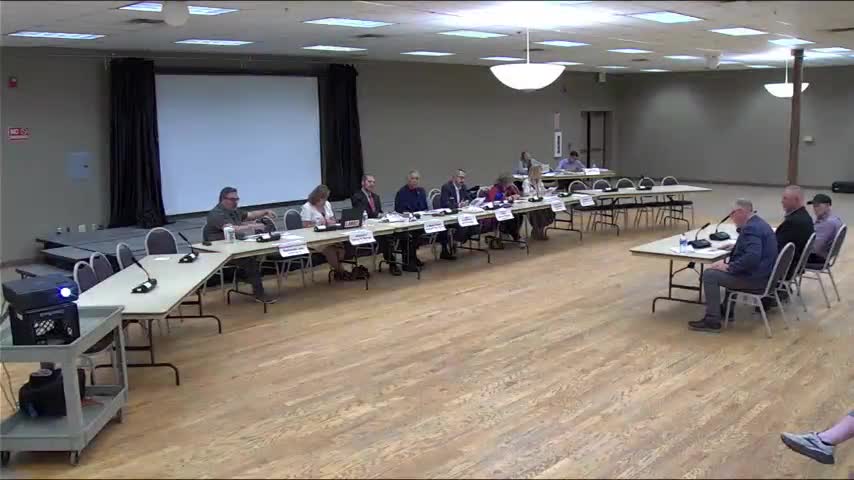
Summary
County and city leaders told the Legislative Transportation Committee that incomplete federal drainage work and a shortfall on a flood-control berm leave the Santa Teresa/Columbus port area vulnerable, disrupting bus routes, business development and public health.
County and city officials in Luna County told the New Mexico Legislative Transportation Committee in Deming on Wednesday that recurring flooding at the Santa Teresa/Columbus port of entry and adjacent industrial park is blocking commerce and putting students and residents at risk.
The county manager, Chris Bryce, said a 1.5-inch rain event left portions of state Highway 11 and the port area standing in water, and that a retention-lift station the federal government planned was never completed. "We put about 5 and a half million dollars worth of infrastructure into the roads, into the industrial park," Bryce said, "they're flooded with water." He said the county has $21,000,000 for a berm project but is about $9,000,000 short to complete a middle phase of the plan.
The unfinished drainage work has immediate consequences for Deming Public Schools, which brings children across the port daily. "These students are citizens of The United States," Charles Turner, government affairs coordinator for Deming Public Schools, told the committee. He said the district runs 15 buses from the port and that heavy rainfall has forced bus cancellations and cut daily attendance by nearly 10 percent on at least one occasion.
Why it matters: lawmakers heard that the unfinished flood-control work prevents private investment in the industrial park, damages the port’s functionality and creates public-health risks including standing water and mosquito infestations. County and city leaders asked legislators for help closing the funding gap to finish the berm and for a review of the federal retention and pump work at the port.
What officials told lawmakers: Bryce said the berm is designed to control what he described as "the hundred year storm" for about 1,800 acres in the southern part of the county and protect planned industrial development. The county and village of Columbus have completed part of the berm under phase one funding but need roughly $9 million to finish phase two; phase three covers a separate state-land parcel and already has federal funding, Bryce said. He described the federal retention basin near the port as incomplete and said the county used congressional-directed funds and state resources to begin work.
Charles Turner described daily operational impacts to schools: standing water at bus stops, increased student nurse visits for mosquito bites, and canceled routes that reduce classroom time. "On a major storm in July when we shut down those bus routes, we had a nearly 10% decrease in attendance and participation that day from the four schools that have students from the port of entry," Turner said.
City and economic-development leaders told lawmakers the flooding also undermines business recruitment. City Manager Aaron Serra and Mayor Philip Skinner said recent capital investments — including roughly $5.5 million in road and drainage work for an industrial park — were overtopped during rainfall and remain vulnerable while the full drainage system is incomplete. Carol Ness, managing member of American Magnesium, told the committee the proposed magnesium project would rely on mill and rail facilities at the Deming industrial park and that reliable truck access and flood protection are essential. "Magnesium is a critical metal," Ness said. She said the deposit near Deming could support long-term mining and milling jobs and tax revenue but that the company needs dependable truck routes and industrial land out of the floodplain.
Funding and federal issues: county officials said they used a mix of governor-directed funds, ARPA and other state sources to build the first berm segment. They credited Senator Heinrich for a small congressional appropriation earlier, but said they have received little federal coordination to finish the retention/pumping work the General Services Administration did not complete. Bryce told the committee that federal NEPA processes complicate using some federal funding and that the county is seeking the remaining funds through the Water Trust Board, capital outlay and other avenues.
Next steps and requests: county, city and school representatives asked committee members to consider the berm phase-two funding gap in upcoming budget and capital-outlay discussions, to help press for completion of federal retention-pump infrastructure around the port, and to coordinate with the Water Trust Board and federal partners so the port and industrial park can operate without repeated flooding.
Ending: Committee members expressed support for follow-up and offered visits and technical contacts; multiple legislators suggested the matter be reviewed with the state Water Trust Board, the New Mexico Finance Authority and the governor’s capital-outlay process to identify funding to complete the berm and related drainage work.