
NMDOT outlines 'Target 0' plan aiming to eliminate traffic deaths by 2050
Get AI-powered insights, summaries, and transcripts
Subscribe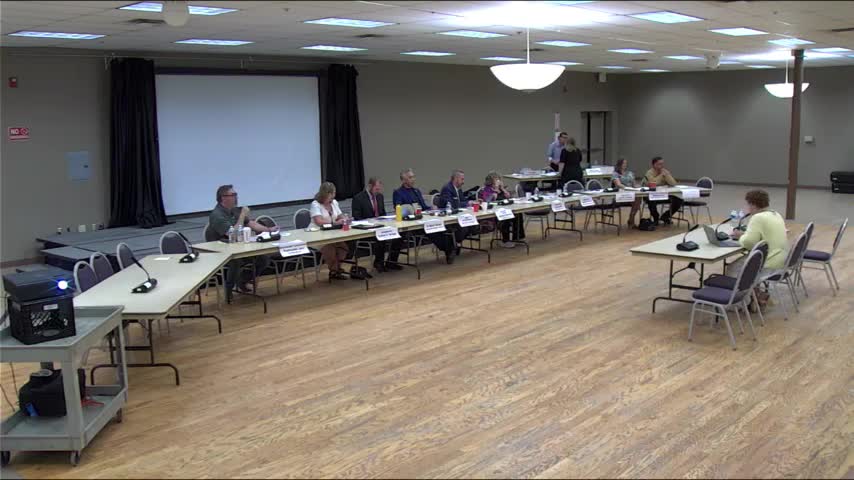
Summary
At a New Mexico legislative committee meeting, New Mexico Department of Transportation staff described Target 0, a statewide safety initiative that bundles data tools, road-safety audits, driver-education changes and local partnerships and said increased maintenance and local funding will be needed to reduce traffic fatalities.
Amy Whitfield, a representative of the New Mexico Department of Transportation, told members of a legislative committee that NMDOT has launched “Target 0,” a comprehensive initiative to eliminate traffic fatalities by 2050. Whitfield said the program grew out of 2023 House Memorial 85 and is modeled on national “Vision Zero” or “Toward Zero” efforts.
Whitfield said Target 0 will coordinate nine existing NMDOT safety plans and bring new, data-driven tools and countermeasures together under a safe-system approach promoted by the Federal Highway Administration. “We need to create the few things that we need, cutting edge strategies that we see in other states that we haven't employed yet. We need to coordinate,” Whitfield said. She listed AASHTOWare Safety, road-safety audits, and a hazard-perception component for driver-education as central tools.
Why this matters: New Mexico ranks high on national measures of traffic fatalities, and Whitfield cited pedestrian-fatality rankings from the Governor's Highway Safety Association and a 2018 CDC estimate that traffic fatalities cost New Mexico about $573,500,000. Whitfield told the committee the state can reduce fatalities incrementally year to year by applying proven countermeasures and addressing social contributors to risk such as homelessness, vehicle age and substance-use rates.
NMDOT described specific program elements the department is pursuing: integrating AASHTOWare Safety to prioritize locations for countermeasures; expanding road-safety audits to involve multidisciplinary teams and local stakeholders; deploying hazard-perception training across driver-education programs to standardize testing and collect outcome data; and proactively identifying 15 high-risk locations for earlier intervention.
On funding, Whitfield said NMDOT does not yet have a single total cost for reaching zero fatalities but asked the committee for increased maintenance funding, dedicated local transportation dollars to implement ADA and safety plans, supplements for rural transit, and set-aside money for targeted locations. She referenced Kansas’s safety corridor program as a model for concentrating engineering, enforcement and education in a small number of high‑risk corridors; Kansas implemented five corridors using about $2.5 million in the first year, she said.
Committee members pressed on data and local roles. Representative Delasos noted Hot-Spot maps that showed many pedestrian incidents on Central Avenue and asked how pedestrian error could read low when crash counts were high; Whitfield replied that slide 14 referenced all crashes while the hot-spot list showed pedestrian crash locations, and stressed exposure and roadway design as risk multipliers. Members and Whitfield also agreed that many hot spots are on municipally owned streets and that coordination with cities is essential; Whitfield pointed to the City of Albuquerque’s Vision Zero work and Safe Streets for All funding as examples of local efforts.
On enforcement and the social drivers of risk, Whitfield said engineering alone will not reach zero fatalities. “If we're gonna truly get to 0, we have to work with the social conditions that contribute to crash fatalities,” she said. Committee members raised homelessness and substance-use as immediate risks in places such as Central Avenue; Whitfield and city representatives noted a mix of engineering, outreach and enforcement will be required.
No formal vote or statutory change was adopted at the meeting. Whitfield said NMDOT will continue to develop Target 0 tools, convene a community of practice across NMDOT districts, send staff to national safety summits and provide technical assistance and training to local governments.
Whitfield closed by inviting elected officials and community partners to participate in an NMDOT Transportation Safety Summit planned for September, and to work with NMDOT to identify near-term, high‑impact investments to reduce fatalities.