
Student advocates outline statewide anti-vaping work as NMPED adopts 24/7 tobacco-free rule
Get AI-powered insights, summaries, and transcripts
Subscribe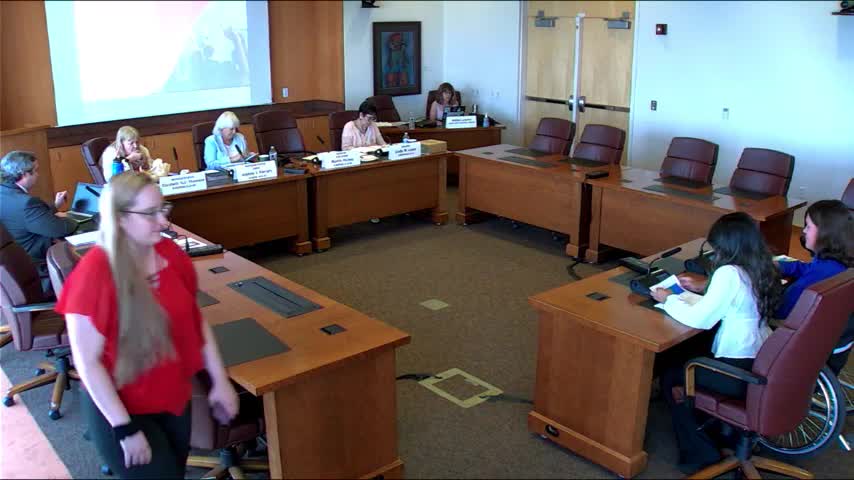
Summary
Student members of the Evolvement program told the Tobacco Settlement Revenue Oversight Committee about statewide outreach, training and campaign results and described recent progress after the New Mexico Public Education Department adopted Rule 6.12.4.1 NMAC requiring 24/7 tobacco- and nicotine-free school policies.
Student presenters told the Tobacco Settlement Revenue Oversight Committee on June 1 that youth-led outreach and training have driven education and local advocacy around flavored nicotine products and school policy updates, and highlighted new resources from a JUUL settlement that organizers said will expand program reach.
The presenters described Evolvement, a partnership that trains high school students to run anti-tobacco events and meet with decision-makers. "Vaping is extremely common among youth," a student presenter said, adding that "since 2020, Evolvement youth have worked 16,020 hours, which equates to approximately $442,526" in volunteered time saved for the state. The student presenter said Evolvement partners with 16 schools each year and runs two principal campaigns: No Minor Sale, which targets retail sale restrictions, and the 24/7 campaign to get schools to adopt comprehensive tobacco- and nicotine-free policies.
Why it matters: the New Mexico Public Education Department (NMPED) recently adopted Rule 6.12.4.1 NMAC to require comprehensive tobacco and nicotine policies for public schools. The presenters and committee members credited student testimony and outreach to school boards and principals as part of the momentum toward broader adoption and implementation of the new rule.
Program and campaign details presented to the committee included: a focus on flavored nicotine (including menthol), community education at events such as Isotopes games, and data collection through support cards and school assessments. The presenters said they collected more than 2,000 community messages of support, recruited 40 local organizations as partners, and conducted 11 local elected-official meetings since February 2023. They also said Evolvement has completed more than 7,700 school assessments and support cards, and that volunteers have presented at over 200 school board meetings and 200 principal meetings.
On flavors and menthol: the student presenter cited the 2024 National Youth Tobacco Survey (NYTS), saying about 1,630,000 youth currently use e-cigarettes nationwide and that nearly nine in 10 youth e-cigarette users report using flavored products. They described menthol as "believed to cause stronger dependency," referencing a study they mentioned from UMass Medical School and saying menthol marketing raises health equity concerns because of targeted advertising and higher menthol use in some demographic groups.
State and local policy context: presenters said seven states and nearly 400 local governments have restricted some or all flavored nicotine products, and they noted one local action in New Mexico: the City of Socorro passed a resolution (listed by presenters as resolution 24-09-17C) expressing support for flavor restriction and preemption repeal. Presenters and committee members also said the Department of Health (DOH) plans to expand Evolvement partnership from 16 to 18 schools; the presenters said they will use additional funds from a JUUL settlement to grow programming and to expand prevention efforts toward younger students.
Committee response and implementation questions: Representative Thompson and other members praised the students' work and discussed outreach to school administrators and school-board associations to support implementation. A committee member asked whether students felt supported by DOH; the student presenter said DOH "works very well with us." Committee members encouraged continued presentations to school boards and local governments and noted that preemption laws can limit local flavor-restriction ordinances, so education and statewide rule changes remain focal points.
No formal committee action was recorded on these items during the meeting; the presenters provided information and answered questions about program operations, funding sources, outreach, and next steps for implementation and local advocacy.
The committee also announced scheduling: the August 15 meeting was canceled and the next committee meeting will be in November in Santa Fe, where members said further evaluations and updates will be discussed.