
Los Alamos scientist shows new Mars rover findings; urges funding for sample return
Get AI-powered insights, summaries, and transcripts
Subscribe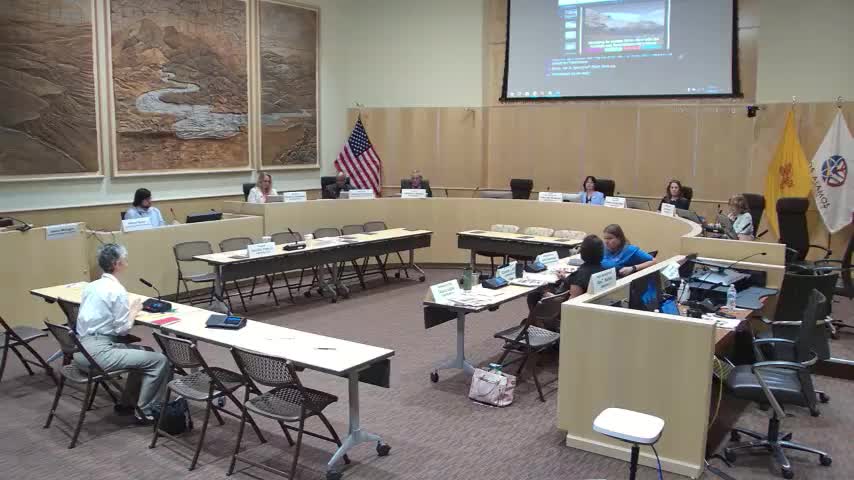
Summary
Los Alamos researcher Dr. Nina Lanza updated the committee on Curiosity and Perseverance rover science, including new sulfur and organic‑bearing targets, and urged support for the Mars Sample Return mission so Antarctic and Martian samples can be fully analyzed on Earth.
Dr. Nina Lanza of Los Alamos National Laboratory briefed the Science and Technology Committee on recent findings from NASA’s Curiosity and Perseverance rovers and described why returning Martian rock samples to Earth remains a priority for planetary science. Lanza, principal investigator for the Curiosity mission’s CHEMCAM instrument, said the rover’s laser‑based spectroscopy has collected more than a million shots and thousands of images during 13 years on Mars. She described a recent discovery of unexpected yellow, crystalline sulfur in a lake deposit that ‘‘is entirely sulfur’’ and which presents several possible formation pathways—volcanic, abiotic chemical reactions, or microbial activity—requiring laboratory analysis on Earth to resolve. Perseverance’s SuperCam adds Raman spectroscopy to the laser suite, enabling mineralogical identifications the older rover cannot perform remotely, Lanza said. Samples the rover has cached are intended to be retrieved and returned by a planned Mars Sample Return campaign; Lanza told the committee that budget language in the NASA proposal had zeroed out sample‑return funding and that the mission’s future depends on congressional decisions. Why it matters: returned Martian samples would allow repeatable, high‑precision laboratory studies (including isotopic and organic analyses) that are not possible with current rover instrumentation; such data are central to testing whether Mars was ever inhabited and to understanding Earth’s own early history. Committee discussion: members asked about mission cost, timelines and launch logistics; Lanza said Curiosity and Perseverance cost roughly $2 billion each, that earlier sample‑return estimates ran into the billions and that the architecture for sample return is being refined to lower cost. She described possible launch windows and said the science community has prioritized sample return in decadal surveys. Next steps: Lanza asked committee members to note the scientific priorities and to support federal funding decisions that would enable sample return; she offered to provide further material on proposed timelines and costs to staff.