
New Mexico School for the Blind seeks facility upgrades, expands statewide assistive-technology outreach
Get AI-powered insights, summaries, and transcripts
Subscribe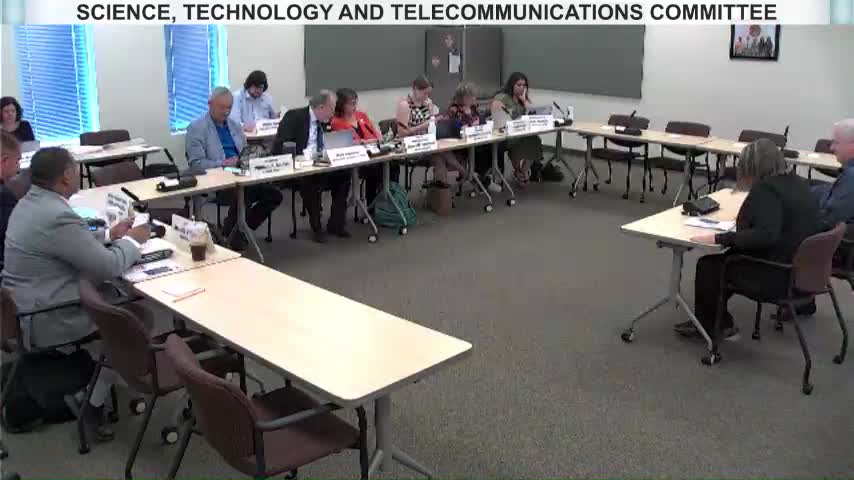
Summary
Officials from the New Mexico School for the Blind and Visually Impaired told the Science, Technology and Telecommunications Committee they need capital work to ease traffic and add a cafeteria at the Albuquerque campus while expanding assistive-technology lending and outreach across the state.
Officials from the New Mexico School for the Blind and Visually Impaired told the state Science, Technology and Telecommunications Committee on site that the school needs capital work to ease traffic and add a cafeteria and that it is expanding statewide technology and outreach services. Heather Miller, the school superintendent, and facilities staff described programs that support students from birth through age 22 and statewide services such as braille transcription and device lending.
The school said it evaluates about 900 children annually through its birth-to-3 program, maintains a rotating caseload of roughly 300 students statewide and runs two residential campuses — one in Albuquerque for early childhood and another in Alamogordo that serves students through age 22. Superintendent Heather Miller said outreach staff also mentor local educators and fund tuition for New Mexico educators who train to become teachers of students with visual impairments or orientation and mobility specialists.
NMSBVI described a technology push around a recently released device, the Monarch refreshable braille display from the American Printing House for the Blind, that provides 15 lines of braille and produces tactile images from mobile inputs. Miller said the school has acquired two Monarch units from an initial national deployment and plans to house one in its lending library and distribute them through outreach evaluations. The school said refreshable braille displays historically have produced two to three lines of braille at a time; the Monarch’s longer display is intended to improve fluency and independence.
Facilities staff said the Albuquerque campus lacks a dedicated cafeteria and that morning drop-off and bus circulation have become congested as the surrounding area grows. Justin Birx, facilities and capital projects coordinator, told the committee that construction documents for a traffic-circle/parking redesign and a multipurpose building are nearly complete but that the project still requires traffic studies and final approvals from municipal planners and the Public School Facilities Authority before the school can issue an RFP and receive final construction dollars.
Committee members asked about funding. Miller said roughly 90% of the school’s operational funding currently comes from trust-land distributions and about 10% from the Higher Education Instruction General Fund; she also said the school received an increase of about $500,000 tied to higher trust-land receipts this year. Birx said the school had received capital awards from the New Mexico Higher Education Department and the Public School Capital Outlay Council for the campus project.
School officials outlined the range of services they provide: short-term stays for focused orientation and mobility instruction, statewide low-vision clinics with ophthalmologists, a lending library for assistive devices, braille transcription (including Nemeth code for math and science) and extracurricular programs such as Maker Mondays and a statewide Braille Challenge. The school said it lent roughly 65 assistive devices to districts last school year and runs a post-secondary program in Alamogordo focused on life and job skills.
Representatives on the committee pressed on whether trust-land distributions are fungible for operations; Miller said trust-land funds support operations, not only capital. She also described space and staffing constraints for outreach as enrollment and demand grow.
The school's presenters asked the legislature to continue support for capital approvals and for funding to expand outreach staff and secure campus safety upgrades such as perimeter fencing, access control and cameras at the Alamogordo campus. The officials emphasized that campus placements are determined by individualized education program (IEP) committees and that the school's goal is to return students to their home districts with added skills and technology, not to retain students permanently.
Less critical details: the school described extracurriculars (goalball, Make48 participation, braille competitions) and curriculum alignment to New Mexico public-education standards and the expanded core curriculum for students with vision loss.