
LFC unveils tax‑expenditure assessment work; early reviews show mixed revenue returns for economic development credits
Get AI-powered insights, summaries, and transcripts
Subscribe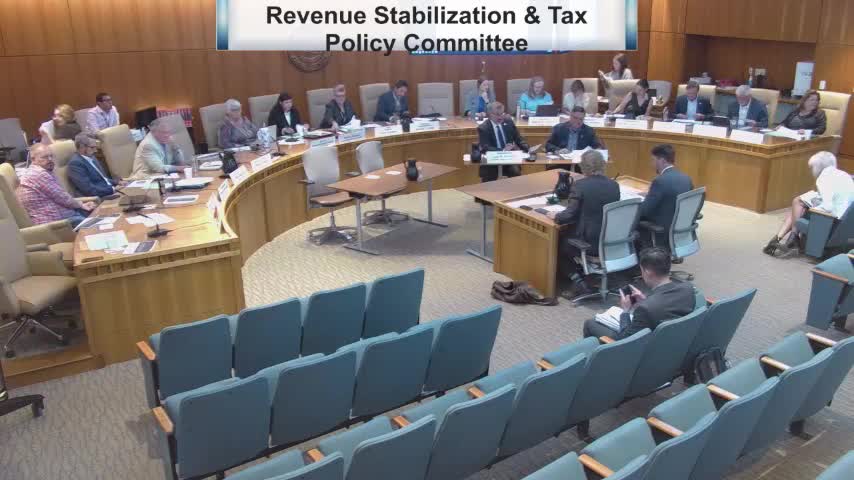
Summary
The Legislative Finance Committee described a new product, tax‑expenditure assessments, and released preliminary analyses of five economic‑development credits, showing positive economic ROI in some cases but negative net returns to state revenue over a 20‑year horizon for several credits.
SANTA FE — The Legislative Finance Committee on June 12 introduced "tax‑expenditure assessments," a new set of analyses intended to quantify how state tax credits and deductions affect the economy and state revenue. "The goal is to get a better sense of what we're buying when we're investing in tax policy," LFC economist Brendan Gray said.
What LFC will do: The new product builds on the Taxation and Revenue Department’s tax‑expenditure report by adding dynamic economic modeling and standardized program design checks. Assessments use a 20‑year horizon and the REMI economic model to estimate economic return on investment (ROI) and the net return in state revenue after accounting for the foregone tax revenue. LFC staff said the work does not yet include cost‑benefit recommendations or cross‑policy comparisons; those would be a later, resource‑intensive step.
Preliminary findings: LFC has published assessments of five credits: the Rural Job Tax Credit, High‑Wage Jobs Tax Credit, Technology Jobs and Research & Development Credit, Laboratory Partnership with Small Business credit, and the Technology Readiness ("Trigger") credit. Early slides show some credits generating positive economic ROI (growth in state GDP) but producing a negative return in state tax revenue over the modeled 20‑year period — meaning the revenue the state recovers from induced economic activity does not exceed the cost of the credit in many cases.
Why it matters: The distinction matters for policy choice. LFC staff emphasized that a negative return in tax revenue does not by itself mean a credit should be repealed: some credits are designed to deliver non‑revenue outcomes (workforce development, innovation, diversification) and may be worth subsidizing even if they do not pay for themselves in state tax receipts. The committee asked LFC to prioritize assessments of the largest expenditures first (for example, sales‑to‑manufacturers GRT deductions and film credits).
Design and transparency: The LFC reviewers checked statutory design elements such as purpose statements, sunset dates, reporting requirements, geographic targeting, refundability, and transferability. Staff suggested several design improvements for some credits: clearer expiration dates, tighter targeting, and better reporting to allow future measurement.
Ending: LFC will continue assessments through the interim, add additional credits and industry categories, and provide the committee with data tables and the REMI model inputs. Committee members asked LFC to produce the assessments for the largest tax expenditures first and to confirm credit types (refundable, transferable, carryforward) in its next deliverable.