
NMED says LANL consent order renegotiated, chromium plume under pump‑and‑treat; tritium drums require state approval
Get AI-powered insights, summaries, and transcripts
Subscribe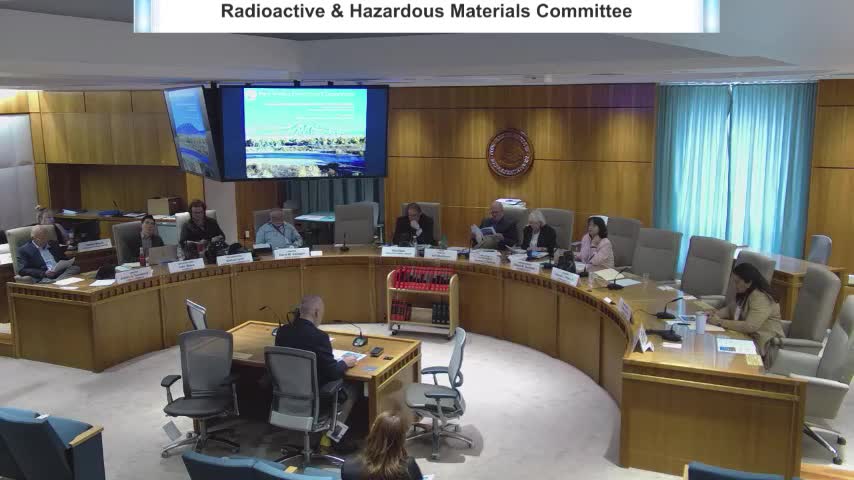
Summary
At a May 20 legislative briefing, the New Mexico Environment Department said it negotiated a new enforceable consent order with Los Alamos National Laboratory and is continuing remediation and monitoring for a hexavalent chromium plume.
At a May 20 legislative briefing, the New Mexico Environment Department said it has terminated an earlier settlement and negotiated a new, enforceable consent order governing cleanup at Los Alamos National Laboratory, and that the department is continuing technical work on a hexavalent chromium groundwater plume.
The department described the new consent order as enforceable and budgeted, and said it includes clearer campaigns and a faster dispute resolution path than the prior 2016 agreement. "There was a prior settlement with Los Alamos National Labs for the cleanup of the waste that are there... That new agreement has been negotiated and it is in effect at this time," the secretary told legislators.
On the chromium plume, the department said it brought in an independent third party to mediate technical disagreement between NMED programs and the laboratory. The department described the remediation approach as pump‑and‑treat with additional monitoring wells. "That hexavalent chromium plume is still, being remediated and and, you know, additional wells, monitoring wells, and things like that are are continuing there," the secretary said, noting the hydrogeology at Los Alamos is complex and technical views differed.
The department also briefed legislators on transuranic waste shipments and the Waste Isolation Pilot Plant. NMED said it negotiated permit conditions for WIPP in mediation and avoided a formal permit hearing. The department reported the mediation cost about $250,000 and said a formal hearing would likely have exceeded $1 million for the state. The department said it remains concerned about WIPP’s utilization and would like to see more New Mexico‑generated waste emplaced there.
Legislators asked about drums at Los Alamos that contain tritium and lead; the department said the presence of lead makes those drums subject to the state hazardous waste law and that NNSA has requested permission to depressurize and capture tritium emissions. "If they didn't have lead, I'd have no jurisdiction. But since they have lead in them, the hazardous waste act applies and we regulate those drums," the secretary said, adding that depressurization is intended to avoid future catastrophic release but is a complex, risk‑management decision.
The department said LANL permits are administratively extended while renewal reviews proceed, and that the new consent order prioritizes cleanup work with enforceable milestones and budget commitments. NMED also said one permit condition now requires DOE to report annually on plans for alternate repositories once WIPP’s statutory capacity under the Land Withdrawal Act nears its congressionally‑set limit; NMED said it has reviewed DOE’s initial report and provided comments to DOE.
The briefing closed with legislators asking for additional reporting on volumes remaining at LANL and WIPP, and the department agreeing to provide a clearer accounting of transuranic waste inventories and how prioritization in the renewed permit affects New Mexico shipments.