
Downwinders urge state support after RECA expansion extends coverage to New Mexico residents
Get AI-powered insights, summaries, and transcripts
Subscribe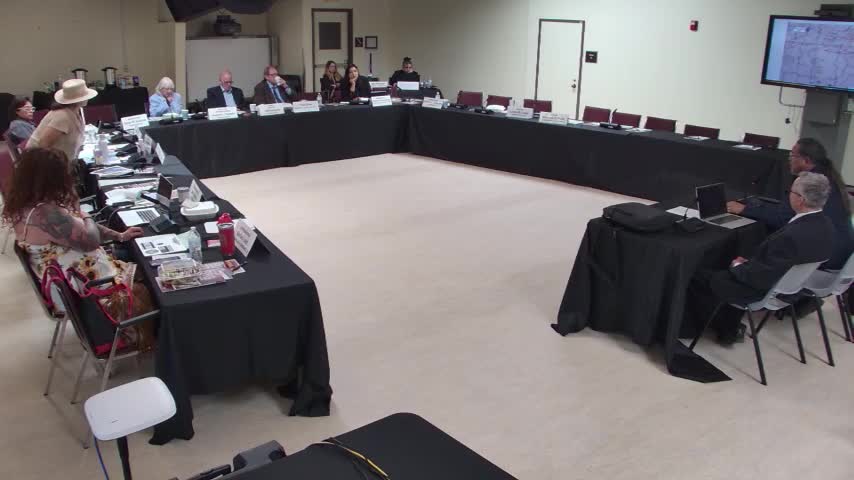
Summary
Leaders of the Tularosa Basin Downwinders Consortium told the committee that recent federal amendments to the Radiation Exposure Compensation Act expand eligibility for New Mexico residents exposed during nuclear testing and urged the state to fund community outreach and application assistance.
Leaders of the Tularosa Basin Downwinders Consortium told the committee that recent amendments to the Radiation Exposure Compensation Act (RECA) open a two-year claims window for many New Mexico residents exposed during nuclear testing and urged state support for outreach and application assistance.
What changed at the federal level: Tina Cordova, consortium co-founder, said the law now extends eligibility to people who lived in New Mexico for at least one year between 1944 and 1962 and raises the one-time payment for qualified downwinders from $50,000 to $100,000. Cordova said uranium-worker benefits were extended for miners employed between 1971 and 1992; the package also increased compensation for some uranium workers (she cited up to $400,000 for qualifying uranium-worker claims). Cordova said health-care coverage for downwinders was not included in the negotiated federal bill.
Why it matters: the consortium said the Trinity explosion (July 1945) and subsequent atmospheric testing irradiated large swaths of New Mexico and that many affected people — including children born in the immediate post-test period — have long-standing health concerns. The consortium is working with researchers who have reconstructed fallout patterns and argue that New Mexico was among the most heavily irradiated states during the testing era.
State needs the consortium cited: Cordova and Bernice Gutierrez asked the legislature to help by funding community-based application assistance, supporting access to historical records (birth, death and school records) and coordinating with state agencies to make relevant documents accessible to claimants. Consortium leaders warned that predatory actors may try to charge for application help; they said state-supported, trained local facilitators can both accelerate claims and reduce fraud.
Administrative and practical issues: Cordova said the Department of Justice (DOJ) has not yet opened RECA claim processing in the updated categories and that the consortium is pressing congressional offices to prompt DOJ action. She recommended rapid state action to train volunteers and public-agency staff to assist residents with documentation, especially where records (for example, some 1945 death records) are incomplete or hard to obtain.
Next steps and civic events: consortium leaders asked legislators to support outreach, records access and training. Cordova also invited lawmakers to attend Trinity-related commemorations marking the 80th anniversary; she said the consortium will continue to seek expansion of covered cancer types and health-care benefits for claimants going forward.