Interim committee approves two-year work plan to study PFAS, carbon sequestration, modular reactors and decommissioning
Summary
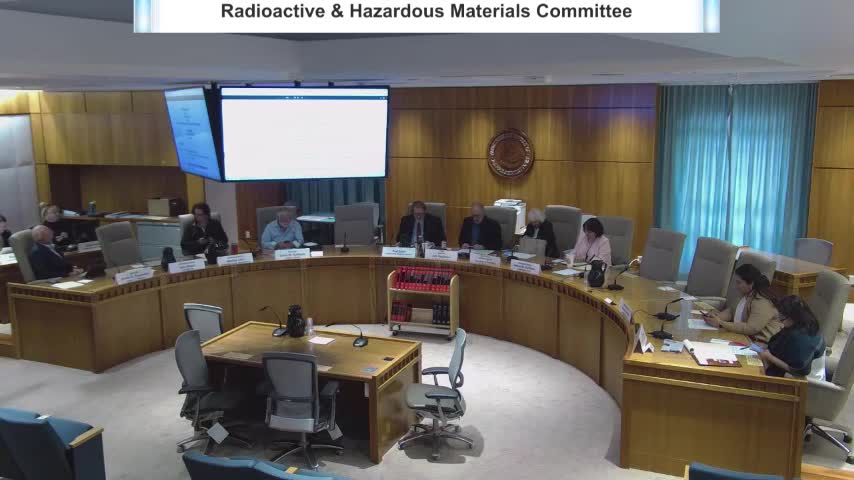
Members of the Radioactive & Hazardous Materials Interim Committee approved a two-year work plan that schedules briefings and site visits on PFAS contamination, carbon sequestration rulemaking, small modular reactors and wind/solar decommissioning; the motion passed with no recorded opposition.
The Radioactive & Hazardous Materials Interim Committee approved its two-year work plan, including scheduled briefings on PFAS contamination, carbon sequestration and proposals for small modular reactors, and a review of wind and solar decommissioning and foundation cleanup.
Committee members said the work plan reflects the committee’s statutory oversight role under the New Mexico Hazardous Waste Act and will allow the panel to track multi-year technical and regulatory issues. “This 1 is in law as a 2 year deal. And I think that that is important to understand the mindset of the work we do here,” the committee chair said when introducing the plan.
Why it matters: The committee is one of the few interim committees rooted directly in statute to oversee hazardous and radioactive materials. Members emphasized the value of a longer, two-year window for full technical reviews, because items such as carbon sequestration rulemaking, PFAS rules and radioactive-waste transport and disposal require extended study and coordination with state and federal agencies.
Key items scheduled under the work plan include: PFAS rulemaking and contamination responses tied to military sites and Cannon and Holloman Air Force Bases; follow-up on new Environmental Improvement Board rules concerning PFAS and chemical-disclosure policies; review of recently enacted carbon-sequestration law that contemplates future state ownership of facilities and attendant rulemaking; examination of small modular reactor proposals linked to data center development; and a review of wind and solar decommissioning issues, including foundation removal and local water use during construction.
Committee members also suggested adding an item on ozone and air pollution related to oil-and-gas activity in the Permian Basin. Paul Estock, a Legislative Council Service staff attorney who supports the committee, summarized committee staff will incorporate those suggestions into the calendar.
Votes at a glance: The committee moved to approve the work plan as presented and amended. A member said, “I so move that we accept the work plan.” Another member seconded. The chair called for opposition; no member registered opposition on the record and the chair stated the motion carried. No roll-call tally was given.
What’s next: Committee members asked staff to schedule guest briefings and consider field meetings in communities affected by work-plan topics, including the Grama (Grants/McKinley area) mining district and Holloman/Cannon Air Force Base areas for PFAS and water impacts. The committee also flagged outreach to local law enforcement, fire and hospital partners for transportation and emergency-response exercises tied to shipments of transuranic waste to the Waste Isolation Pilot Plant.
Ending: The committee will reconvene on the dates listed in the work plan and return with a refined calendar and invited speakers for the flagged topics.