
NMFA gives "Bond 101" to committee: how New Mexico pools municipal borrowing through the PPRF
Get AI-powered insights, summaries, and transcripts
Subscribe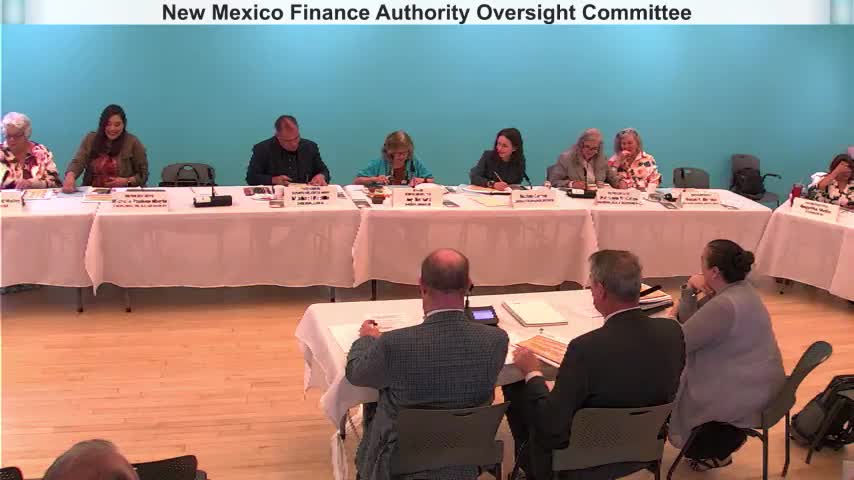
Summary
New Mexico Finance Authority staff briefed the legislative committee on municipal bonds and the Public Project Revolving Fund, explaining pooled financing, tax-exempt rules, pledges used to secure repayment and how the NMFA supports small and large borrowers with underwriting, disclosure and pooled credit enhancement.
New Mexico Finance Authority officials presented a “Bond 101” overview to the legislative site committee, explaining how municipal bonds work, how pooled financing through the Public Project Revolving Fund (PPRF) operates and what local governments should expect when seeking low-cost capital.
Why it matters: The PPRF aggregates loan repayments from many local borrowers and issues bonds in the capital markets to secure lower interest rates for communities across the state. Committee members probed how security pledges, ratings and market conditions affect rural and large borrowers and how the NMFA evaluates creditworthiness.
Mark Chaikin, general counsel for the NMFA, opened with constitutional and legal context, noting limits on state assistance. “Article 9, section 14, the so-called anti-donation clause … restricts the ability of the state to either lend its credit or give aid to private industry,” Chaikin said, describing the legal constraints municipal bond issuers face.
Chaikin and other NMFA officials explained key features of municipal debt: maturities, fixed vs. floating interest rates, tax-exempt vs. taxable bonds and the federal tax rules that govern tax-exempt issuance (Internal Revenue Code sections referenced during the briefing). Chaikin said federal rules are designed to prevent arbitrage and that compliance increases issuance costs, but tax-exempt status usually yields lower long-term interest costs for public borrowers.
Chip Pierce, the NMFA’s chief financial strategist, said pooled financing is central to the PPRF model: the authority issues bonds and “then we use the [proceeds] to… make loan agreements” to many borrowers, creating a basket of underlying credits that investors can evaluate via NMFA disclosure resources. Pierce described program mechanics including simultaneous loans (for loans above $10 million) to avoid interest-rate mismatch risk and reimbursement loans (for smaller loans made from existing cash on hand).
NMFA officials said the authority has a strong disclosure practice and investor relations presence, which supports broad investor demand. The authority’s ratings — S&P AAA and Moody’s Aa1 (as reported in the presentation) — were cited as factors in securing favorable pricing, Pierce and Chaikin said.
Officials described the transaction team roles: municipal advisers (fiduciaries to borrowers), underwriters (who market bonds), bond counsel (legal opinion providers), disclosure counsel and trustees who act for bondholders. Chaikin noted the NMFA’s use of a master indenture and supplemental indentures for each issuance and the trustee’s role as bondholder representative.
Security pledges and credit analysis were a major focus. The NMFA accepts a broad set of pledges — general obligation (property-tax-backed), gross-receipts-tax pledges, net-system-revenue pledges (for water/wastewater), special assessments and others. The authority can in limited cases intercept certain tax revenues and route them to debt service, a feature officials said strengthens repayment security for some loans.
Officials described how the NMFA assesses borrower capacity — reviewing operating results, revenue trends, reserves, limits on future borrowing and worst-case scenarios — and stressed that the authority has not had a borrower default on debt service in its PPRF portfolio over decades of lending. They also said the authority is considering a third-lien product to broaden access for less-secure credits without diluting existing senior/subordinate security.
Committee members raised questions about capacity for large borrowers such as the Albuquerque Bernalillo County Water Utility Authority, the effect of federal interest-rate and tariff news on market pricing, and whether rural hospitals or private water systems could access NMFA financing. NMFA staff said large utilities can and do issue through the PPRF for the administrative and reporting benefits and that taxable conduit financing is an option for some private or cooperative entities; however, bonds cannot be used to fund government operations, only capital projects.
Procedure and timing details: NMFA officials walked through a typical three-month timeline from decision to close, described negotiated vs. competitive sales, the role of rating presentations and the order/price period on sale day. They noted the importance of accurate disclosure and the Electronic Municipal Market Access (EMMA) repository for ongoing investor disclosures.
Next steps: The NMFA told the committee it will present draft PPRF rule amendments for committee approval at the next meeting in Deming and provide follow-up materials the committee requested on particular capacity and budget questions. The committee approved minutes earlier in the session but did not take additional bond-program votes during this briefing.