
New Mexico Bioscience Authority seeks sustained funding, co‑investment fund and lab space to keep startups local
Get AI-powered insights, summaries, and transcripts
Subscribe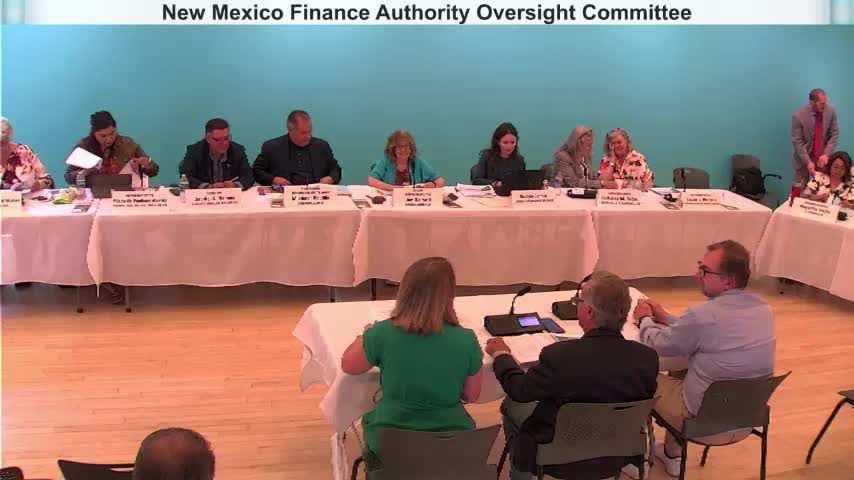
Summary
The New Mexico Bioscience Authority told a legislative committee it plans internships, an ecomap of industry assets, and a co‑investment fund to attract private capital; the authority is requesting the legislature consider recurring operating funding and said a 25,000‑square‑foot accelerator is under study for capital outlay.
"My name is Stephanie Tafigi. I'm the executive director of the New Mexico Bioscience Authority," Stephanie Tafigi told a legislative oversight committee as she opened an update on the state's bioscience sector and the authority's work.
The authority asked lawmakers to consider recurring operating funds and to enable a state co‑investment program designed to leverage private venture capital for New Mexico‑based bioscience startups. The board said a $25 million state commitment could attract private matching funds on a two‑to‑one basis and that the program would use milestone‑based tranches and clawback provisions to protect state investment.
Board chair Paul Lohr, who identified himself as the founder and chief operating officer of a Santa Fe biotech company, said capital is the biggest barrier for early biotech firms and argued the co‑investment fund would help seed multiple startups and attract venture capitalists. "I think we should really be funded by $50,000,000," Lohr said, explaining that a larger fund allows a meaningful number of investments to be made and increases the chance of back‑end returns that could replenish the treasury.
Board members and presenters described three near‑term priorities: build financial capital and co‑investment structures; expand lab and accelerator infrastructure so firms can scale without leaving the state; and develop workforce pipelines through paid internships and commercialization training. The authority said bioscience in New Mexico grew about 22% in jobs from 2019 to 2024 and that NIH awards and private investment have contributed to the sector. The authority also operates an online "Ecomap" at nmbioscienceconnect.com that catalogs companies, resources and career opportunities across the state.
Presenters said lab and scale‑up space is in short supply and cited two companies that relocated or expanded outside New Mexico because of limited local space. Board member Alex Coughlin (introduced as a cofounder of a biomanufacturing company) described experience building lab space twice and told lawmakers there is demand for space for at least 20 additional companies now. The board said it will run a feasibility study for a proposed 25,000‑square‑foot accelerator that could house roughly 20 companies; if feasible, the authority plans to seek capital outlay funding to design and build the space.
The authority outlined two internship programs the board intends to pilot with the initial one‑time legislative allocation the authority already received. The "bioscience entrepreneurship experience" will pair bioscience students with business students in paid placements inside New Mexico companies and is targeted at New Mexico residents. The "bioscience commercialization internship" will embed interns in university tech‑transfer offices and the authority said it will work with UNM, NMSU, New Mexico Tech and community colleges to place students. Staff estimated the pilot internships program would cost about $250,000 to support roughly 40 interns.
Lawmakers asked about federal NIH awards and recent cuts; presenters said universities were working to restore some awards and that the authority is coordinating with federal program managers to bring grant opportunities and panels to New Mexico. Lawmakers also pressed the authority on accountability and clawback language in the proposed co‑investment approach. Lohr and board members said milestone‑based tranches, board oversight and approvals by the secretary of economic development and finance would be part of governance.
The authority did not present a request for new recurring funds at this hearing but said it plans to spend its one‑time allocation on the internship pilot, feasibility work for an accelerator, and outreach. Staff said they will return to the legislature with detailed capital outlay and recurring‑fund requests at the appropriate point in the budget cycle.