
Planning board agrees on engagement push for housing chapter, targets November community meeting
Get AI-powered insights, summaries, and transcripts
Subscribe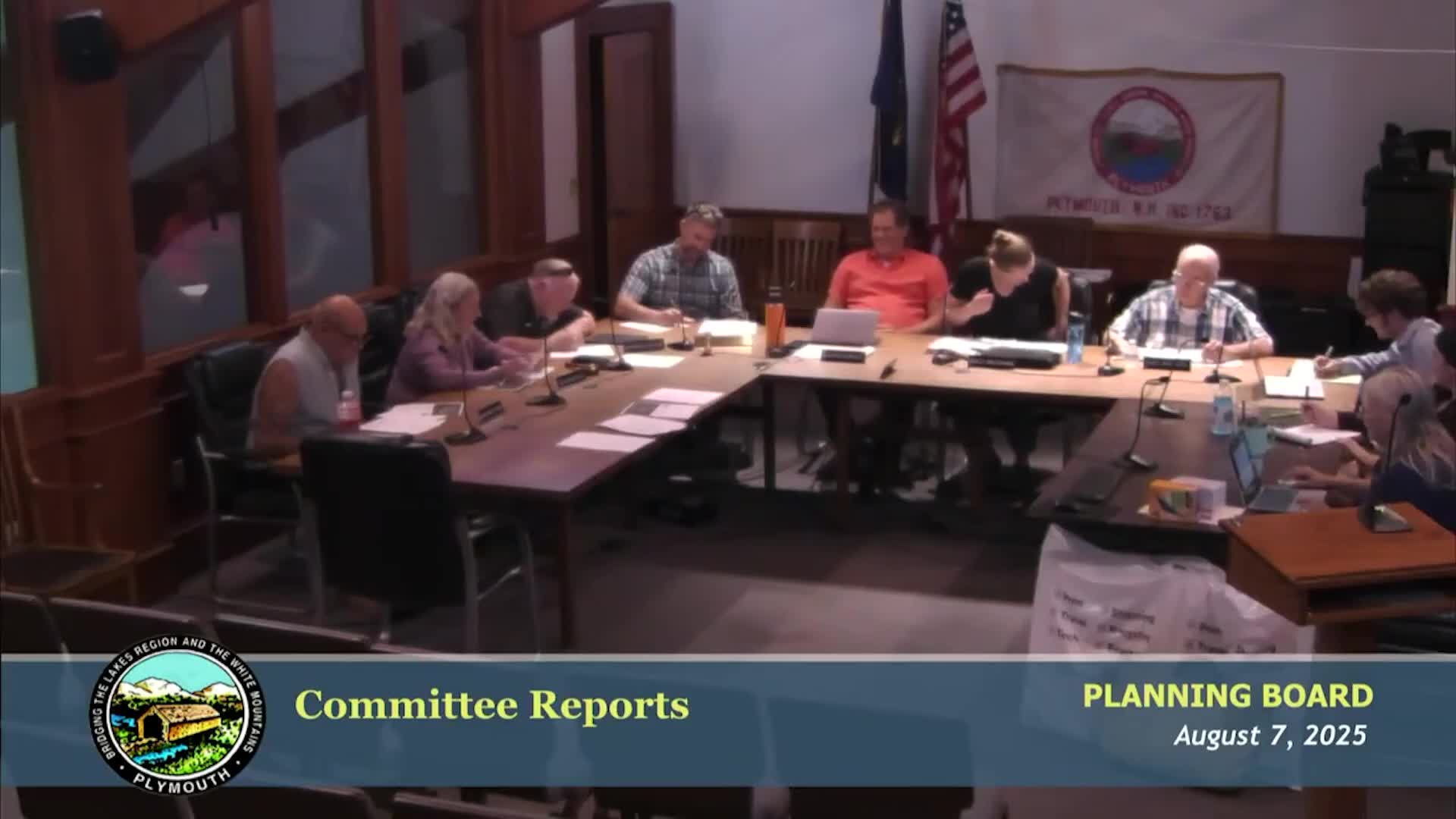
Summary
The Plymouth Planning Board on a recent meeting agreed to run a monthlong public engagement activity using a “six‑word stories” prompt, pursue a short online survey and target an early November community meeting to inform the housing chapter of the master plan.
The Plymouth Planning Board on a recent meeting agreed to run a monthlong public engagement activity using a “six‑word stories” prompt, pursue a short online survey and target an early November community meeting to inform the housing chapter of the master plan.
The board’s outside presenter, Judy Barrett, described a low‑pressure engagement box and card activity designed to collect short responses about “home.” Barrett said the physical displays will be set at town hall, the library and the senior center and recommended an August 18 start and a roughly monthlong run: “we would put this out probably the week of the August 18 and let it run for a month.”
The consultant said she will supply printed materials — posters, cards and stickers — and will ship display boxes to town staff. Board members discussed adding a travelling display and placing boxes at high‑traffic sites, including the transfer/recycling center to reach residents, and retail locations to capture nonresident perspectives.
Board members asked Barrett to keep the online survey short; one member suggested “five questions.” Barrett said the survey is primarily an engagement tool rather than a scientific instrument: it is “more about engagement. It’s about an opportunity for people to participate who may not ever wanna get up at a public meeting.” She and the board agreed the survey results and six‑word story comments would be used to structure a public meeting where maps and visual examples could show what different housing approaches might look like.
On zoning topics, the board and staff discussed state law changes that require municipalities to allow certain housing types. Planning staff told the board the highway commercial zone will need to allow multifamily housing by right to meet the state requirement, and the group debated whether to require ground‑floor commercial or to allow flexibility. Staff framed the practical choice as a staged approach: “as a first go through, just allow multifamily and then actually get the feedback for the master plan and find out what we really wanna do there.”
The board discussed overlays previously considered for Fairgrounds Road and Tenney Mountain Highway and whether new residential allowances should be limited in form (for example, attached single family, mixed‑use, or larger multifamily). Members emphasized the importance of visual examples and noted prior engagement showed people responded differently when they saw what a building could look like. Barrett noted several specific implementable zoning tools — height and setback rules, design standards, clustering requirements and parking limits — that could reduce the risk of unwanted “big box” outcomes.
Other technical items raised during the conversation included accessory dwelling units (ADUs) and parking standards. Staff said legal changes to ADU rules are already in effect and the town should follow state law in permitting ADUs rather than requiring special exceptions. On parking, staff recommended clarifying residential parking minimums and considering limits for very large nonresidential lots.
The board set near‑term steps: run the six‑word stories engagement roughly Aug. 18–Sept. 15 (Barrett will provide materials), prepare a short online survey, and plan a community meeting in early November (with flexibility if scheduling or hearings require moving the date). Barrett committed to revise the engagement plan and send the board an updated copy.
Board members and staff also discussed infrastructure timing that could affect where housing is most appropriate, including a state bridge rehabilitation and a North Main project under consideration for a statewide 10‑year transportation plan. Staff said the Green trestle bridge over the Baker is now weight‑rated at 10,000 pounds and that the bridge rehabilitation has been accelerated into the state plan, which could shift sequencing for sidewalk and bike improvements on North Main.
Next steps: the planning office will circulate the revised engagement plan, post and manage the physical displays, and prepare draft short survey questions for review. Staff also will begin drafting zoning amendments required to comply with state law (for example, multifamily in highway commercial and ADU provisions) and bring preliminary drafts back to the board for review before public hearings.