Get Full Government Meeting Transcripts, Videos, & Alerts Forever!
Get email alerts on the Drainage Study Subdivision topic
No spam. Unsubscribe anytime.
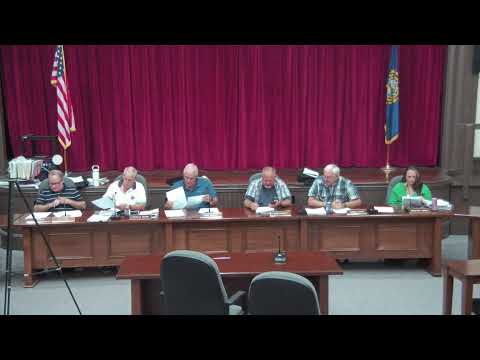
Alton planning board denies request to remove drainage‑study condition after contested Prospect Mountain subdivision review
Summary
The Alton Planning Board on Aug. 19 voted to deny a request to remove a drainage‑study condition attached to a previously approved minor subdivision, after concluding the submitted materials did not satisfy the board’s requirement for a professional drainage study.
The Alton Planning Board on Aug. 19 denied an applicant’s request to remove a condition that requires a drainage study and plan for a previously approved minor subdivision, concluding the material submitted to date did not meet the board’s original intent for a professional drainage study.
The July–January approval for the two‑lot subdivision (case P2502) included a condition that “before a building permit is issued, a drainage study and plan be completed.” The applicant sought to remove that condition by asking the board to accept a drainage plan and accompanying report prepared by Fraggle Rock Environmental and other consultants. After a lengthy public discussion, the board voted to deny the request to remove the condition and left the original drainage‑study requirement in place.
Fab, a builder representing Bethel Builders and speaking for the applicant, told the board his team had commissioned a licensed wetland scientist and stormwater specialist to prepare a five‑page report and plans. Fab said he had already made physical improvements — deepening and stone‑lining a roadside ditch, installing an 18‑inch culvert at his driveway and removing a small beaver dam — at significant cost, and that his neighbor had sent a letter saying the flooding concerns had been alleviated.
“I hired Damon from Fraggle Rock Environmental. He is a certified wetland scientist and a licensed erosion‑control and stormwater specialist,” Fab said, summarizing work done and asserting the plan and report addressed the neighbor’s concerns. Fab told the board he had spent tens of thousands of dollars on ditching and driveway work and described a completed house on the parcel that is presently unable to be sold because the subdivision condition remains unresolved.
Town Highway Director Seth Garland told the board he believed the ditch improvements had substantially increased conveyance to the road but said he remained concerned about winter icing where concentrated flow enters the roadway. “I’m comfortable with the amount of water — like I said, 90% of the time — but we haven’t seen winter yet,” Garland said, warning that runoff changes could increase icing risk at a road corner.
Planning staff and the town engineer reviewed the material submitted by the applicant and told the board the material constituted a drainage plan but did not meet the planning board’s original intent for a drainage study prepared by a registered professional engineer. Planning staff noted the subdivision regulations’ stormwater and erosion control standard requires drainage design by a licensed New Hampshire professional engineer with recent stormwater experience; the town engineer told the board he found the submitted plan “technically not a study.”
The applicant pressed the board for flexibility because a building permit had been issued for one house on the property and that house is nearly complete. Realtor Amy Stanley, representing the listing for the finished house, urged the board to find a path that would allow the house to be sold while the necessary technical work is completed. Richard Shea, a member of the board of selectmen speaking during public input, urged flexibility so a usable home would not be taken off the market if there was any way to proceed while preserving public safety.
Conservation Commission comments and the town engineer’s review recommended the board preserve the drainage‑study requirement. Town staff recommended an easement and maintenance agreement so neighbors and the town have legal access to maintain the ditch and to manage future beaver impacts; the applicant said draft easement language had been prepared to allow neighbor access and town inspection.
After public comment and deliberation the board passed a motion to deny the applicant’s request to remove the drainage‑study condition attached to approved case P2502. The board and staff discussed nonbinding options the applicant may pursue: withdrawing the prior approval and resubmitting an amended application that explicitly splits which lot carries the drainage‑study obligation, or providing the formal drainage study prepared by a licensed professional engineer. Planning staff also said the building permit question (how and why a building permit was issued before the condition was resolved) should be referred to the town attorney for review.
Outcome: the board denied the application to remove the condition that a drainage study and plan be completed; the original condition remains in force. The applicant was encouraged to coordinate with the town engineer on next steps; staff noted a licensed professional engineer will likely be required to complete the study and that additional state permits or design changes could follow from that study. The board did not modify the approved subdivision but instructed staff to notify the applicant of the exact engineering standard expected for the study.