Get Full Government Meeting Transcripts, Videos, & Alerts Forever!
Get email alerts on the Landuse Manufactured Housing topic
No spam. Unsubscribe anytime.
Alton planning board continues review of proposed 38-unit manufactured home park, approves HOA-document waiver
Summary
The Alton Planning Board continued action on an application for a 38-unit manufactured (veteran) home park to Sept. 16, requiring a soils report signed by a certified soil scientist and approving a waiver that exempts the project from providing homeowners association documents under subdivision regulations.
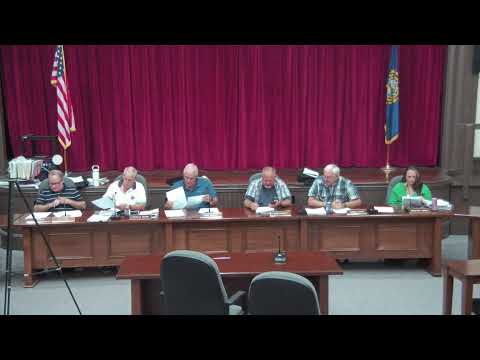
Alton Planning Board members on Aug. 19 continued review of a proposal to build a 38‑unit manufactured home park that includes one single‑family site, saying the application must supply a soils report signed by a certified soil scientist before the board will act further. The board voted to grant a separate waiver exempting the applicant from supplying homeowners‑association documents required by the town’s subdivision regulations.
The application — for a single owner to develop an 85‑acre parcel as a manufactured home park with four septic systems and a separate private septic for the single‑family dwelling — was discussed in detail at the meeting. Board Chairman Bill O'Neil opened the discussion and members pressed the applicant to provide a signed soils statement and clearer documentation tying the soils testing to the stamped septic design. Alan Roscoe, representing the applicant (TF McMahon, agent), said a soils report and a stamped septic design had been prepared and brought to the meeting after staff flagged the earlier submission as missing that material.
“The test pits were done at the bottom of the hill and then upwards, and they support the septic system designs for the four systems we’re proposing,” Alan Roscoe said, describing work by an in‑house septic designer and a soils professional identified in the record. The project team identified the soil professional as Chris Danforth and said Danforth performed the field test pits.
Planning staff told the board the original waiver request had covered submission timing for the soils analysis; after reviewing the material at the meeting, staff and board members said they still needed a signed, concluding statement from the soil scientist verifying that the soils are adequate for septic design. Board members repeatedly emphasized they needed a stamped signature and explicit conclusions in the soils report. “We’re going to need a stamp and soil sign and a little bit more information,” one board member said during deliberations.
The board also considered a second waiver request asking that homeowners‑association documents be waived because the development will be rental‑only and wholly owned by one entity. That waiver was approved by motion under section 7.14(c) of the subdivision regulations; the motion passed unanimously.
The board heard other project details: the applicant said four separate septic systems were designed to disperse effluent over a larger area rather than concentrating discharge; the developer said a private septic and well are planned for the single‑family site rather than tying that dwelling to the park systems. The applicant reported coordinating with the fire department on a cistern‑to‑hydrant connection; Deputy Turcotte of the fire department was reported to have no objections after a minor drawing revision.
Planning staff and the applicant also discussed state permitting. Staff noted the project will require several state permits, including a DES community water supply approval and state highway (AOT/DOT) reviews. The board said such state reviews are typically conditions of local approval and that applicants often obtain state permits after local approval, but that the town may require amendments if state review forces design changes.
Action taken: the board approved the waiver of homeowners‑association documentation (subdivision regulations section 7.14(c)) and continued the application to the Sept. 16 meeting with a clear condition that the soils report must include a stamped signature and a concluding statement from a licensed soil scientist and that the board receive the signed document prior to final action. The applicant agreed to provide the soil scientist’s signed statement and updated materials before the continued hearing.
The continuation also left standard subsequent conditions in place: recording of final plans and receipt of required state permits where applicable.
The board’s discussion emphasized the need to document that soils testing supports the stamped septic design and to protect abutters’ wells and wetlands. Board members repeatedly asked for explicit, signed conclusions from the soil professional rather than raw test data alone. The applicant said the missing statement was an unintentional omission and pledged to deliver the signed report for the next hearing.
The board’s decision preserves the applicant’s ability to seek design review at the next scheduled meeting but requires the clarified soils documentation before final approval.