Get Full Government Meeting Transcripts, Videos, & Alerts Forever!
Get email alerts on the Transportation Highway topic
No spam. Unsubscribe anytime.
Organizers urge Cape Girardeau to back long‑planned I‑66 corridor; ask city to support rebadging and seed funding
Summary
Organizers of the long‑standing I‑66 (Transamerica) corridor outlined a multistate plan and asked the Cape Girardeau City Council on June 16 to endorse rebadging Missouri Route 74 as future Interstate 66 and to consider modest seed funding for studies and coordination. No formal council action was taken at the meeting.
Organizers of the I‑66 (formerly Transamerica) corridor told the Cape Girardeau City Council on June 16 that rebadging and technical studies could position the region to capture freight and economic growth tied to a proposed east–west interstate route.
The presentation was led by Robert "Robbie" Spurlock, identified in the meeting as one of the I‑66 project leaders, and Earl Norman, an organizer of the project dating to the late 1980s. They described decades of planning, recent outreach to neighboring jurisdictions and state officials, and specific next steps the group is asking the city to consider.
Norman said the corridor idea began in the 1980s and argued it would correct long‑term regional disadvantages. “I want you mad,” Norman said during his presentation, referring to a 1960s decision that he said diverted an interstate away from Cape Girardeau; he urged local officials to treat the project as a chance to restore growth.
Presenters said the corridor concept would link ports and inland freight routes, with planners seeking to connect Norfolk/Newport News through Pikeville, Ky., and westward across Kentucky, Illinois and Missouri. Spurlock said much of the route already exists to the east, and the current gap includes the Southern Illinois crossing and the Missouri connection from the Mississippi River bridge toward Van Buren.
They asked the council to consider two concrete items: a municipal endorsement of an effort to rebadge Missouri Route 74 as “Future I‑66” so that state and federal studies could proceed, and modest local contributions to cover coordination and updated engineering studies. Earl Norman said an update to the Illinois study could cost about $500,000 and suggested the Delta Regional Authority or federal sources might cover part of that amount.
Speakers cited prior studies and economic forecasts in support of the corridor. Norman referenced work by Dr. Lonnie Hafner at Washington University in St. Louis, saying the study estimated the corridor would carry roughly 47,000 vehicles per day if built and could raise per‑capita incomes in the corridor. Spurlock described Corridor Q (expected by presenters to be in place by 2027) as one piece of the overall network that would improve connectivity to the east.
Council members and staff asked procedural and local‑impact questions. Council member Tamika asked about a timetable for “sign off”; presenters replied that the sequence depends on updated engineering work, multistate coordination and federal programming. When asked whether the group was focused on the Cape Girardeau area or taking a corridor‑wide approach, a project participant named John (no last name given in the record) said the effort is attempting to align the corridor from just east of Paducah through Van Buren to connect into existing four‑lane facilities.
Presenters also described ancillary benefits they expect from establishing a corridor: a consolidated utility/electricity corridor to move renewable generation, the potential to attract manufacturing and distribution employers (name‑checked examples included Procter & Gamble), and opportunities for federal matching funds if local matching commitments are available.
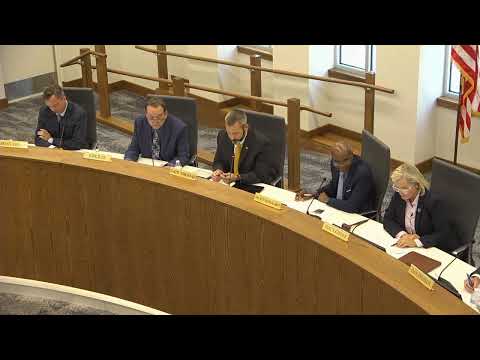
The council did not take formal action. Presenters said they would return seeking endorsements and requests for funding or assessments from cities along the corridor; no city motions or votes on the rebadging or funding requests were recorded at the June 16 meeting.
The presentation included historical context, references to past federal highway priorities and examples from other interstate projects; presenters repeatedly emphasized the need for a sustained, staffed local effort to keep the project active in federal and state processes.