Get Full Government Meeting Transcripts, Videos, & Alerts Forever!
Get email alerts on the Housing Manufactured Communities topic
No spam. Unsubscribe anytime.
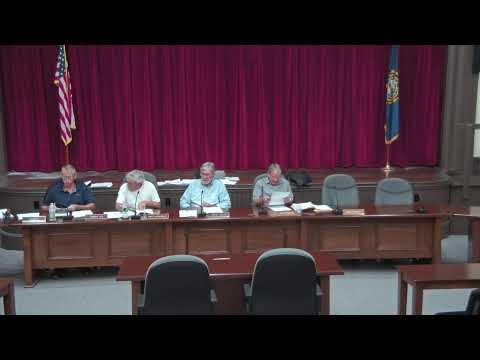
Alton ZBA: Special-exception for Eagles Rest septic ruled unnecessary; variance approved to allow two additional units
Summary
At a Sept. 4, 2025 Alton Zoning Board of Adjustment hearing, the board found that a special exception for an individual septic system in the aquifer protection overlay was not required for the Eagles Rest manufactured-housing community and approved a variance to permit 57 units where 28 are allowed in the rural zone.
Lede On Sept. 4, 2025, the Town of Alton Zoning Board of Adjustment ruled that a special exception was not required to install an individual sewage disposal system within the aquifer protection overlay for Eagles Rest, a 55-unit manufactured-home community, and later approved a variance to allow 57 manufactured housing units on the property where the rural-zone limit is 28.
Nut graf The board’s determinations resolve two linked issues raised repeatedly during the applicant’s rehearing: whether the zoning ordinance’s special-exception provision for “liquid or leachable wastes” applies to a single on-site septic system serving one home within a community, and whether the property is entitled to relief from current density limits. The outcome allows the owner to add two units to a long-established senior community but leaves open the technical and permit work required by state regulators.
Body The case (Z25-15R) concerns Eagles Rest, a manufactured housing community established in 1986 and described in the hearing record as a 55-home park with about 90–95 residents. Attorney Sean Dunphy, representing property owners Walter and Janice Borowski, told the board the application seeks approval for two additional single-family units, one of which would require a new individual septic within the town’s aquifer protection overlay.
Dunphy summarized the procedural history: the owner submitted a building permit in May 2024, was later advised to go through local permitting after a lapse in town records, and then appeared before the planning board and this ZBA. He said the current rehearing focuses on whether Article 600, Section 602(c)(3) of the town zoning ordinance — the provision the staff had applied to require a special exception — actually applies to the single septic system proposed.
Board member Paul Monzioni, with town counsel present, led a close reading of the ordinance language and explained the board’s interpretation: "the article specifically is applying to the liquid or leachable wastes," and if those wastes are "typical of a single family domestic waste, then you don't need the special exception." After discussion the board voted that, for this application, the wastes from the single septic system were typical of single-family domestic waste and therefore the special exception was not necessary. A motion to that effect was made and seconded; the board announced the finding "4 to nothing" that a special exception was not necessary.
Public comment responded to both technical and community concerns. Resident Roger Sample emphasized monitoring of the community water system and noted that the park’s water is tested monthly. Opposing commenter Maureen Kalfas raised affordability concerns, saying many residents are on fixed incomes and describing park rents as a strain for some tenants. Owner Walter Borowski described Eagles Rest as a primarily senior community and said the property historically has had both a community septic system and a number of individual septic systems; he said state engineers previously approved the parcel’s septic loading capacity and that the owner engaged a local firm for the proposed designs.
After resolving the special-exception question, the board considered the density variance requested under Article 400, Section 452(a)(1) to permit 57 units where the rural-zone limit is 28. Applicant counsel and supporters argued the property’s original layout predates the present ordinance (the park was designed when the rule effectively allowed roughly one unit per acre on the 57‑acre parcel), that infrastructure is already in place (roads, community water and partial community septic), and that adding two units would not change the character of the neighborhood. Board members reviewed the variance criteria (public interest, spirit of the ordinance, substantial justice, property values, and hardship) and each stated agreement with findings that the variance met the criteria in this circumstance.
The board then voted to approve the variance (motion, second; vote recorded as unanimous on the motion as read). The board chair thanked town counsel and the parties.
Ending The board’s actions mean the applicant may proceed with local approvals for the two units, subject to any state permitting that remains required (the record shows prior DES involvement and the applicant said it has filed related documents with the state). The transcript records that the applicant had filed a court action about whether the ordinance applies; that court filing was noted as stayed pending the board’s rehearing. The record does not show final engineering, DES permits, or building permits being issued at the hearing; those steps remain post-decision tasks.