
Platte River intergovernmental agreements updated in draft to add flexibility, trim prescriptive language
Get AI-powered insights, summaries, and transcripts
Subscribe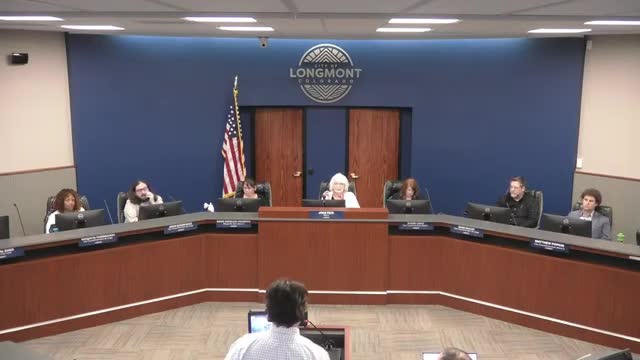
Summary
Platte River Power Authority and Longmont staff presented draft amendments to the four-city organic contract and Longmont’s power-supply agreement at the Sept. 2 study session, emphasizing flexibility for future technologies while preserving PRPA’s governance and bond protections.
Longmont utility and Platte River Power Authority (PRPA) staff presented draft updates to two intergovernmental agreements at the Sept. 2 Longmont City Council study session: the four-city “organic contract” that establishes Platte River and a separate power-supply IGA between each city and PRPA. The updates remove prescriptive technical language, broaden implementation flexibility for future technologies, refine board-member eligibility and adjust administrative details ahead of potential bond and infrastructure actions expected in the next few years.
Daryl Hahn, electric utility director for Longmont Power & Communications, told the council the organic contract — in effect the governance constitution for Platte River — contains dated, specific language that could constrain future choices. “The current language is sort of of a time. It is very specific, and in some cases, it mandates solutions rather than leaving it open for us to kind of change with the times and use the best technology that makes sense,” Hahn said. The proposed changes would, among other things, remove overly prescriptive references to particular resource types and add language allowing modern communication methods where the original contract required hand-delivered paper notices.
Sarah Leonard, general counsel at Platte River, joined Hahn to explain work on the companion power-supply agreement. Hahn said the contract updates emphasize Platte River’s “three pillars” — reliability, cost effectiveness and environmental responsibility — while broadening the authority’s flexibility to respond to evolving markets, technologies and regulation. The organic contract currently expires in 2060; staff said the update would help the owners and Platte River adapt for decades ahead.
Councilors asked for clarification about a clause in Article 1 that limits the size of city-owned new generation resources Longmont can add without negotiating with Platte River. Councilor Popkin noted a provision that Longmont may continue to generate up to the capacity of facilities in service on Sept. 5, 1974, and that new generation is limited to the greater of 1,000 kilowatts or 1% of the city’s peak load. Longmont’s peak is roughly 190 megawatts, so that 1% threshold equates to roughly 2 megawatts.
Hahn and Sarah Leonard explained the threshold is intended to protect Platte River’s revenue base and the authority’s bond covenants. Hahn said small grandfathered facilities (for example, Longmont’s ~500-kilowatt hydro near Lyons) and behind-the-meter generation are exempted, but larger, utility-scale city-owned generation could reduce Platte River’s ability to guarantee revenues to bondholders. “In order for us to issue bonds and keep the bondholders happy, they really need to have assurances that Platte River is going to be able to bring in the revenues,” Hahn said.
The presentation closed with a timetable for next steps: Longmont staff will return with the two IGAs for council consideration next week; PRPA’s board will consider the power-supply agreement on Sept. 25; and staff expect signings in October if councils and the board approve the drafts.
Why it matters: The organic contract and power-supply IGAs shape how Longmont and its three partner cities (Fort Collins, Loveland and Estes Park) govern Platte River and procure energy for municipal utilities. The proposed edits remove dated specifics and add flexibility to adopt new technology, but they preserve governance constructs that PRPA and the owner cities consider critical to financing, reliability and shared decision-making.
What’s next: Council was asked to review the IGAs next week; the PRPA board will review the power-supply agreement on Sept. 25. Hahn and Leonard urged councilors to flag specific language concerns before the approval vote so staff can reconcile owner-city differences across the four agreements.
Sources: Presentation by Daryl Hahn and Sarah Leonard at the Sept. 2 Longmont City Council study session; council Q&A on Article 1 limitations for local generation.