Get Full Government Meeting Transcripts, Videos, & Alerts Forever!
Get email alerts on the City Budget Restructuring topic
No spam. Unsubscribe anytime.
Denver leaders preview agency restructures and service impacts as budget briefings begin
Summary
City leaders from four agencies outlined reorganizations and cost‑saving measures during a mayor‑council briefing, including absorbing the Office of Special Events into Denver Arts & Venues, shifting some positions off the general fund, and warning of modest delays in project pipelines and inspections.
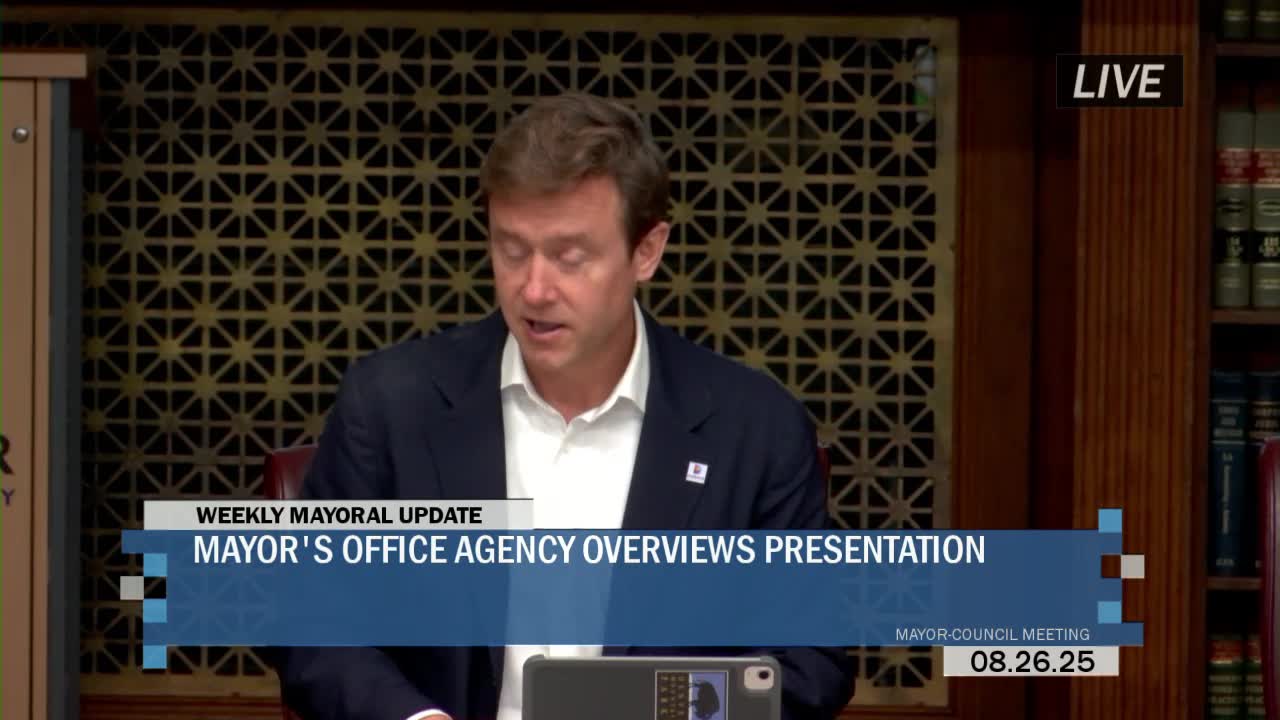
Denver’s mayor and city council on Tuesday heard briefings from four city agencies about organizational restructuring aimed at preserving public programs while closing a budget gap.
The presentations from the Climate and Sustainability office (CASER), the Office of Children’s Affairs, the Department of Transportation & Infrastructure (DOTTI) and Denver Arts & Venues reviewed plans to streamline internal operations, shift some personnel costs to special funds, and absorb the Office of Special Events into Arts & Venues. Agency leaders warned the changes are intended to preserve core services but could lengthen timelines for some projects and reduce inspection or weekend coverage in limited cases.
City officials said the briefings are part of a multiweek budget review process that includes public and private sessions for council members ahead of the formal budget release and hearings. The changes are largely administrative and programmatic at this stage; several agencies said they will return with ordinance or rule changes where required.
Liz, the lead presenter for the city’s climate office, told council members the office was set up five years ago and is moving from a startup structure to a more integrated model. “We were created 5 years ago. We opened our doors in the 2020, in the middle of COVID,” she said, describing a reorganization that consolidates program delivery, preserves community grant funding and shifts some aligned positions to the Climate Protection Fund.
Office of Children’s Affairs Executive Director Jess described a reorganization that groups early childhood, out‑of‑school programs and youth workforce efforts to reduce internal silos and improve access for families. Jess said longtime programs such as Head Start will continue under the new structure; the office currently serves more than 1,100 children through Head Start and early Head Start programs.
Amy Ford, speaking for DOTTI, emphasized that the department kept project delivery and trash collection staffing intact while seeking administrative efficiencies. “We did not touch project delivery,” she said, noting the department eliminated some vacant or duplicative supervisory positions and may see slower movement on nonpriority projects as vacancies are worked through. Ford warned that some services—such as weekend inspections for horizontal (transportation) projects—could be reduced in frequency in limited cases.
Gretchen Holler, executive director of Denver Arts & Venues, said her agency will begin absorbing the Office of Special Events’ budget and personnel now so general‑fund relief starts this fiscal year. “We are planning to absorb the budget and personnel of the 7 FTEs of the Office of Special Events starting this year,” she said, and outlined a timeline for a rapid improvement event, rule updates and possible ordinance amendments this fall.
Council members pressed agency leaders for measurable outcomes. “What is still sort of missing for me is how is that going to make a difference?” Councilman Sawyer asked, requesting clearer performance metrics on service delivery, timing and employee morale. Council members also raised practical concerns including streamlining rules for small neighborhood events, timelines for curbside and right‑of‑way programs, and how youth and food security programs are being handled across agencies.
Agency leaders described several concrete staffing and program moves already decided or underway: shifting some positions from general fund to special‑revenue funds; eliminating vacant positions; consolidating administrative functions; starting a rapid improvement event with PEAK Performance to identify efficiencies across departments; and moving specific programs to other agencies where infrastructure already exists. Jess said the city plans to move the city’s Tasty Food (free meals for children) administration to the Department of Public Health & Environment and to move youth violence prevention work to the Office of Social Equity & Innovation to leverage existing operational capacity.
Officials said the work is intended to protect dollars that go directly to community programs while trimming internal overhead. Several presenters noted that some adjustments will require ordinance or rules changes and that they will return to council with proposals and public hearings where required. Gretchen said the ordinance creating the Office of Special Events (2021) may be amended in October or November depending on the results of the cross‑department review.
Council members and agency directors agreed to continue briefings and one‑on‑one followups as the budget process continues. Council members asked that subject‑matter experts and rank‑and‑file employees be included in PEAK’s improvement work and that communications and community outreach be embedded in program changes so residents see clearer, faster service rather than extra administrative barriers.
The briefing did not produce any formal votes. Agency directors said they would return with detailed budget numbers, proposed ordinance language where necessary and performance metrics during subsequent budget sessions and before hearings.
Looking ahead, officials said the city will hold additional public briefings and multiweek private briefings for councilmembers as the administration finalizes budget details and ordinance proposals. The presenters framed the reorganizations as intended to protect core services while finding administrative savings; council members repeatedly asked for clearer metrics and timelines to assess whether the changes meet that goal.