
Harm Reduction Action Center urges Denver to expand evidence-based overdose response as deaths rise
Get AI-powered insights, summaries, and transcripts
Subscribe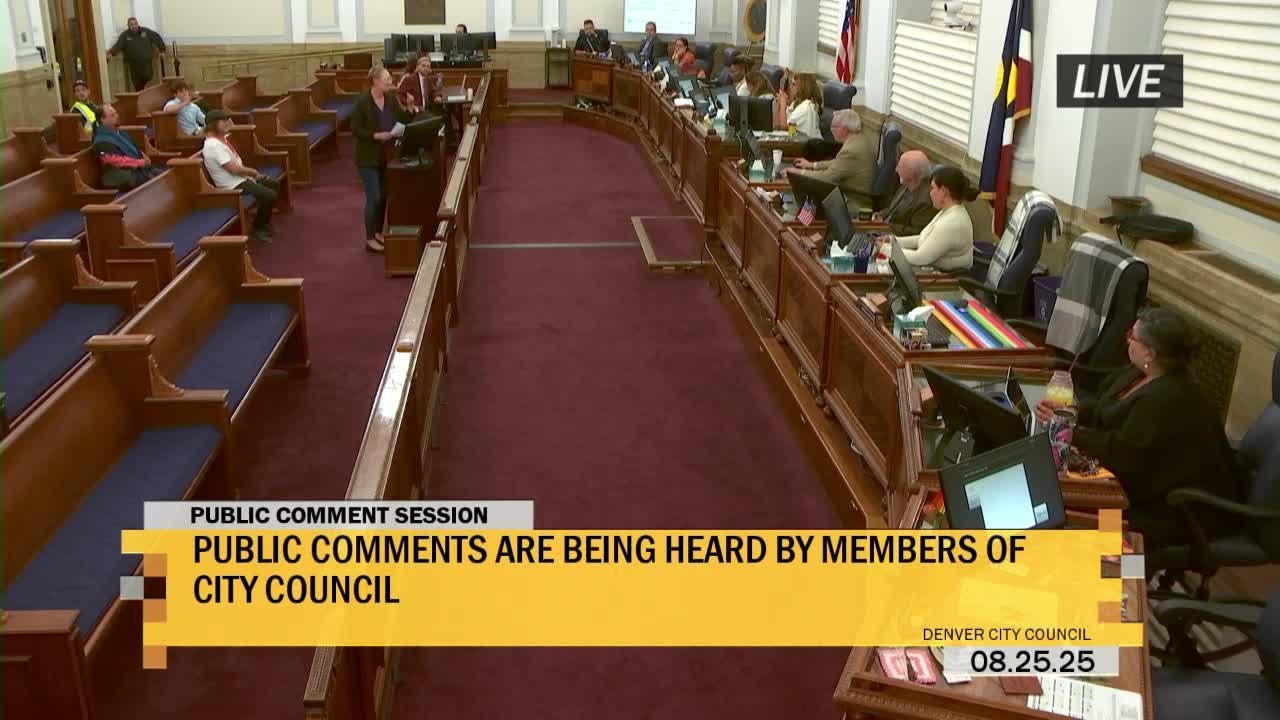
Summary
Lisa Rayville, executive director of the Harm Reduction Action Center, told the City Council that overdose deaths in Denver are rising and urged the city to fund and use every evidence-based tool to reduce public overdoses and fatalities.
During public comment at the Aug. 25 Denver City Council meeting, Lisa Rayville, executive director of the Harm Reduction Action Center, described an escalating overdose crisis in Denver and urged elected officials to adopt evidence-based responses instead of criminalization.
“351 folks have died already this year in Denver,” Rayville said, adding year-to-year counts she cited: “483 last year, 598 the year before that.” Rayville said overdose has been the leading cause of death among people experiencing homelessness in Denver for seven years and that arrests, forced treatment and incarceration are ineffective responses. “We know that law enforcement can't arrest their way out of drug use or they simply would have already done so,” she said.
Rayville thanked Denver Health for sponsoring a proclamation for Overdose Awareness Day and said the event offers “a moment of grief, rage, reflection, and action.” She described the Harm Reduction Action Center as a collaborative partner with the city for 23 years and urged support for “every evidence based tool in the toolkit” to reduce public drug use and deaths. “It does not have to be like this. We can do better,” she said.
Discussion only: the remarks were part of public comment; no formal policy action or vote occurred on the council floor during this session.
Requests and direction sought: Rayville urged the council to support harm-reduction measures and to fund and implement evidence-based interventions to reduce public overdoses and overdoses among people who are unhoused.
Background: The speaker characterized the current drug supply as “unregulated” and said that frontline grief and loss have intensified. She urged that the city and partners pursue nonpunitive, public-health approaches.
Next steps: No formal motion was presented during public comment; Rayville’s remarks requested that council members and city departments consider harm-reduction interventions and funding during legislative and budget deliberations.