
Denver residents urge council to reject proposed changes to at‑large council seats
Get AI-powered insights, summaries, and transcripts
Subscribe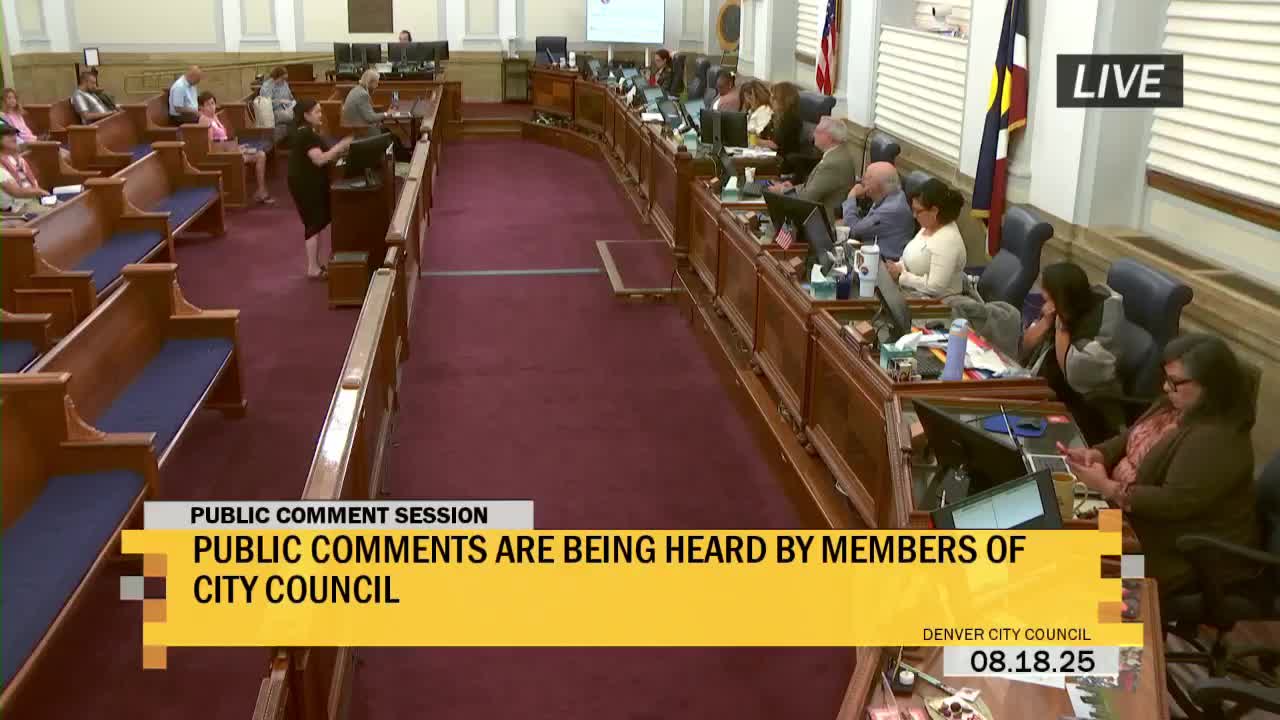
Summary
During the Aug. 18 public comment period, multiple Denver residents urged the City Council to reject a proposed change to how at‑large council seats are elected, saying the plan would reduce voter choice and not increase turnout.
Dozens of Denver residents used the city council’s Aug. 18 public comment period to oppose a proposed change to how the council’s at‑large seats would be elected, saying the plan would limit voter choice and not fix low turnout.
The speakers — who identified themselves as residents of Districts 5, 9 and 10 and as organizers — told the council the proposal “looks for a problem” and should be withdrawn or substantially re‑examined. "This is a solution that is looking for a problem," said Yolanda Calderon, a resident of District 10. "I urge you to thoroughly reexamine the issue before you and reject this insufficiently vetted proposal."
Why it matters: At‑large seats represent citywide constituencies, and how those seats are elected affects whether candidates must appeal to the entire city or to narrower groups. Speakers said the proposal could reduce the ability of voters to support multiple preferred candidates and could undermine diversity and trust in the process.
Several speakers urged the council to pursue alternative measures to increase turnout instead of changing the voting method. Anna Gelt of District 9 said, "If the council seeks to increase voting in municipal elections, hold them in November when turnout is greater." Laurie Kagan, representing the Denver chapter of Together Colorado and identifying herself as a District 5 resident, cited 2023 turnout data, saying "38% of active registered voters voted in the first election and 32% in the runoff," and warned that runoffs can depress participation and increase costs.
Opponents argued the proposal would reduce voter flexibility. Candice DeBaca told the council she opposed the bill going to a vote that night and called it "a bastardized version" of prior reform conversations, saying it could prevent voters from choosing two preferred at‑large candidates if both fall into the same seat category.
Speakers also raised concerns about potential gaming of the system, outside spending and the creation of "kingmaker" dynamics that could concentrate influence in particular races. Kagan said the proposed model "makes space for dark money" and could let organized spending determine winners.
The remarks were delivered during the half‑hour general public comment session; the transcript does not record any council response or a formal council vote during that session. Several speakers said the bill was scheduled for a vote that night and urged council members to delay or reject it.
Next steps: Commenters urged council members to reexamine the proposal, consider moving municipal elections to November, or explore alternative changes such as staggering at‑large seats. The council did not make formal remarks in the public comment period recorded in the transcript.