Get Full Government Meeting Transcripts, Videos, & Alerts Forever!
Get email alerts on the Budgeting topic
No spam. Unsubscribe anytime.
Fort Collins moves to simplify budget books, tie budgets to strategic plan and revamp council onboarding
Summary
City financial leaders told council they will phase out aspects of the current BFO process in favor of clearer, more visual budget presentations tied more closely to strategic plans, while launching a revamp of council onboarding and program‑level service inventories.
City financial leaders presented a multi‑year plan to simplify Fort Collins’ budget process, align the budget more directly with strategic plans, and expand council onboarding to give new council members earlier and clearer context for fiscal decisions.
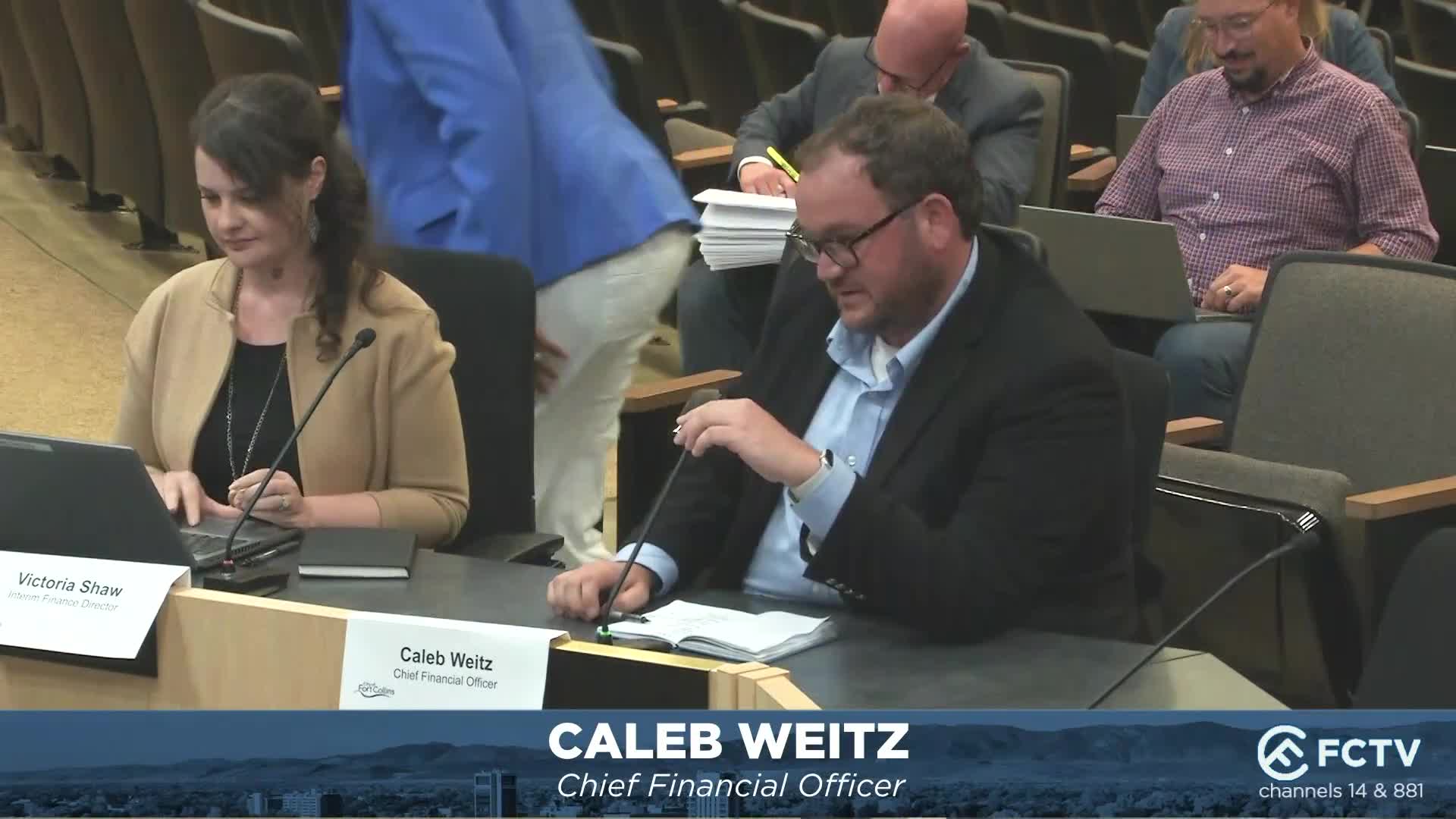
Caleb Weitz, the city’s chief financial officer, said the review was initiated after council feedback on the existing Budgeting for Outcomes (BFO) system. Victoria Shaw (on special assignment as budget lead) summarized findings from BFO and said staff heard a steady call for transparency that is also digestible: “We published 1,800 pages of narrative for our currently adopted budget,” she said, and residents and council need clearer visuals and better context tying sources of funds to uses.
Staff proposed a transitional approach: maintain existing systems for the near term while redesigning how budget information is presented. The timeline staff presented calls for a transitional 2027–28 budget that preserves current IT platforms and inputs, and a more extensive redesign linked to strategic planning for the 2029–30 cycle that would include interactive visuals, program‑level inventories, and year‑to‑year forecasts. Staff said Government Finance Officers Association (GFOA) best practices guided the effort.
Shaw described proposed changes: move from long narrative “offers” to condensed program summaries with longitudinal charts showing funding over time; present a clearer distinction between restricted (dedicated) revenues and unrestricted general fund; evaluate base services alongside enhancement requests; and build program inventories and level‑of‑service definitions so future decisions are more data‑driven.
Council asked detailed questions about bias, metrics, and user‑facing displays. Councilmember Julian pressed staff on how the process will handle entrenched program owners who may resist changes; Weitz said the goal is to increase objective, measurable outcome metrics and acknowledged that work to mature metrics will take multiple years. Several councilmembers urged stronger scenario planning for priorities such as affordable housing, cost‑recovery policies for recreation and cultural services, and fee policies.
Staff also proposed a retooled council onboarding program, including two short retreats to ground new members in long‑range plans and to set clear priorities and expectations for council‑manager roles. Rupa Venkatesh and the leadership team will help design the onboarding sequence and said onboarding is an ongoing process, not a single event.
Ending: Staff will begin detailed process design in the fall and return to council with implementation details and examples of the proposed visual budget format. Councilmembers suggested small working sessions with staff to refine priorities and asked that staff include examples from peer cities and clearer examples tying proposed changes to potential budget trade‑offs.