Get Full Government Meeting Transcripts, Videos, & Alerts Forever!
Get email alerts on the Right Of Way Vacation topic
No spam. Unsubscribe anytime.
Council approves Broadmoor request to vacate portions of Holly Avenue and First Street
Summary
The Colorado Springs City Council voted unanimously to approve a Broadmoor-led application to vacate about 2.13 acres of public right of way on Holly Avenue and First Street, with conditions preserving utility easements and prohibiting new connections to adjacent neighborhood streets.
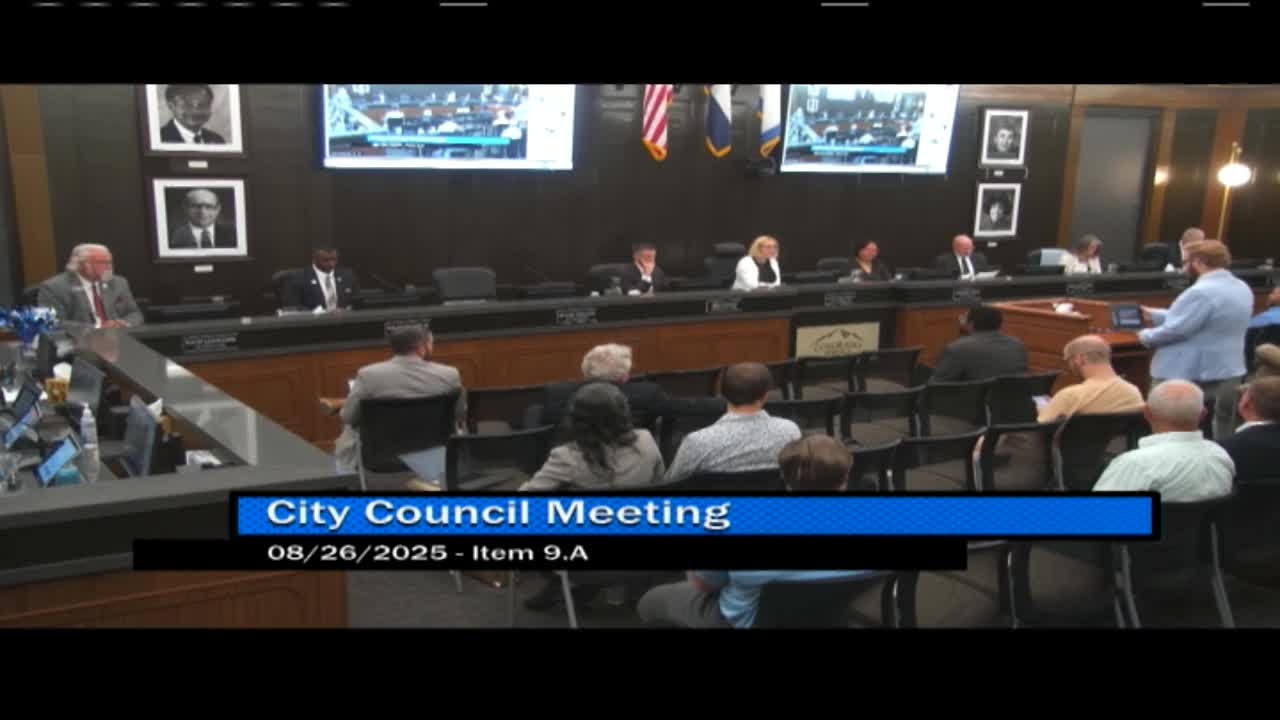
Colorado Springs — The City Council unanimously approved an ordinance Tuesday to vacate portions of Holly Avenue and First Street northwest of First Street and Lake Avenue, allowing the Broadmoor to assume private ownership and maintenance of roughly 2.13 acres of right of way while preserving public utility and drainage easements. Council voted 9-0 after staff and the applicant described changes intended to protect the surrounding neighborhood.
City planning staff said the vacated right of way will “snap” to the adjacent zoning districts if the ordinance is adopted in its final form and that the applicant added restrictive language to the vacation plat to limit future access. Ethan Schafer, an urban planner with the City Planning Department, told council the plat includes notes reserving easements for public access, drainage, improvements and utilities and specifically prohibits creation of any vehicular or pedestrian connections from the vacated area to Hazel, Elm, Maple or the adjacent segment of First Street.
The vacation stems from long-running operational conflicts where commercial trucks and event vehicles at the Broadmoor frequently encounter parked cars on the corridor, obstructing access to loading docks and event support areas. Chris Lever, a principal at NES representing the Broadmoor, described the corridor as effectively a dead-end that serves the hotel, Broadmoor Hall and related facilities and said the Broadmoor will continue to maintain the existing landscape wall that separates the property from the residential streets.
“We think the right-of-way vacation will allow the Broadmoor to better manage how that corridor is used,” Lever said. He and Broadmoor President and CEO Jack Timoli emphasized the continued availability of loading-dock access for the World Figure Skating Museum and the preservation of blanket easements for utilities. Timoli said Broadmoor staff will continue to direct traffic and ask parked drivers to move when staging large vehicles for events such as the Space Symposium.
Some neighbors initially expressed concerns that vacation would open the door to commercial traffic and reduce neighborhood protections put in place during earlier land-use approvals. Schafer told the council staff received six public comments during the process; one commenter later indicated the restrictive language included in the plat addressed his concerns. Resident Roger Matthews, who lives on Maple, told the council the neighborhood’s current ad hoc parking pattern can become “a free-for-all” during large events and asked whether the Space Foundation or event hosts control parking during major events.
Council members asked whether the existing landscape buffer and median installed as conditions of the Broadmoor’s 2004 approvals would remain. Both staff and the applicant confirmed those features will be preserved and that the city will retain utility and maintenance easements under the vacated areas. Councilman Donaldson asked whether the World Figure Skating Museum supported the proposal; staff said the museum had provided written confirmation that it did not object and that its loading access would remain.
Outcome: Council approved the right-of-way vacation on a 9-0 vote. The plat language and the ordinance include reserved utility easements and a prohibition on creating new connections into adjacent residential streets. The city attorney indicated minor language edits were made between first and second reading to ensure consistency with city code; staff noted the city attorney may recommend a third reading because of those substantive edits.
The council’s action does not change the city’s reservation of rights for public utilities, and the county assessor will allocate any parcel changes per applicable state statute and county practice.