
Pierce County adopts SEPA exemption increases and new cultural-resource rules amid split council votes and multiple amendments
Get AI-powered insights, summaries, and transcripts
Subscribe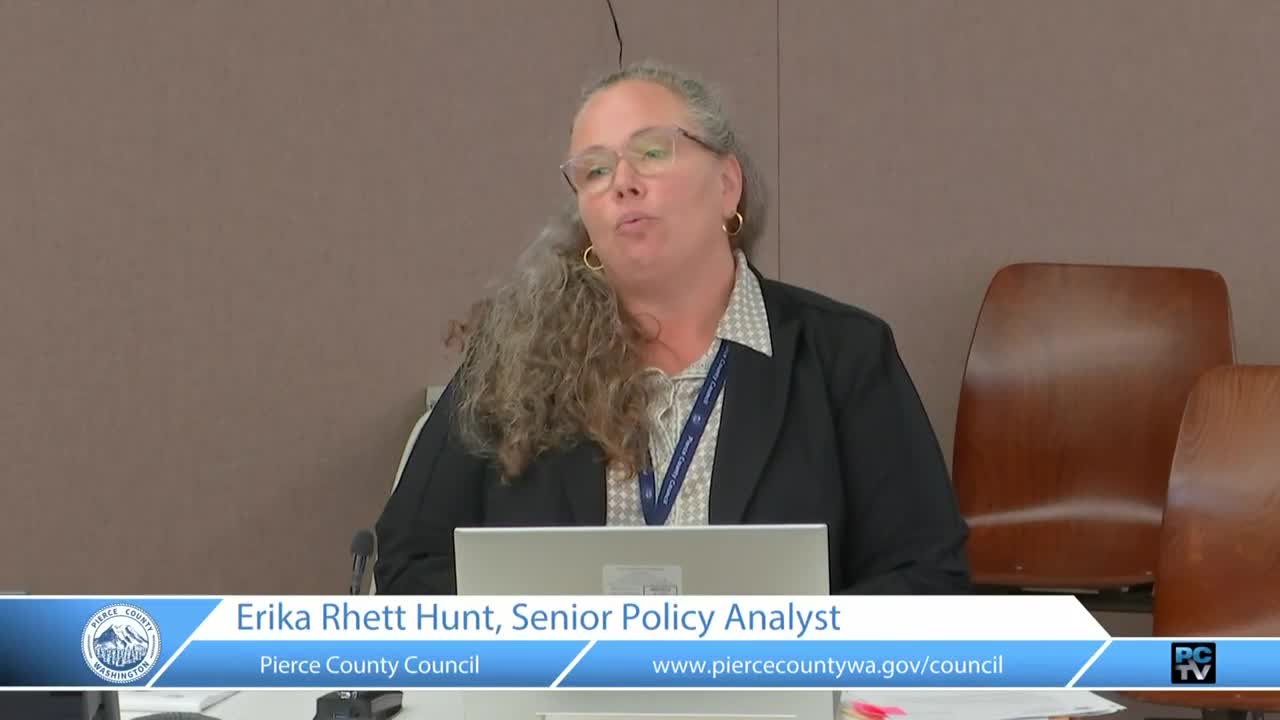
Summary
Pierce County on Tuesday adopted an ordinance to raise SEPA categorical exemption thresholds for larger single-family and multifamily projects in the urban growth area and to establish a county cultural-resource screening and mitigation process; the ordinance passed 4-3 after nine amendments and public testimony from tribal representatives and builders.
Pierce County—ouncil members on Tuesday passed a contentious ordinance that raises State Environmental Policy Act (SEPA) categorical exemption thresholds for certain residential projects and creates a new Pierce County code chapter establishing a cultural resources screening, risk assessment and mitigation process.
Why it matters: Council majority supporters said the ordinance streamlines permitting for more residential development and implements protections for cultural resources outside the SEPA checklist process; opponents warned the changes could add study costs, delay projects and put new burdens on homebuilders. The debate included nine council amendments that changed screening rules, clarified exemptions and removed obsolete language.
What the ordinance does: Erica Rhett Hunt, council staff, summarized the measure (O2025-522S) as proposing higher SEPA exemptions in the urban growth area (UGA) — for single-family developments and multifamily developments — and adopting a new Chapter 18D.60 (Cultural Resource Protection). Under the proposal, project applications that would no longer trigger SEPA review must instead go through an administrative prescreening process for cultural resources; the new code formalizes how staff screen projects using the state resource database and when projects must complete a professional risk assessment or cultural-resource survey. Rhett Hunt said tribal notification, inadvertent discovery plans and compliance with state and federal guidance are part of the proposed approach.
Key contested points and council action: During debate council members and staff negotiated multiple amendments. The council adopted several technical and substantive changes that narrowed applicability and added clarifications: amendments added dates to findings, exempted minor ground-disturbing repair and maintenance and activities that do not require permits, allowed the department to waive a required risk assessment for some shoreline projects during pre-application review, removed an unused definition for "traditional cultural place," and revised curation language to require DAHP permitting where state law applies. Several other amendment attempts failed. After public testimony and discussion, the ordinance as amended passed on a 4-3 vote.
Public testimony and tribal concerns: The record shows organized participation from tribal and developer stakeholders. Brandon Raydon, Tribal Historic Preservation Officer with the Puyallup Tribe, addressed the council and cataloged known sites and tribal concerns, including petroglyphs, village sites and burial locations across the county. He urged protections and argued that archaeological and cultural data are countywide and not limited to a few places.
Developers and builders also addressed the council. Aaron Holmberg of the Master Builders Association of Pierce County said the industry remains concerned about costs and said the association will watch implementation closely. Multiple builders and land developers described the real costs they had faced when cultural studies were required and asked for clearer data-sharing, predictable exemptions and operational guidance.
Implementation and process notes: The code establishes a prescreening step at pre-application or application review. Screening uses the state architectural and archaeological record system (WISAARD) and notifies tribes of results. If a parcel is adjacent to a documented cultural resource, within 500 feet of a known resource, involves ground-disturbing activity within shoreline jurisdiction, or a professional archaeologist identifies probable adverse effects, the screening may require a risk assessment and, if indicated, a cultural resource survey with field work. The county advised that existing requirements under state and federal law for inadvertent discovery (and DAHP permitting) remain in force.
Council members said changes are intended to balance housing goals and cultural protections. Council member Denson said the ordinance paired expanded exemptions with a formal cultural resources program and called it a significant step toward both building more housing and protecting cultural resources. Other members warned that the new requirements could increase permitting complexity and costs and said they wanted to watch implementation closely.
Ending: After a public hearing that included testimony from tribal representatives and local builders, the council adopted O2025-522S as amended. Council members said the department and the tribes will need to work through implementation details and the council may revisit code language after staff experience with screening and risk-assessment workloads.
(Direct quotes are attributed only to speakers shown in the article speaker list.)