Get Full Government Meeting Transcripts, Videos, & Alerts Forever!
Get email alerts on the Clean Water Utility topic
No spam. Unsubscribe anytime.
Public comment urges Island County to use Clean Water Utility LID allocation; commissioners to discuss in budget
Summary
A public commenter reminded the Board of Island County Commissioners that 4.5% of Clean Water Utility funds were designated for low-impact development (LID) stormwater strategies and asked whether those funds have been used.
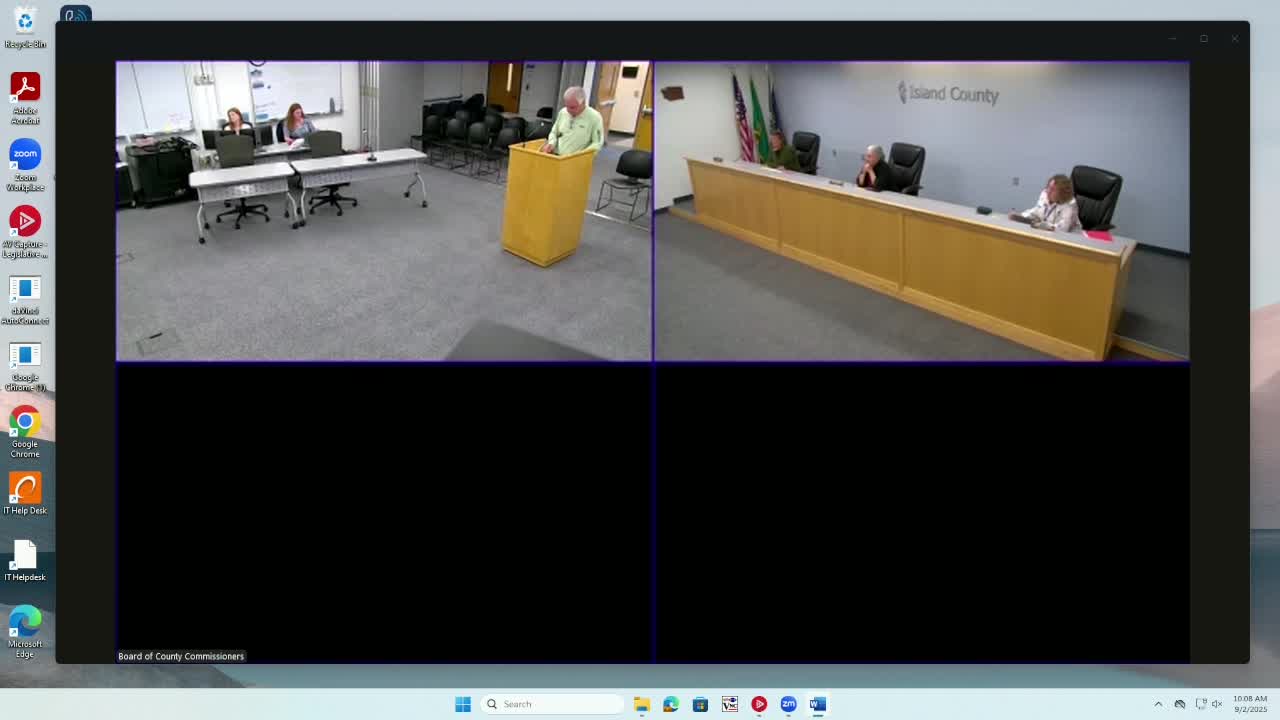
A Langley resident told Island County commissioners on Sept. 2 that a portion of the county’s Clean Water Utility funds was originally intended to support low-impact development stormwater strategies and asked the board to confirm whether the money has been used.
“I know you're gonna talk about the clean water utility tomorrow in your budget, and just wanna remind you that… 4 and a half percent of the funds were dedicated for low impact development, stormwater strategies to be implemented in that county through the code,” Bill Poss said during public comment.
Poss said he has advocated previously for use of those funds and asked commissioners to check whether any such projects have been funded. The transcript contains no county response that confirmed whether the 4.5% set-aside has been spent; commissioners did not take formal action on that question during the Sept. 2 meeting.
The remark came during public comment ahead of a scheduled budget discussion. Commissioners later noted they had canceled two budget meetings for the week and planned to approve the budget in December rather than October, giving staff additional time before decisions are finalized.
No formal directive or vote about Clean Water Utility spending was recorded on Sept. 2. The source of the 4.5% allocation was described in the meeting as a provision “through the code,” but the transcript did not specify the exact code section or whether funds have been obligated or spent.
County staff or commissioners would need to provide a follow-up to state whether the LID allocation has been spent or remains available for projects.