Get Full Government Meeting Transcripts, Videos, & Alerts Forever!
Get email alerts on the Environmental Remediation topic
No spam. Unsubscribe anytime.
County staff proposes reserving $2 million of Monsanto settlement funds for site preparation; $5.5M left for later decisions
Summary
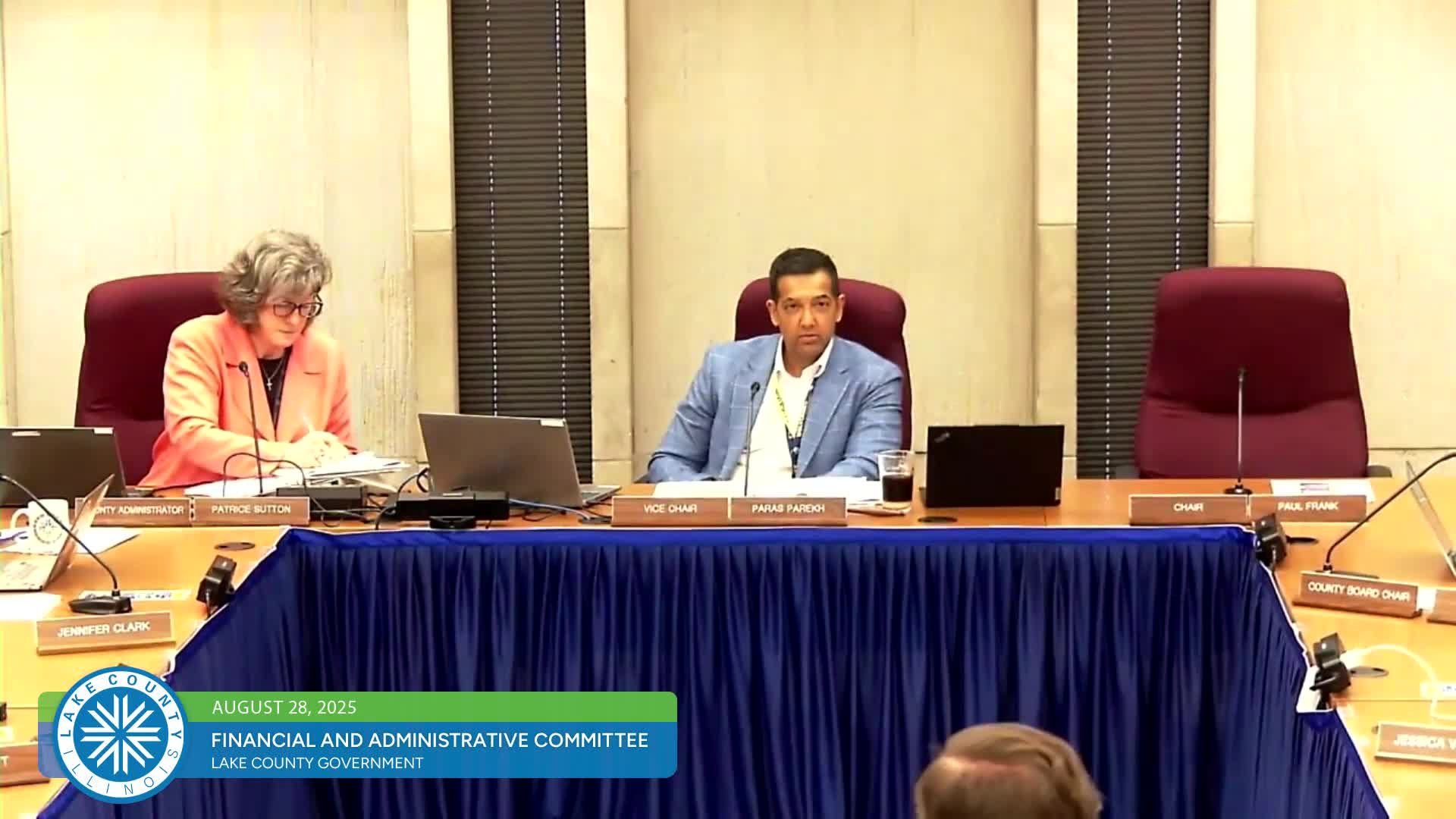
Lake County staff told the Financial Administrative Committee it received $7.5 million from a 2023 Monsanto settlement and proposed reserving $2 million to support site preparation and Superfund-site remediation tied to economic development opportunities; the committee directed staff to return next week with a formal action to lock $2 million.
Deputy County Administrator Matt Myers briefed the Financial Administrative Committee on Aug. 28 about $7.5 million Lake County received from a 2023 settlement related to polychlorinated biphenyls (PCBs) manufactured by Monsanto. Myers said the settlement originated from a class action that produced a $550,000,000 pool; Lake County received the maximum allocation available for impacted jurisdictions touching Lake Michigan, which was $7,500,000. He said the settlement language provides broad remedial flexibility — funds may be used for remediation, stormwater and water-quality work, education or held in reserve — and that the county previously appropriated the funds to the general fund in 2023 pending further analysis. Myers recommended reserving up to $2,000,000 of the county’s share for site preparation and costs related to Superfund-site cleanup that could unblock economic development opportunities, leaving $5,500,000 for subsequent decisions and a formal process to solicit projects or support county priorities. Committee members pressed staff on details including how other municipalities (North Chicago, Waukegan, Zion and others) had used their settlement allocations, whether the county should create a special revenue fund to fence the money and interest, and how to require applicants to demonstrate matching funds or federal grant applications. Patrice Sutton, the county administrator, said creating a special revenue fund and defining eligible uses would be possible and would formalize the “fences” around the money. Several committee members emphasized environmental remediation along the Lake Michigan shoreline and Superfund sites such as Johns Manville and local brownfields; some said they favor prioritizing county-owned projects or internal stormwater and water-quality projects while others supported targeted partnership funding with municipalities to advance lakefront cleanup, public access and redevelopment. Myers said staff will return next week with an action to lock $2,000,000 in place as a commitment and will continue analysis and outreach on potential uses for the remaining $5,500,000. Committee members requested additional information about how other jurisdictions spent their settlement shares, whether interest earnings should be restricted to related uses, and clarified that timing and contracting details would be developed before any awards are made.