Get Full Government Meeting Transcripts, Videos, & Alerts Forever!
Get email alerts on the Foia‑vexatious‑requests topic
No spam. Unsubscribe anytime.
County seeks state change to address surge of AI‑generated and vexatious FOIA requests
Summary
County staff told the Legislative Committee they are experiencing floods of automated and repetitious Freedom of Information Act requests and asked the committee to pursue state law changes allowing public bodies to treat bot‑generated and vexatious requesters as unduly burdensome and to request Public Access Counselor review.
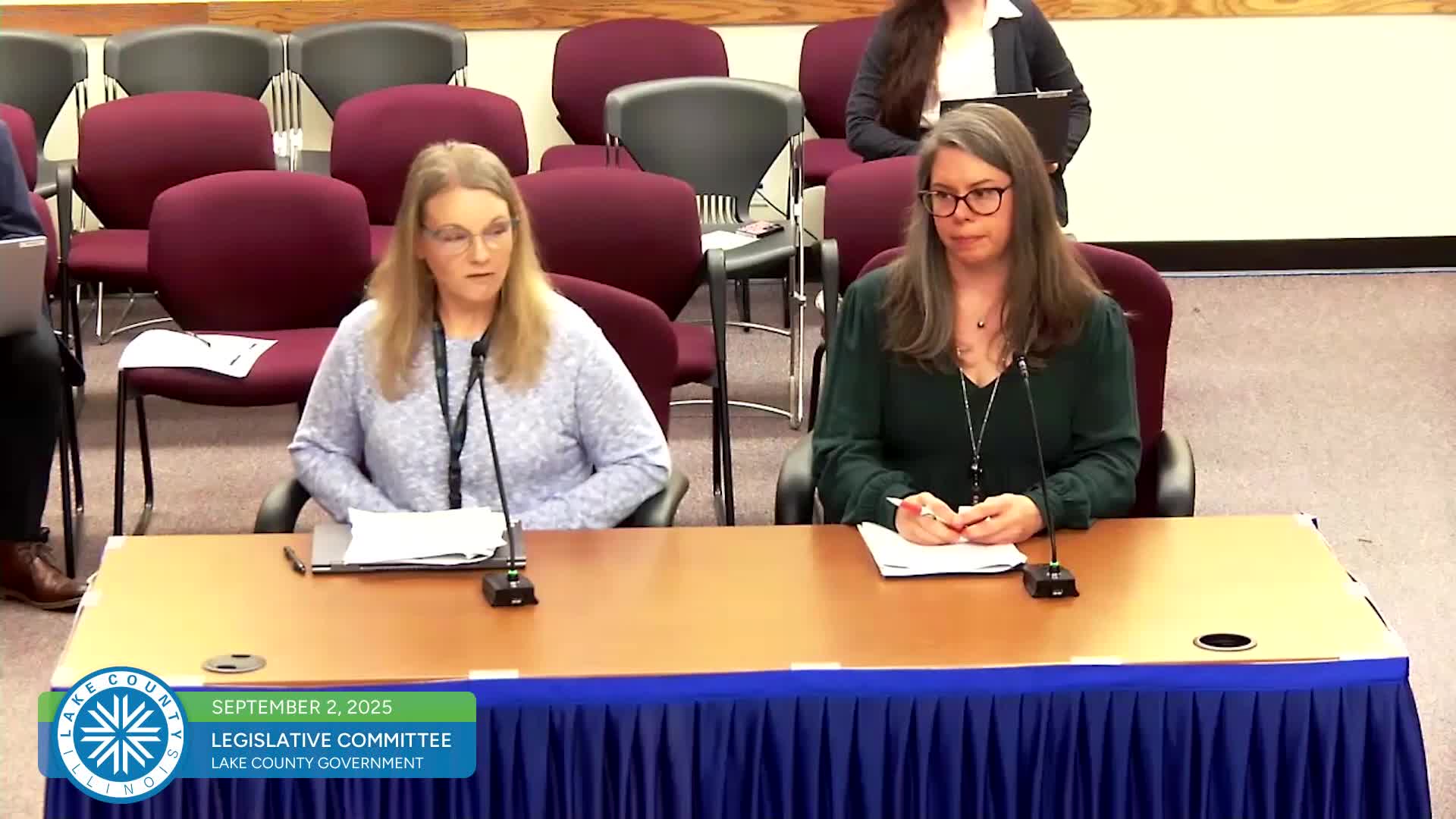
Lake County staff briefed the Legislative Committee on a recent surge in Freedom of Information Act (FOIA) requests that county departments attribute to a small number of individuals and to automated, AI‑generated submissions. Betsy Brandon, assistant to the county administrator and a former FOIA coordinator, told the committee that one individual filed roughly 230 requests across county departments within about 3 1/2 months and that many requests are broad, repetitive and time‑consuming to process.
Betsy asked the committee to support state law changes that would expressly allow public bodies to treat FOIA requests they reasonably believe are bot‑generated as unduly burdensome and to permit referral of repeat, abusive requesters to the Public Access Counselor (PAC) at the Illinois Attorney General’s office for a vexatious‑requester determination. Under the proposal described by staff, PAC could designate a requester as vexatious and permit a public body to decline further responses or seek reimbursement for excessive staff time responding to frivolous requests; staff cited statutes or administrative rules in Connecticut, Hawaii, Maryland and Washington state as models.
Why it matters: County staff said these concentrated, repetitive requests can divert staff from normal duties and, if unaddressed, could force local governments to add staffing or reduce responsiveness to other public records requesters.
Discussion vs. action: Committee members expressed support for the concept and asked for a quantitative escalation schedule and suggested follow‑up language. Staff said they will draft model language and present a formal proposal to the committee.
Details: Committee members recommended an escalating monetary or procedural response and asked that the proposal preserve public access while giving public bodies tools to respond to AI‑driven request volumes. Betsy said the county already works with about 50 FOIA officers in county departments and that the proposed measure is not intended to block legitimate requests.
Ending: Committee consensus was to move the concept forward and direct staff to prepare draft language and an implementation approach for the next meeting.