Get Full Government Meeting Transcripts, Videos, & Alerts Forever!
Get email alerts on the Public Health Funding Medicaid Snap topic
No spam. Unsubscribe anytime.
Lake County health officials ask committee to restore state public‑health grant funding and monitor federal policy changes to Medicaid and SNAP
Summary
Lake County Health Department leaders asked the Legislative Committee to support restoring and increasing the Local Health Protection Grant by $10 million statewide and to monitor federal policy proposals that could reduce Medicaid and SNAP eligibility, which county staff say would raise demand for local services.
Lake County Health Department leaders asked the Legislative Committee to include two health‑policy items in the county’s 2026 legislative program: restore and increase the state Local Health Protection Grant by $10 million statewide and monitor federal policy changes that could reduce Medicaid and SNAP eligibility and increase demand for county public‑health and safety‑net services.
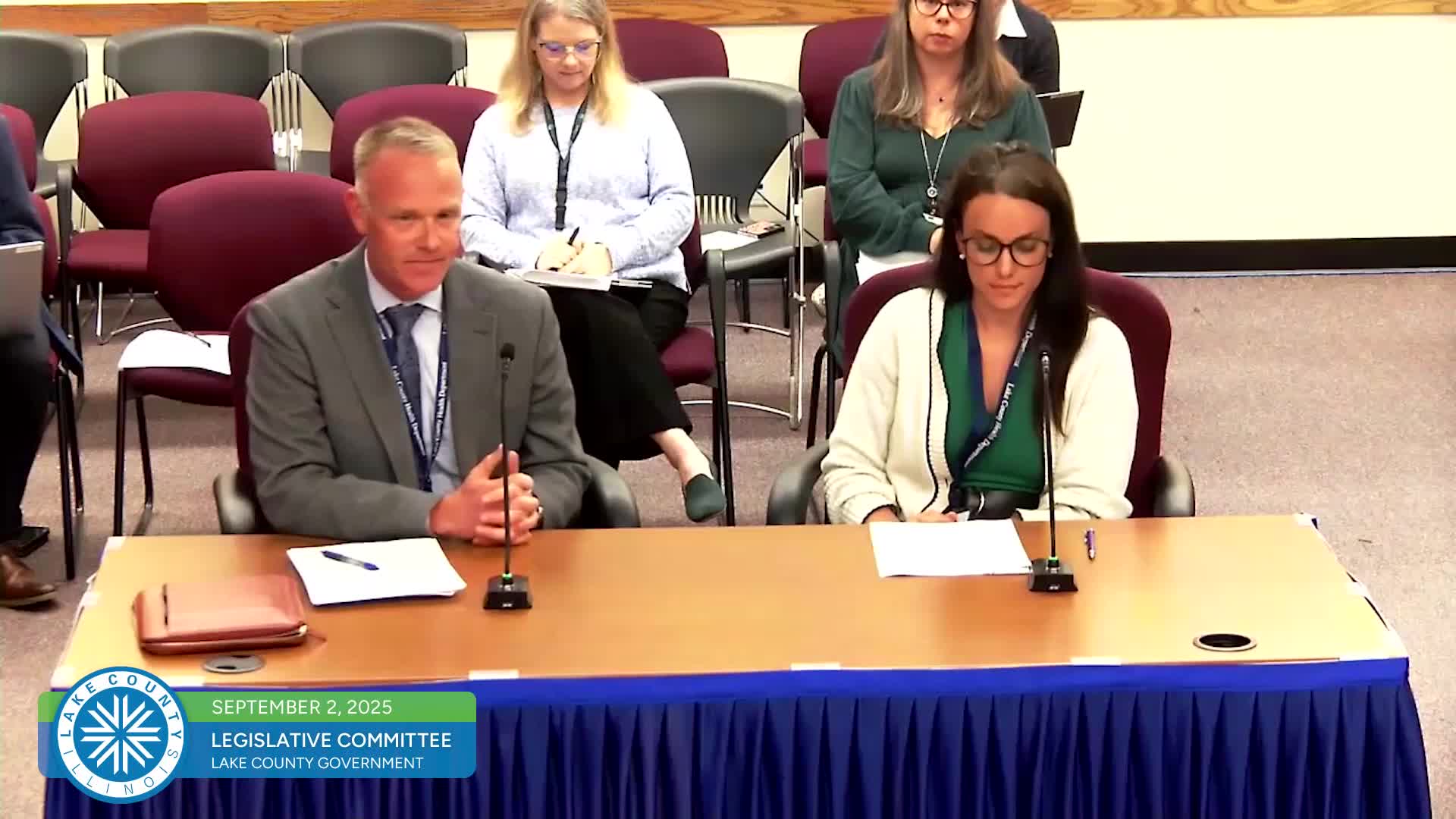
Chris (executive director) and Emily Galber (public policy strategist) explained that the Local Health Protection Grant pays for core, state‑mandated local public‑health services such as food inspections, infectious‑disease control, immunizations and water/septic oversight. Emily told the committee that Illinois ranks 40th among states in state public‑health funding and that the state cut $5 million from the grant for FY2025; the department asked for restoration plus a $10 million statewide increase to support local public health operations.
The health department also asked the committee to monitor federal proposals and reinterpretations it said could reduce Medicaid and SNAP eligibility. Staff told the committee that Medicaid expansion enrollment in Lake County is roughly 27,000 and that approximately 150,000 Illinois residents in the county are on Medicaid (county estimate noted), while the health department serves about 25,000 patients. Emily said an estimated 13,517 health‑department clients use SNAP and that state estimates indicate about 1 in 5 SNAP recipients statewide could be vulnerable to losing benefits under some proposed changes; the department asked the county to track federal and state proposals and ask for sustainable, flexible funding to soften impacts.
Why it matters: County health‑department staff warned that reductions in Medicaid and SNAP would increase ER visits, worsen chronic conditions and strain an already full safety‑net system, and they asked for county monitoring and advocacy to protect program access.
Discussion vs. action: The committee agreed to monitor related legislation and asked the health department to provide additional details on lake monitoring (volunteer lake monitoring program) and to return with a brief for potential inclusion in the legislative packet.
Details: Staff reported uncertainty over the number of people who would lose coverage; they cited state estimates of 330,000 Illinois residents potentially affected by broader federal changes and county estimates of tens of thousands losing coverage depending on how rules are applied. Emily and Chris emphasized the county’s limited capacity to absorb influxes of newly uninsured residents.
Ending: The committee asked staff to monitor proposals and to supply more specific fiscal and programmatic estimates so the committee can consider advocacy positions.