Get Full Government Meeting Transcripts, Videos, & Alerts Forever!
Get email alerts on the Affordable Housing Tax Credit topic
No spam. Unsubscribe anytime.
County planning staff seek state tax credit to boost affordable housing production
Summary
Lake County planning staff asked the Legislative Committee to include monitoring and support for a proposed Illinois state housing tax credit program and to track recommendations from the governor’s missing‑middle housing report that could produce near‑term bills.
County planning and community development staff asked the Legislative Committee to add two housing-related items to Lake County’s 2026 legislative program: (1) monitor and respond to follow-on legislation from the governor’s ad‑hoc Missing Middle Housing Solutions report, and (2) evaluate a proposed state-level housing tax credit that would mimic the federal low‑income housing tax credit (LIHTC) to expand financing for affordable rental construction.
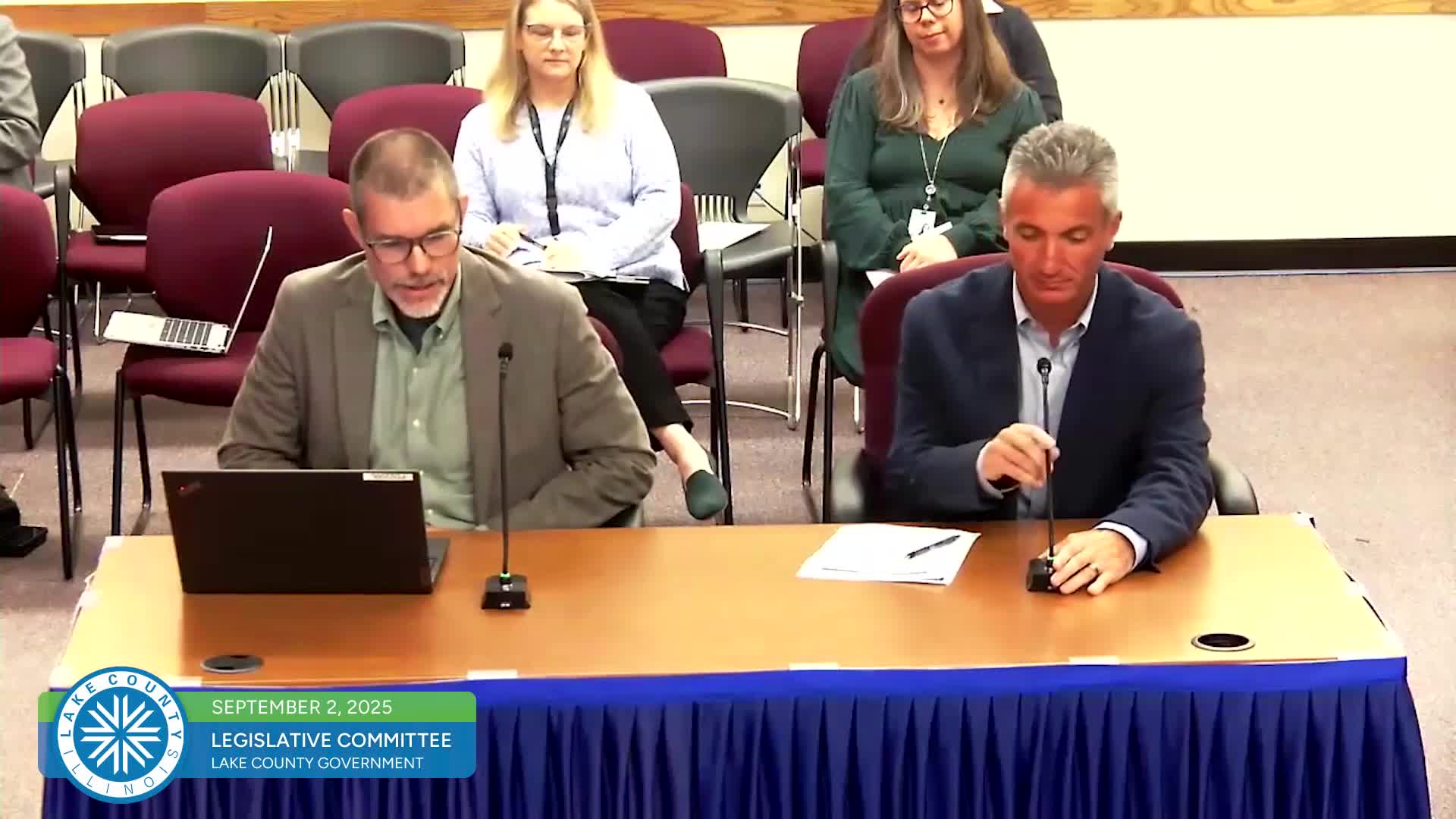
Eric Wagner, Planning, Building and Development Director, and Dominic Strazo, Community Development Administrator, briefed the committee that Illinois currently lacks a statewide tax credit program that mirrors federal LIHTC and that several proposals would establish one. Dominic said one recent proposal (referred to in committee discussion as SB0062) would create a state tax credit administered by the Illinois Housing Development Authority (IHDA) and that County staff’s preliminary ask would be an allocation in the order of $120 million over six years to supplement existing federal credits and expand new-construction opportunities.
Why it matters: LIHTC has been the primary financing tool for new affordable rental construction in the county; state credits would create additional investment capacity and could allow more projects to move forward, particularly when paired with less-competitive 4% LIHTC allocations and local CDBG/HOME funds. Staff characterized the county’s approach as monitoring and preparing to take positions on specific bills once language is filed.
Discussion vs. action: Committee consensus was to move the idea forward as a monitoring priority; staff will draft language for the county’s 2026 legislative program and return with a draft position and bill text, if/when filed.
Details: Staff noted 9% and 4% LIHTC differences (9% awards are more competitive and provide larger financing shares). Staff said state programs in over 20 states have successfully supplemented federal LIHTC allocations. Dominic and Eric emphasized the county’s ongoing role in the Lake County Coalition for Housing and stressed coordination with IHDA and local partners.
Ending: The committee gave staff direction to track missing‑middle report follow-ups and the state tax‑credit proposals and to present a draft legislative position in future committee meetings.