
Council sends staff code‑of‑conduct revisions back to working group after concerns over officeholding ban
Get AI-powered insights, summaries, and transcripts
Subscribe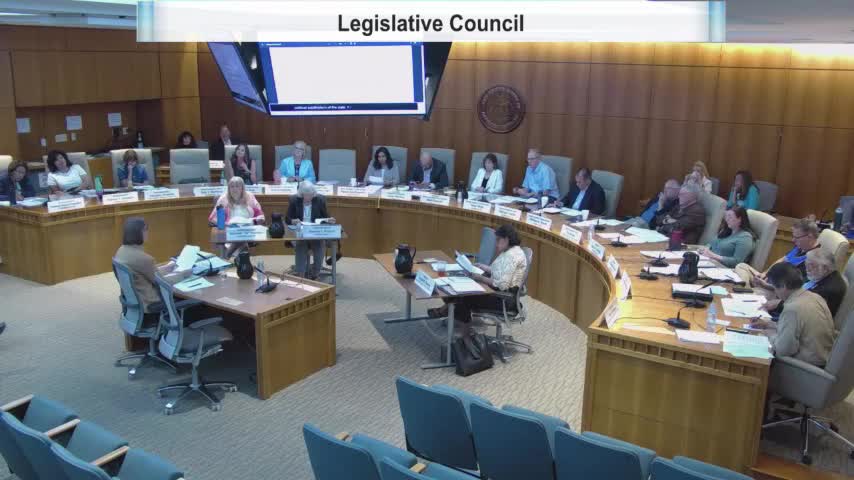
Summary
The council returned proposed code‑of‑conduct changes on legislative employees running for or holding elected office to the working group after members warned a blanket prohibition would exclude tribal, acequia and other local community officeholders and risk losing institutional expertise.
The Legislative Council voted to send proposed revisions to the legislative staff code of conduct back to the working group after widespread concern that a blanket prohibition on legislative staff running for or holding elected office would unduly bar employees who serve in tribal, acequia and other local positions.
The issue matters because the policy governs whether legislative employees — including district legislative aides, session staff and other listed employees — can seek or hold external elected positions. Members warned that a broad prohibition would discourage experienced local leaders from working for the legislature and could force staff to choose between community service and employment.
Council staff explained the genesis of the draft: in January the council adopted language that prohibited legislative staff from running for or serving in elected office and required resignation upon filing or accepting nomination. The working group later identified consequences for temporary session staff and officials who serve in tribal or other local offices and lacked consensus on the breadth of the prohibition. The compromise draft before the council limited the prohibition to elected offices “with the state and political subdivisions of the state” and exempted temporary legislative staff, which would exclude tribal elected office but include acequia officers and land grant trustees because those entities are political subdivisions as described in the draft.
Multiple members objected. Speaker pro tem and several legislators said the prohibition would “unduly burden historic Hispanic communities” and rural areas where residents commonly hold local tribal, acequia or land grant leadership posts. Senator David Gallegos, Representative Patricia Roybal Caballero and others argued the council should avoid cutting off community leaders with deep local expertise. Representative Gail Armstrong and others said they prefer a bright, simple prohibition but warned the current language casts too wide a net.
After extended discussion, Representative (name not specified) moved that the council return the draft to the working group for further work; the motion passed. Council members instructed the working group to explore narrower alternatives, consider partisan versus nonpartisan distinctions, and clarify how any new rule would apply to temporary session staff, tribal officeholders and small local political subdivisions.
Council members asked for a forthcoming alternative that balances avoiding conflicts of interest with preserving the pool of experienced employees who also serve their local communities. The council did not adopt the revised code at the meeting and left the existing code in effect while the working group returns with new language.