Get Full Government Meeting Transcripts, Videos, & Alerts Forever!
Get email alerts on the Surface Water Permitting topic
No spam. Unsubscribe anytime.
State begins rulemaking to take over surface‑water permitting under SB21; draft rules, mapping and fees planned
Summary
NMED said draft surface‑water permitting rules will be released for public comment, with a 60‑day review, and the agency is developing e‑permitting, a surface‑water map and fee proposals; officials estimated a program needing about 57 FTE and roughly $8 million a year.
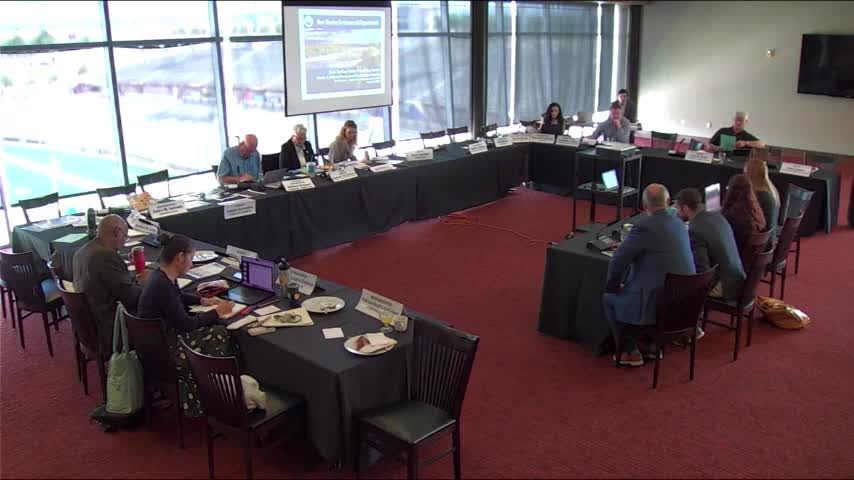
The New Mexico Environment Department on Wednesday outlined a timetable and early design choices for implementing Senate Bill 21, the 2025 law that authorizes a state‑led surface‑water permitting program and a state‑level version of the National Pollutant Discharge Elimination System (NPDES).
Shelly Lehi, chief of NMED’s Surface Water Quality Bureau, told the committee that draft rules for a New Mexico Pollutant Discharge Elimination System (NMPDES) and amendments to existing ground and surface water regulations will be issued for public review at the end of the month and posted for a 60‑day comment period. The department intends to petition the Water Quality Control Commission for rulemaking in December 2025 and to schedule formal rule hearings in 2026.
Key program elements - e‑permit database and mapping: NMED is developing an electronic permitting system and a surface‑water mapping tool to help determine jurisdiction and whether projects require permits. Lehi described a draft mapping product to be available for validation in October and a live mapping tool by the following October. - Staffing and costs: The department estimates the program will require about 57 full‑time equivalents and roughly $8 million per year in operating costs. Lehi said the department is assessing how much of that will be covered by permit fees versus legislative appropriations. - Fee design and equity: Lehi said other states vary in approach; many use a hybrid model of fees plus state funds. NMED will consider application fees, annual fees and special‑study fees, and she identified options for fee exemptions, hardship waivers and minimal‑impact exceptions. Several witnesses told the committee they favor a hybrid funding approach to avoid undue burdens on small communities.
Stakeholder input and tribal consultation NMED said it has engaged a Surface Water Advisory Panel and has initiated government‑to‑government consultation with tribal nations and pueblos. The department plans broader outreach during the public comment period and to provide guidance and training as the program ramps up.
Municipal and stakeholder perspectives Las Cruces utilities and environmental groups said local administration could improve clarity and responsiveness compared with federal oversight, but they cautioned about potential unfunded mandates, fee levels and the costs of complying with new, possibly more stringent standards. Trisha Snyder of New Mexico Wild urged a hybrid approach with fee relief for small wastewater providers; Steven Perez of Las Cruces Utilities described the potential for a more streamlined permitting relationship with state staff but warned that smaller communities may need assistance to meet any new regulatory costs.
Discussion vs. decisions - Discussion: Draft rules, a 60‑day comment period, mapping and e‑permitting timelines, cost estimates and fee options were presented and discussed. - Direction: NMED will release draft rules for comment, continue tribal consultation and develop fee proposals for legislative consideration. - Formal actions: No legislative votes were taken on program design at the hearing.
Ending Lehi asked lawmakers to consider funding choices as the department finalizes rule language and fee structures, and stakeholders urged robust outreach, equity in fee design and training for permittees and local governments.