
Processors and ranchers urge continued support for state inspection, wastewater and site‑development help to expand in‑state meat processing
Get AI-powered insights, summaries, and transcripts
Subscribe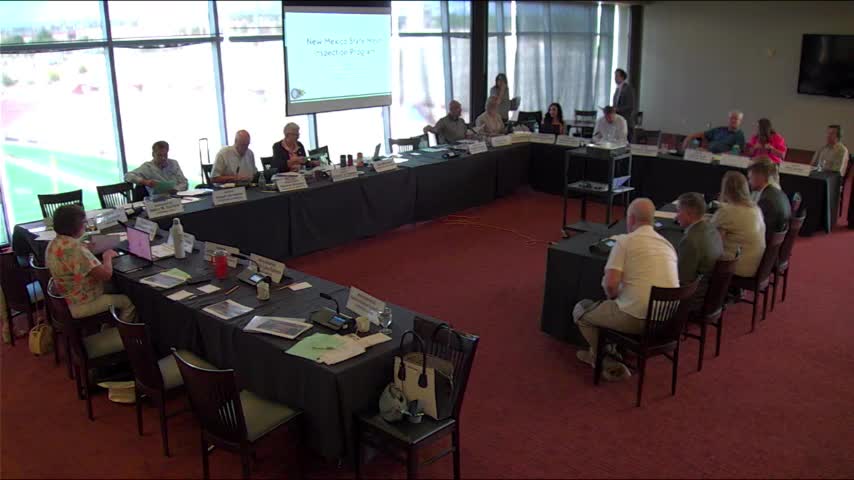
Summary
Processors, ranchers and the newly organized New Mexico Association of Meat Processors told the committee that state inspection authority and targeted grants are needed to keep more New Mexico beef and lamb processed and sold inside the state; they warned of capital, regulatory and wastewater compliance barriers.
Panelists described intertwined economic, regulatory and infrastructure barriers that limit in‑state processing capacity and create uneven enforcement after state inspection lapses. Kayla Schoberg, deputy director of the New Mexico State Meat Inspection Program, said the state is finalizing rulemaking for custom‑exempt slaughter and is preparing to sign a cooperative agreement with USDA’s Food Safety and Inspection Service to establish a state inspection program that meets federal standards.
Industry testimony and constraints: Michelle (owner, A & M Meat Processing and co‑founder of the New Mexico Association of Meat Processors) told lawmakers that older plants (many built 1960–1990) are not sized for today’s animals and that bring‑up costs for facilities are high. She described overlapping state and federal licensing requirements and said permitting and zoning (for example, specified residential buffers) block new sites or expansions. John Richardson (Slash Ranch) and Manny (Trilogy Beef) testified that the economics of live prices, processing charges and capital costs can push producers to send animals out of state and reduce local plant throughput.
Wastewater and byproduct disposal: Multiple speakers called out wastewater‑treatment rules and disposal inconsistency as major obstacles. Nicholas Frizzini (NMDA marketing specialist) told the committee that federal EPA effluent‑limitation guideline updates under consideration could impose more stringent limits affecting small processors and that the agency expects a final rule in August 2025. Panelists said many small processors lack pretreatment systems or capacity for wastewater monitoring and face high engineering and operating costs.
Grant activity and requests: NMDA said it received $3,000,000 (one‑time, FY25) for a local meat‑processing grant; applicants requested about $5.5 million across 14 proposals and the department is reviewing awards to reduce byproduct and wastewater constraints. Panelists requested targeted funding for cold storage, composters, septic/upgrades, repair and building code relief for agricultural facilities, plus workforce training and incentives for distribution capacity. Schoberg said the state is on track to operationalize the inspection program and will continue training and outreach to processors.
Committee takeaway: Lawmakers heard that state inspection, targeted grants for wastewater and infrastructure, coordinated permitting guidance, and investments in distribution and workforce development are the most direct levers to retain more processing inside New Mexico.