Get Full Government Meeting Transcripts, Videos, & Alerts Forever!
Get email alerts on the Strategic Water Supply topic
No spam. Unsubscribe anytime.
State launches strategic water supply program, eyes $40 million to develop brackish supplies; agencies outline safeguards
Summary
The Legislature authorized a Strategic Water Supply Program and appropriated $40 million; state engineers and the Environment Department plan grants and contracts to develop brackish groundwater desalination and other supplies, with timelines, permitting and financial‑assurance safeguards discussed.
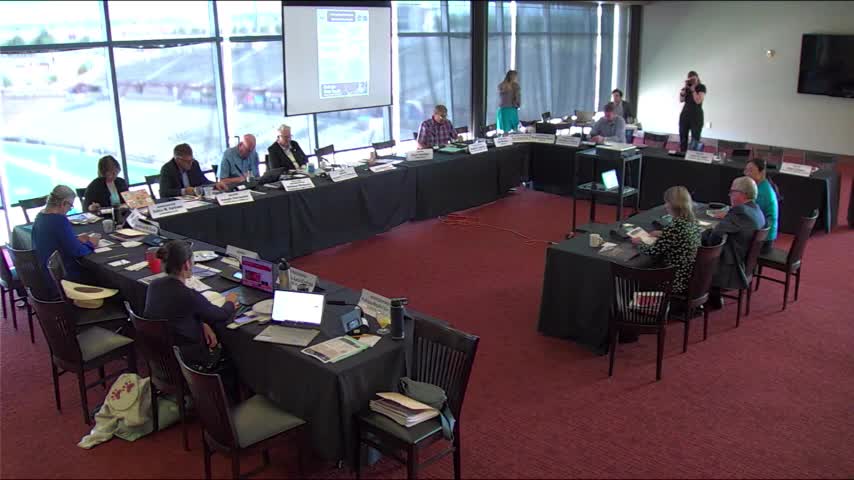
New Mexico’s Strategic Water Supply Program, created by the Legislature this spring, will begin soliciting grant and contract proposals next week and is backed by an initial $40 million appropriation to encourage development of brackish groundwater and other non‑freshwater supplies, state officials told the legislative committee.
“The $40,000,000 that the legislature appropriated for this program is going to grants and contracts,” John Roderick, Deputy Cabinet Secretary for Administration at the Environment Department, said. “We are collaborating to identify projects that come in from either agency that this money can be utilized for.”
What the program will do The program is a joint effort by the Office of the State Engineer (OSE) and the New Mexico Environment Department (NMED). It is structured to support public entities through grants and to allow contracts with private firms for delivery of water projects. Agency staff said they will prioritize feasible projects that can deliver water “out of a pipe” quickly, and will use university technical review and feasibility evaluations in the selection process.
Key details and timeline - Funding: $40 million initial appropriation shared between OSE and NMED to support grants and state contracts. Agencies told the committee they expect demand to exceed the initial appropriation and plan to come back to the Legislature with requests as projects develop. - Launch timing: Trujillo and Roderick said funding solicitations would open the Monday after the hearing and agencies expect to issue grants and contracts before the end of the calendar year. - Eligibility and priorities: Public entities are eligible for grants; the contracting program will accept proposals from private firms. Agencies said they will favor projects with local financial participation and demonstrable community benefit.
Technical and environmental safeguards Panelists fielded questions about water quality risks, concentrate (brine) disposal and long‑term impacts. Kei (Kei) Xu, a professor at New Mexico State University who led a preliminary water‑quality characterization effort, presented multi‑constituent analyses of 23 brackish groundwater samples. He said total dissolved solids ranged widely and that PFOA and other PFAS compounds appeared in many samples; some exceedances require treatment.
“Reverse osmosis technology … can remove the PFAS compounds from the permeate product water,” Xu said, describing treatment options. Roderick noted that technologies for brine and concentrate management are a critical part of project design and that each proposal will be judged case‑by‑case for its disposal plan and environmental protections.
NMED financial assurance and permitting Roderick said NMED’s discharge permits will require financial assurance sufficient to cover cleanup or abatement if a project fails; those assurances are reviewed on a five‑year basis and must increase if the estimated remediation cost rises. Shelly Lehi, Surface Water Quality Bureau Chief, discussed concurrent rulemaking to implement state surface‑water permitting (see separate article) and said any brine disposal or discharge will require appropriate permits.
Examples and precedents Agencies pointed to El Paso’s desalination system — online since 2007 — as an example of long‑term potable reuse and desalination development in the region, and to pilot projects and university mapping that will feed the grant evaluation process.
Discussion vs. decisions - Discussion: Committee members asked about who should pay for projects (municipalities versus industries), whether private users such as data centers should be funded by grants, and the availability of existing projects like Cuba and other pilot sites. Agencies said eligibility is focused on public entities for grants and that contracts with private firms are possible but will be evaluated for community benefit. - Direction: Agencies will solicit proposals and evaluate projects using technical review, community benefit criteria and required permitting and financial assurance. No binding appropriation decisions beyond the Legislature’s initial $40 million were made by the agencies in the hearing.
Ending State officials framed the program as one tool among many — conservation, reuse, leak repair and agricultural conservation — and emphasized the need for an “all‑of‑the‑above” approach to address long‑term supply shortfalls.