
Taos and Mora conservation districts describe decades of private‑land thinning and local stewardship
Get AI-powered insights, summaries, and transcripts
Subscribe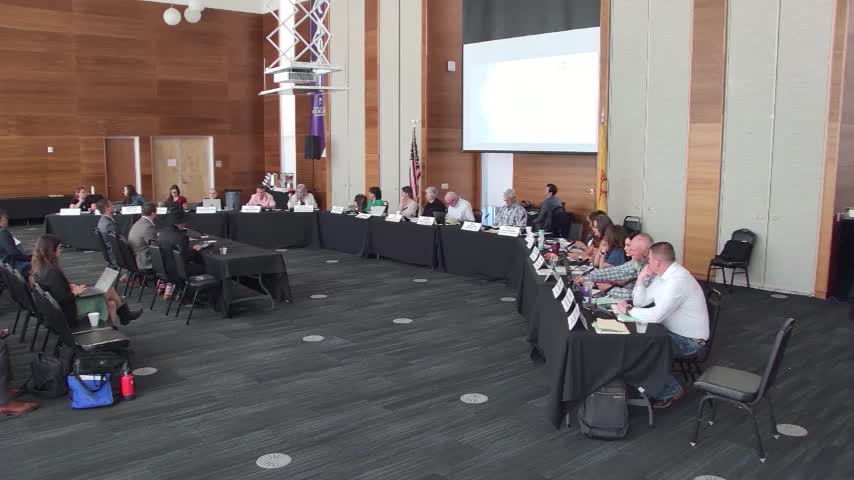
Summary
Managers from Taos and Mora Soil & Water Conservation Districts detailed local, taxpayer‑funded thinning, defensible‑space and outreach programs that treated thousands of acres on private land and stressed the need for partnerships and stable funding.
Leaders of local soil and water conservation districts told legislators that locally led programs are a critical on‑the‑ground mechanism for private‑land thinning, homeowner defensible‑space and workforce development.
Peter Hill, manager of the Taos Soil & Water Conservation District, said Taos began one of the nation’s early cost‑share thinning programs and has used local tax authority to carry out projects and foster stewardship. “We better make sure that we give the public their money back after they've paid their taxes and services,” Hill said, summarizing the district’s approach of broad, locally prioritized projects.
Joe Romero, who leads local conservation efforts in Mora, said his district partnered with State Forestry and federal programs to thin about 4,393 acres on private land between 2002 and 2021 using roughly $3.25 million in funding. He described treatment types — hand thinning, chipping, lop‑and‑scatter and hauling merchantable wood off site — and said some treated sites altered fire behavior by converting canopy runs into lower‑intensity understory burns, although not all treatments prevented complete mortality in extreme fire behavior.
Both managers said funding and access to markets for small‑diameter wood remain obstacles. They encouraged state support for soil and water conservation districts as locally trusted partners with authority to operate across ownership types when agreements are in place. The districts emphasized workforce training, youth engagement and the ability to coordinate private landowners to consent to treatment projects.
Lawmakers on the committee praised the districts’ local knowledge and urged state and federal partners to lower administrative barriers and expand targeted funding for private‑land treatments that have demonstrated local benefits.