
State engineer officials warn most New Mexico dams are aged, underfunded; northern projects get spot repairs
Get AI-powered insights, summaries, and transcripts
Subscribe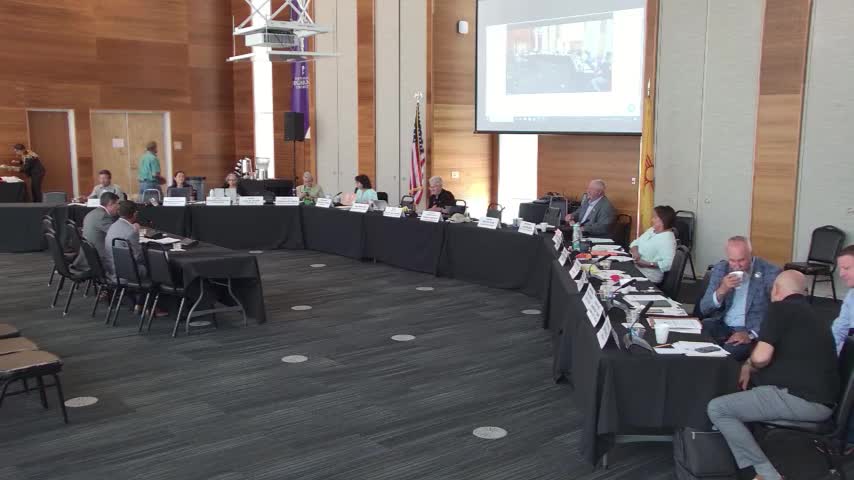
Summary
State dam officials told the Water & Natural Resources Committee that New Mexico’s inventory of regulated dams is older than their design lives and many are in poor condition, with costly repairs looming.
State dam officials told the Water & Natural Resources Committee that New Mexico’s inventory of regulated dams is older than their design lives and many are in poor condition, with costly repairs looming.
Sushil Chaudhary, dam safety manager with the Office of the State Engineer, said the state submits data to the nationally available National Inventory of Dams and that “the average age of the dams is 64 years.” He warned that “dams are normally designed for 50 year design life,” and that the state now manages hundreds of aging structures.
The numbers in the state engineer’s presentation showed roughly 403 dams listed in New Mexico’s entries in the inventory, with about 72% falling under state regulation and roughly 60–65% rated either poor or unsatisfactory in condition. Chaudhary described common causes: aging materials, outdated design standards, missing historic design documentation, “hazard creep” where development below older flood-control dams has increased potential for property damage, and a lack of routine maintenance by owners.
The presentation highlighted recent and ongoing projects in northeastern New Mexico. Officials said Power Lake Dam in Santa Rosa is under construction with ARPA and state funds and carries an estimated construction cost of about $9 million, and Peterson Dam near Las Vegas is in final design with construction funding not yet secured. Chaudhary also described an urgent discovery at Chimayó-area Chimarangito Dam: contractors found a large void beneath spillway slabs on May 1; CDM Smith was contracted to investigate and prepare repairs. Officials listed completed projects (Bridal Dam, Morphew Lake) and larger, unresolved needs: Lake Malloyah near Raton was described as having a severely inadequate spillway with a preliminary rehabilitation estimate “upwards of $25 million.”
Legislators pressed officials on gaps in authority and help for smaller local owners. Representative Zachary Chatfield told the panel he had attended a soil-conservation meeting where most board members did not know they owned dams; Chatfield asked where small owners should seek engineering assistance and funding. John T. Romero, RAP and water-rights director for the Office of the State Engineer, advised owners to contact the Natural Resources Conservation Service for investigation and design assistance and noted that construction usually requires matching funds. Romero added that the state has limited enforcement tools and has pushed for stronger authority—an enforcement bill that reached the Senate floor last session but did not receive a final vote.
Committee members also asked whether removal of some dams is being considered. Chaudhary said dam removal is a national trend but cautioned that many New Mexico dams are flood-control structures that protect downstream property and therefore are difficult to remove. He added that some small diversion barriers with no active diversions could be candidates for removal.
On funding, Romero said repairing all deficient dams would be expensive—“in tens of billions” of dollars—and described ongoing efforts to prioritize the riskiest structures so limited state funds can be directed to the most urgent projects. He and Chaudhary pointed to federal programs (NRCS, Corps of Engineers, FEMA) and state funds as sources for individual projects; they said the department is working with USDA–NRCS on designs and FEMA on high-hazard grant opportunities.
Committee members asked the office to provide additional detail on who to contact for assistance, and to share studies that estimate statewide funding needs. Romero said staff can provide the state-level cost studies performed by the association of state dam safety officials that break costs down by state.
Officials described next steps as prioritization based on risk, continued project design with federal partners for some sites, and targeted use of statewide rehabilitation dollars to help pay for engineering and matching for construction.
For communities and district owners, the state engineer’s office recommended owners document and file for available technical assistance from NRCS, pursue state match funding where available, and coordinate with state dam-safety staff; for the Legislature, officials requested sustained funding and statutory tools to improve compliance and enforcement.
While officials described specific projects and potential federal matches, the presentation repeatedly underscored scale: many of New Mexico’s regulated dams are beyond their design lives and require long lead times for investigation, design and construction.
Less-critical details: Chaudhary said the state’s dam-safety program provides data to the National Inventory of Dams and maintains maps and condition ratings. Officials said they are developing prioritization lists to focus available funds on the top 10–20 highest-risk dams in coming cycles.