
Highlands University tells water committee it will pursue energy independence, expanded doctorates and reforestation work
Get AI-powered insights, summaries, and transcripts
Subscribe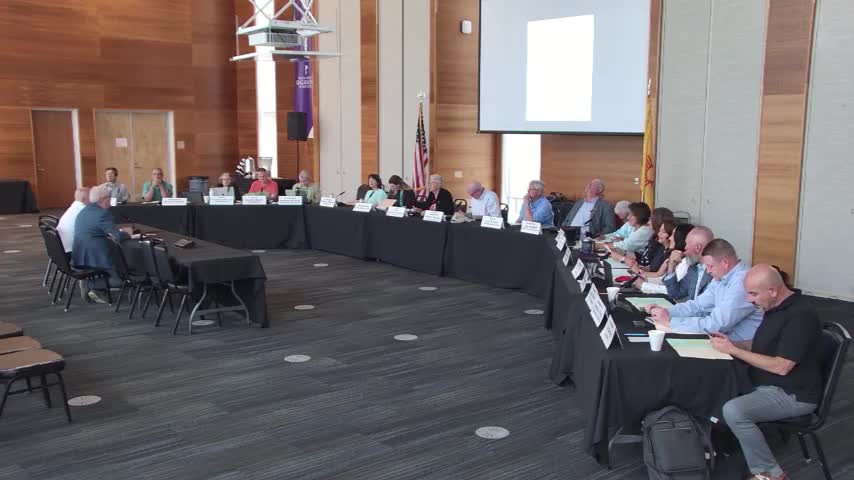
Summary
New Mexico Highlands University President Neil Wolf told the Water & Natural Resources Committee the school plans new doctoral programs, a venture‑linked computer science masters, large reforestation and seed‑bank work tied to wildfire recovery, and a plan to become energy independent to reduce greenhouse gas emissions and operating costs.
LAS VEGAS, N.M. — New Mexico Highlands University President Neil Wolf told lawmakers on Tuesday that the school is pursuing new graduate programs, housing development and an ambitious campus energy plan and that the institution will play a regional role in reforestation efforts following recent wildfires.
The most newsworthy point: Wolf said Highlands plans to be “the first public university in The United States to be energy independent,” and described an inventory showing the university produces about 6,000 metric tons of CO2 annually and pays roughly $1.6 million a year in energy costs the campus plans to cut through solar, wind and geothermal projects.
Why it matters: Highlands’ plans tie academic workforce development, campus infrastructure and regional natural‑resources recovery. The university is pursuing health‑related workforce programs, including an anesthesiology assistant program and a doctorate in nursing practice funded by prior legislative allocations, and has received RPSB funding for a doctorate in social work. Wolf said a redesigned master’s in computer science will pair students with venture capitalists through an entity called Sandbox so students can gain startup experience in year two of the program.
Wolf described the university’s reforestation and watershed work as regionally significant. Highlands operates a nationally recognized watershed institute and a reforestation center that is working with the University of New Mexico, New Mexico State University and local partners to grow native seedlings and plant saplings in burned areas. “We re going to build a seed bank here in Las Vegas,” Wolf said, describing plans to harvest native seeds, grow and dry them, and provide saplings for replanting in Mora and other burned areas.
Mayor David Romero of Las Vegas said local volunteers recently removed a large amount of debris from the downtown river walk and urged lawmakers to see the community’s recovery efforts firsthand. He told the committee the river walk cleanup required “a lot of manpower” and noted that some debris entering the city comes from the wider watershed and the burn scar.
Wolf also said the university’s Board of Regents has formed a land‑development entity to build housing on underused university land — specifically a campus golf course — to increase local housing supply for faculty and staff. He said about 70 percent of the university’s faculty currently live outside the area because of housing availability and that planned mixed academic and residential projects aim to keep more workers locally.
On workforce and academics, Wolf said Highlands will introduce a doctorate in social work and a doctorate in nursing practice, noting legislative and RPSB support. He described a pilot “Sandbox” master’s track in computer science that pairs students with venture capitalists to incubate startup ideas and said the university hopes to align student company projects with regional needs.
In Q&A, several legislators expressed support and curiosity about the university’s timeline for energy projects, reforestation funding, and the scope of seed‑bank operations. Senator Silvia Lopez asked whether the energy plan will be “primarily solar” and Wolf replied the inventory phase must determine how much potential exists for solar, geothermal and wind resources. On reforestation survivability, Tierra Montes manager Gerald Romero told the committee that current survival rates for planted seedlings in the region run “in most cases even in ideal conditions … between 15–25%,” underscoring the scale and technical challenge of reforestation work.
No formal committee action or legislation was taken during the presentation, but committee members asked staff to note the university’s offers of partnership and to consider Highlands’ regional role in wildfire recovery plans and future committee briefings.
The committee heard the presentation as part of a field hearing in Las Vegas; lawmakers said they appreciated the university and the city hosting the meeting.