
Northern New Mexico acequias face long, costly recovery after fires; state, federal programs strained
Get AI-powered insights, summaries, and transcripts
Subscribe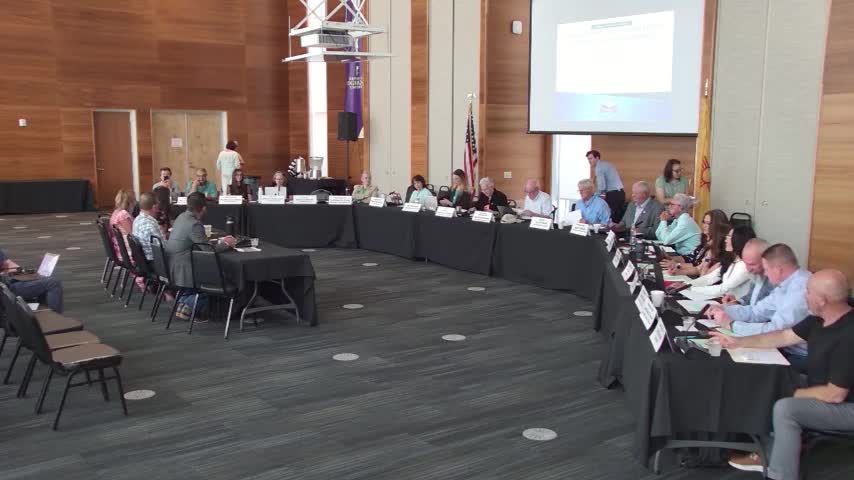
Summary
At a Water & Natural Resources Committee hearing in Las Vegas, acequia leaders, NMDOT and state agencies described widespread acequia damage after recent wildfires and post‑fire floods, describing multiple funding streams, staffing gaps at NRCS, $65 million in NMDOT debris contracts and persistent problems with local cost‑share requirements.
LAS VEGAS, N.M. — Representatives of New Mexico acequia groups, the Department of Transportation and the Interstate Stream Commission told the Legislature’s Water & Natural Resources Committee on Tuesday that hundreds of traditional irrigation ditches (acequias) across the state remain damaged or at risk after recent wildfires and repeated post‑fire flooding.
Panelists said multiple recovery programs exist — FEMA public assistance, Department of Homeland Security and Emergency Management (DHSEM) projects, USDA Natural Resources Conservation Service (NRCS) Emergency Watershed Protection (EWP) work and a one‑time Hermits Peak‑Calf Canyon (HPCC) claims fund — but that the patchwork of programs, federal staffing cuts and 25 percent local cost‑share rules are slowing repairs.
Why it matters: Acequias supply irrigation and cultural value for small rural farms and communities across New Mexico. Panelists estimated roughly 150 acequias sustained significant damage in the last three years and urged the Legislature to stabilize funding and technical assistance so repairs move from emergency work to durable resilience projects.
Speakers and programs described overlapping roles. Paula Garcia, director of the New Mexico Acequia Association, told lawmakers “there are about 700 acequias across the state of New Mexico in 23 different counties,” and said roughly 150 of those have been affected by recent major disasters. John Romero, highway operations division director at the New Mexico Department of Transportation, said the department has contracted emergency debris removal work totaling “just over $65,000,000” and has spent contractor monitoring funds of about $3,000,000 with consulting firms to document work for FEMA reimbursement.
Panelists summarized how the recovery programs work and where they break down. FEMA public assistance reimburses emergency debris removal and certain repairs but operates on a reimbursement basis; NRCS EWP issues emergency watershed work through a local sponsor (often a conservation district) and can administer design and construction on behalf of acequias; DHSEM and state funds can fill some gaps; and the HPCC claims office provided 100 percent federal funding for parts of the Hermits Peak‑Calf Canyon disaster.
Debbie Hughes, executive director of the New Mexico Association of Conservation Districts, said her association and partner groups have already expended roughly $6,300,000 on acequia recovery projects tied to the Hermits Peak‑Calf Canyon work and cited an engineering estimate that rebuilding acequia systems in the region may cost “at least $43,000,000.” She and other panelists warned that a persistent problem is the 25 percent local match required by many federal programs, a burden many volunteer‑run acequias cannot meet.
Jonathan Martinez, acequia bureau chief at the Interstate Stream Commission, outlined a state program established in 2019, the Acequia and Community Ditch Infrastructure Fund (ACDIF), which provides about $2,500,000 annually for planning, engineering and construction. He said a 2023 amendment allowed that fund to be used for disaster response and removed local match requirements for acequias under that program. Martinez urged lawmakers to consider using ACDIF dollars as a formal, predictable state match when federal money requires cost share.
Panelists stressed two recurring operational lessons from the Hermits Peak‑Calf Canyon and Black Fire responses: first, a reliable mechanism to provide the non‑federal cost share is needed so communities do not “reinvent the wheel” after each disaster; second, sustained technical assistance and engineering capacity are essential because acequias are volunteer governed and need engineering designs, historic‑preservation clearances and compliant procurement documentation to qualify for federal reimbursement.
Garland‑style coordination models received specific praise. Paula Garcia described New Mexico Department of Transportation (NMDOT) emergency debris removal as a positive model when NMDOT procures contractors and manages Category A/B emergency debris removal work and then seeks FEMA reimbursement, reducing administrative burden placed on volunteer acequia boards.
Several committee members asked how the Legislature and state agencies could help. On staffing, panelists warned of recent personnel losses at NRCS — “about 52 people” in New Mexico, panelists said — that will constrain federal capacity for EWP design and contracting and could shift more burden to the state. Panelists recommended expanding the state’s technical service provider and conservation planning programs, formalizing cost‑share sources for recurring cascades of post‑fire flooding, and institutionalizing NMDOT’s debris‑removal role for acequias where appropriate.
The panel also highlighted community‑level priorities such as seed collection, reforestation and thin‑and‑treat forestry work to reduce future flood and fire risk. Gerald Romero, manager of the Tierra Montes Water Conservation District (a frequent local sponsor for NRCS EWP work), gave specific operational details about survivability of nursery trees and noted survivability rates “in most cases even in ideal conditions is somewhere between 15–25%.”
Committee action: The committee did not adopt new legislation during this panel. Members asked staff to compile follow‑up information on cost‑share options, state matching mechanisms and staffing projections for NRCS and state technical assistance programs.
Funding and scale: Panelists provided the committee several headline numbers during the hearing — NMDOT debris contracts of about $65 million, NMDOT monitoring and project management near $3 million, NMACD expenditures near $6.3 million for HPCC work, an estimated $43 million or more needed to fully restore many acequia systems in affected regions, and an annual ACDIF allocation of $2.5 million for planning and construction services.
What panelists recommended: institutionalize a state cost‑share mechanism for recurring cascades of post‑fire flooding; increase and stabilize funding for engineering and technical assistance to acequias; support local sponsors (conservation districts) for NRCS EWP projects; and expand training and workforce programs so local contractors and planners can meet the demand for reconstruction and longer‑term resilience work.
The committee scheduled further panels and public comment; lawmakers asked staff to gather precise cost estimates and options for a state match fund to present at a future hearing.