
NMSU tells legislators water research, AI and Opportunity Scholarship drove recent enrollment gains
Get AI-powered insights, summaries, and transcripts
Subscribe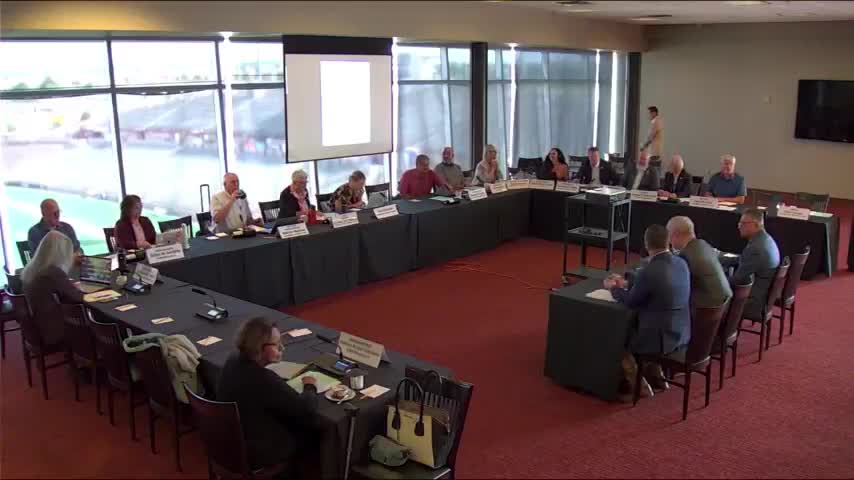
Summary
New Mexico State University officials told legislators the university is expanding water-focused research, investing in AI for applied problems such as agriculture, and that the Opportunity Scholarship and outreach have helped reverse enrollment declines.
New Mexico State University (NMSU) officials told a legislative committee in Las Cruces that water research, applied artificial intelligence projects and the state's Opportunity Scholarship have helped stem enrollment losses and advanced applied research tied to the state's water challenges.
NMSU's president told lawmakers the university has researchers working on drought-resistant crops, wastewater reuse and other water-related innovation at experiment stations across the state, from Clovis to Artesia. "We have some of the best experts worldwide," the president said, adding the land-grant mission requires the university to transfer that research across counties and into extension work.
The president also described university investments in artificial intelligence, saying NMSU created an institute and added internal funding — including $500,000 last year and a planned additional allocation — to coordinate AI and machine-learning research across units. "A lot of the research on produced water and brackish water...produces a lot of data," the president said. "That data is becoming almost unmanageable if we don't put some kind of...rationalization. I do believe that AI and machine learning will help us do that."
On enrollment and student aid, the president told lawmakers the university expects systemwide enrollment growth of roughly 1,000 students over the prior year, with a sizable share coming through online education. He credited the Opportunity Scholarship with increasing access and said the university needs to address total cost of attendance (housing, food and other non-tuition costs) to sustain gains. "The Opportunity Scholarship takes away the one pressure point. But the pressure point doesn't go away," he said.
Why it matters: Water scarcity and agricultural productivity are central policy issues for New Mexico. NMSU officials described partnerships with counties and municipalities on water reuse and drought-adapted crops as central to the university's mission; they argued AI and data tools will be necessary to manage the growing volumes of research data. Lawmakers questioned campus housing availability and the effect of student aid on local housing markets and workforce housing needs.
Context and caveats: The president said NMSU has high occupancy in campus housing (about 92%), which he called a positive sign of demand, and that the university supports bridge programs and on-campus services to improve student persistence. He said more advertising and clear presentation of the Opportunity Scholarship and total cost of attendance may help recruitment in communities that have not yet taken advantage of the program.
Ending: University officials told the committee they will continue partnerships with municipalities, community colleges and industry to align AI and water research with workforce needs and that the Opportunity Scholarship remains a key lever in stabilizing enrollment while other non-tuition costs require targeted supports.