
Officials, acequia representatives urge permanent funding, more staff and engineering capacity for New Mexico post-fire recovery
Get AI-powered insights, summaries, and transcripts
Subscribe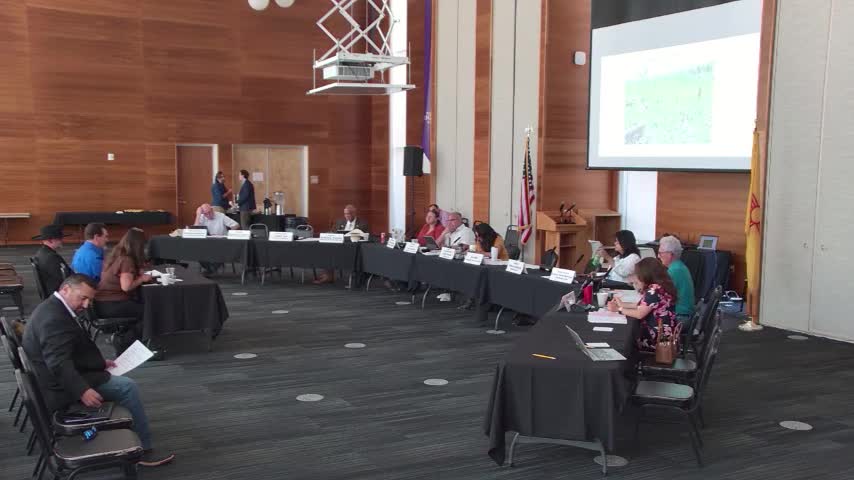
Summary
State and local officials, acequia leaders and conservation districts told a Las Vegas interim committee that cascading post-fire flooding has strained federal programs and local capacity; they urged institutionalizing debris removal, expanding technical assistance, and increasing engineering and state support for acequias and land grants.
Speakers at the Land Grants Interim Committee meeting in Las Vegas described a complex, multi-agency response to post-fire flooding that has left many acequias and land grants waiting for design, engineering and construction funds. "This is why we're here. You know, we want communities to own their common land," Paula Garcia, executive director of the New Mexico Acequia Association, told the committee.
Garcia summarized statewide impacts and the aid work her organization and partners have done after major fires. She said the Hermit's Peak–Calf Canyon disaster and other events have hit acequias and small irrigation systems statewide: "In the Hermit's Peak Calf Canyon, there were some 90 or more acequias damaged," she said, and added that roughly 150 acequias have been damaged in recent years and that the association has worked with about 640 acequias over 25 years. Garcia and other presenters said local sponsors and technical-assistance providers are stretched thin.
Dr. Jeremy Class, bureau chief for Recovery and Mitigation at the Department of Homeland Security and Emergency Management, described a state effort to build a "sustainable recovery framework" and a common operating picture to prioritize work in burn scars. He said the department is piloting the Sebastian Canyon restoration project and coordinating data and hazard assessments that will guide funding and NRCS Emergency Watershed Protection (EWP) applications. "We're starting to build a sustainable recovery framework, by working across all lands, ecosystems, and jurisdictions," Class said.
Gerald Romero, district manager at the Tierra–Mora Soil and Water Conservation District, and representatives of the New Mexico Association of Conservation Districts explained how sponsors, NRCS and local districts carry out Emergency Watershed Protection projects, aerial seeding and point protection. Romero said the state-led aerial seeding effort covered more than 60,000 acres early after the fire and that EWP has placed tens of millions of dollars on the ground for stabilization and home protection. He cautioned that rebuilding infrastructure too quickly can be wasted if watersheds remain unstable.
Speakers described recurring bottlenecks:
- Engineering capacity and the need for hydraulic/hydrologic (H&H) studies. Multiple presenters said an insufficient number of engineering firms slows designs needed for culverts, upsized diversions and other infrastructure.
- Confusing program rules and reimbursement timing. Garcia and presenters said NRCS will not pay for some items (culverts) while FEMA public-assistance claims or other programs may cover them, forcing sponsors to piece together multiple grants and cost-share arrangements. Paula Garcia said federal programs are often slow to make eligibility decisions; she urged making eligibility for EWP more automatic after qualifying fires.
- Local sponsor capacity and cash flow. Many acequias lack the fiscal capacity to front project costs and wait for reimbursement; presenters urged state gap funding and easier access to advance funds.
Several successes were noted. Romero said a recent federal allocation added $60 million to EWP funding for acequias; presenters described a state MOU that enabled New Mexico Department of Transportation contractors to perform emergency debris removal on private property under a state-managed arrangement during the Hermit's Peak–Calf Canyon recovery. Class said DHSEM is trying to institutionalize faster deployment and cross-jurisdictional planning and that a DHSEM tracker now centers funding and application status for more than 100 acequia applications.
Panelists recommended several state-level responses: institutionalize emergency debris removal capacity (so DOT-like help is immediately available after disasters), create or expand state gap funds to bridge FEMA and federal program reimbursements, increase DHSEM and sponsor staffing for technical assistance, and invest in more H&H engineering capacity. Class said pilot projects emphasize "natural channel design" and that the state is working to extend burn-severity assessments beyond federal lands to private land and community-owned commons. Garcia and Romero urged formalizing technical-assistance roles so acequias that lack staff can navigate federal and state programs more easily.
Ending: Presenters asked the committee to consider durable state solutions — funding, staff and program design — to reduce long-term costs and speed recovery. They said immediate work will continue under current federal and state programs while the state studies institutional options.