
San Miguel Del Vado seeks to preserve history with museum plan while pressing state and federal title issues
Get AI-powered insights, summaries, and transcripts
Subscribe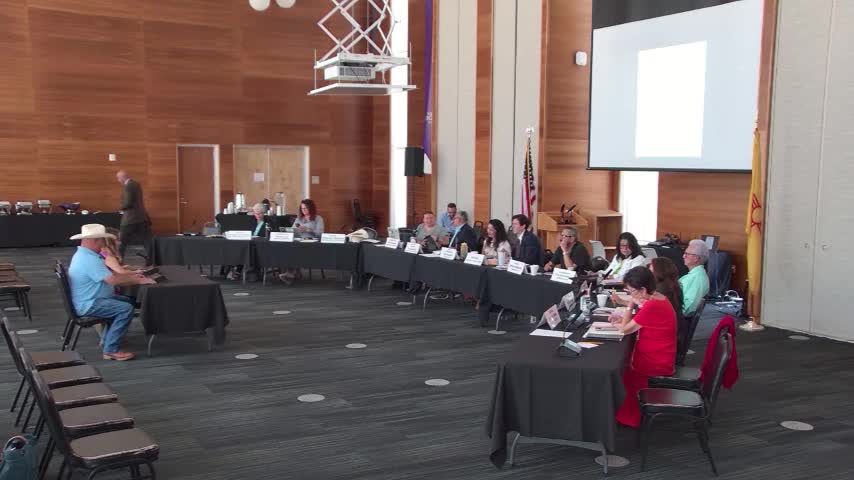
Summary
San Miguel Del Vado land grant leaders described plans for a history museum, an oral-history project, a Santa Fe Trail marker and efforts to recover or protect common lands now held by federal and state agencies; they urged legislative help on mapping, title discrepancies and cemetery access.
San Miguel Del Vado land grant officials told the Land Grant Interim Committee they are developing a community history museum, pursuing markers and outreach, and continuing long-term efforts to resolve title and common-land issues resulting from historical federal actions.
President Clarice Romero said the land grant has secured a building gift for a three-room museum intended to display territorial-period artifacts, Pueblo pottery and other material tied to the community’s trade history. Romero said she expects to break ground soon and described the museum as part of a longer, 20–30 year plan to restore the historic plaza and adjacent buildings as a living-history district. “We have a lot of stuff going on… one of our biggest projects right now is our history museum,” Romero told the committee.
Secretary Luis (surname Gallegos) said the museum is tied to a broader historic-district effort that aims to purchase and restore historic plaza buildings over decades and to reestablish the village as a focal point on Santa Fe Trail itineraries. He described two grants from the Santa Fe Trail Association that funded a stone trail marker and said the marker work should be completed by August so the community can unveil it during local fiestas.
Both Romero and Gallegos discussed longstanding title and boundary complications. They said San Miguel Del Vado’s historical boundary originally encompassed far larger commons (reports cited an original 315,000 acres reduced to roughly 5,500 after late-19th-century court action) and that many small parcels inside the historic boundary are now State Trust Land or Bureau of Land Management property. Romero said some cemeteries and commonly used parcels fall on federal land and that the land grant has been working with the Department of Justice and the New Mexico Land Grant Council and the Sandoval 7 coalition to seek policy or legal remedies.
Romero described ongoing efforts to document oral histories and to involve students and local seamstresses in cultural projects such as recreating a famous church tapestry. She said the land grant hopes to use museum programming, a Comanchero market and community events to generate modest revenue and to support scholarships and education initiatives tied to Highlands University.
Legislators on the committee emphasized several practical needs: ensuring museum and community-center facilities are ADA-accessible and up to code; clarifying county property maps and assessor records where surveys and tax records conflict with historic grant boundaries; and examining contracting language when nonprofits serve as fiscal sponsors for capital projects. Romero said the land grant will continue to coordinate with the New Mexico Land Grant Council and state agencies and invited committee members to visit for tours and events.
The committee recessed for lunch after the presentations and discussion.