
Taos mental-health provider urges state action as rural behavioral-health system ‘broken’
Get AI-powered insights, summaries, and transcripts
Subscribe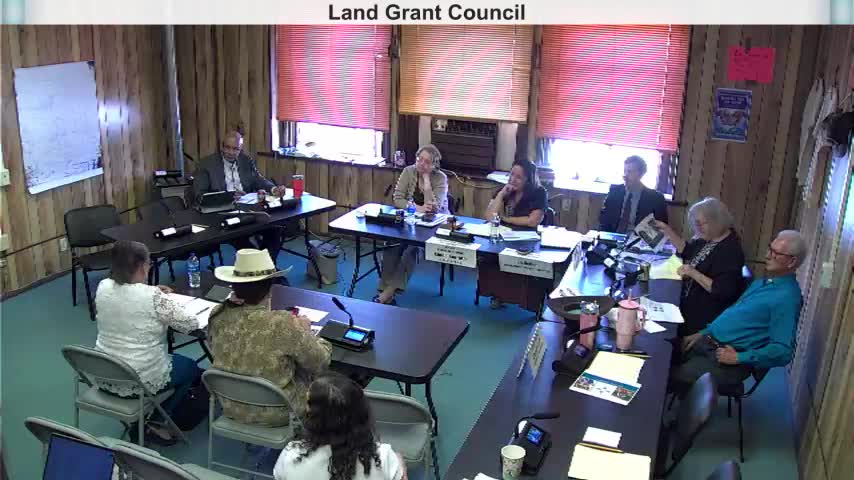
Summary
A longtime Taos mental-health clinician and Holy Cross Hospital board member described a persistent local behavioral-health crisis, examples of unmet need and gaps in inpatient and follow-up services, and urged greater investment in community health workers, detox capacity and hospital supports amid looming Medicaid cuts.
Trinidad de Jesus de la Cruz, a mental-health nurse, clinical social worker and member of the Holy Cross Hospital board, told a legislative committee that northern New Mexico’s behavioral-health system is failing people with severe mental illness and substance-use disorders and that families and providers are exhausted.
“Those are the two out of many individuals that I just want to bring to the foreground because when we’re looking at the behavioral system in New Mexico, it is broken,” de la Cruz said, describing local clients who cycled through emergency rooms, jails and short inpatient stays without sustained follow-up.
Why it matters: De la Cruz combined data framing and personal experience to argue that Medicaid and Medicare funding changes threaten already limited services in rural areas. She described gaps in inpatient placement from rural hospitals, long jail holds while waiting for inpatient beds, and instances in which people discharged after stabilization received no coordinated community follow-up.
De la Cruz gave several local examples. She told the committee about “Monty,” a longtime Taos resident whose mental health and substance use escalated; Monty was found frozen outside a grocery store, hospitalized and later died after transfer to an Albuquerque inpatient facility. She also described a local woman who was detained in jail for seven to eight months while awaiting placement in a Las Vegas, N.M., inpatient program, was admitted for five months, then returned to the community without coordinated services and later re-entered custody. “She came out. She was beautiful. She was great. But then the munch [sic] was back in jail,” de la Cruz said.
De la Cruz urged expansion of community health workers and peer supports, and training to improve providers’ community communication and cultural competency. She described a seven-year community-health-worker training program her nonprofit runs and said community health workers “are that navigator, that link” between providers and residents.
She told the committee that rural providers and hospitals are already strained and that proposed federal Medicaid and Medicare changes could prompt more hospital closures and provider departures. “We’re lucky we have the hospital, but what’s gonna happen when those cuts hit?” she asked, adding, “The system is broken. We have to do something about it.”
Discussion and committee response: Committee members asked about detention-to-placement timelines, the local detox center’s opening status and community health-worker certification and counts. De la Cruz said she trains community health workers in hybrid classes and that the Department of Health offers a virtual training platform; another committee attendee reported an approximate statewide count of about 1,000 community health workers.
Ending: De la Cruz concluded by urging the committee to support a standard-of-care continuum that provides crisis services, treatment coordination and post-discharge follow-up so individuals do not simply cycle among emergency rooms, jails and homelessness. “We need to look at very, various ways to approach the challenges that we have in our community,” she said.