
NM Department of Justice’s Treaty Division expands staff, legal representation for land grants and acequias
Get AI-powered insights, summaries, and transcripts
Subscribe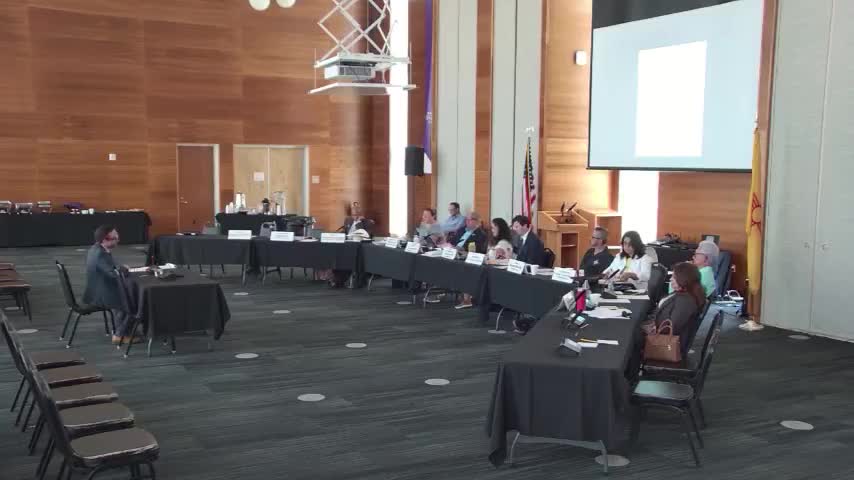
Summary
Assistant Attorney General Enrique Romero told the committee the Treaty of Guadalupe Hidalgo Division now has four full‑time attorneys and is providing direct representation, policy work and facilitation for land grants and acequias, including appeals and coordination on water and disaster issues.
Assistant Attorney General Enrique Romero, director of the New Mexico Department of Justice’s Treaty of Guadalupe Hidalgo Division, told a legislative interim committee that the division increased staffing and casework and is serving as counsel to the Land Grant Council and the State Acequia Commission.
The Treaty Division was created by statute (cited in the presentation as NMSA §8‑5‑18) to review and address concerns tied to the Treaty of Guadalupe Hidalgo and the state constitutional provision that requires treaty‑guaranteed rights and privileges be “preserved inviolate.” Romero told the panel the division now has four full‑time attorneys and one non‑attorney staff member, enabling a broader portfolio of direct legal representation, policy advocacy and facilitation.
“We are counsel to the New Mexico Land Grant Council and to the New Mexico Acequia Commission,” Romero said, describing steady coordination with Land Grant Council staff and monthly meetings with the Sandoval land grants that are engaged on a shared set of issues.
Romero outlined current legal work: joining the San Antonio de Lehi Huertas land grant on appeal after a county challenged a valuation protest board decision, co‑counsel work with New Mexico Legal Aid, engagement on lineas boundary and Taos County assessor matters, representation in ditch‑related election litigation, and involvement in a water‑rights appeal that raises both a statutory challenge to acequia approval of transfers and related civil‑rights and Open Meetings Act claims.
The division is also pursuing policy and preparedness work, Romero said. Staff are preparing water‑rights adjudication training for land‑grant and acequia leaders, conducting conservation‑easement and historic‑preservation legal reviews, and organizing a leadership conference to connect communities with legal, planning and federal agency partners. He described facilitation efforts with FEMA, DHSEM, the State Engineer’s Office and state auditors in disaster or compliance matters involving acequias and land grants.
Romero characterized monthly coordination with affected land grants as a preliminary step in building any litigation or negotiation strategy: “Our plan is really to have them all sitting in, listening to each other's stories, seeing what the commonalities are, seeing where each one of them has already made some kind of headway,” he said.
Lawmakers asked about how evidence and the congressional record can factor into legal strategy and into efforts to reopen older federal decisions; Romero said the division is building the factual record and assessing legal options while working to secure stakeholder consensus and durable legal theories before litigation or negotiated remedies.
The Treaty Division’s caseload includes about 80 open matters tracked in the department’s case management system, Romero said. He asked the committee to consider the division’s ongoing needs for staff and resources as the agency continues to expand representation and training for land grants, acequias and other traditional communities.
Sources and provenance: remarks by Assistant Attorney General Enrique Romero to the interim committee; Q&A exchanges with Representative Garcia and Senator Thornton are included in the transcript.