
Acequia leaders outline aging irrigation systems, disaster needs and limited state funding
Get AI-powered insights, summaries, and transcripts
Subscribe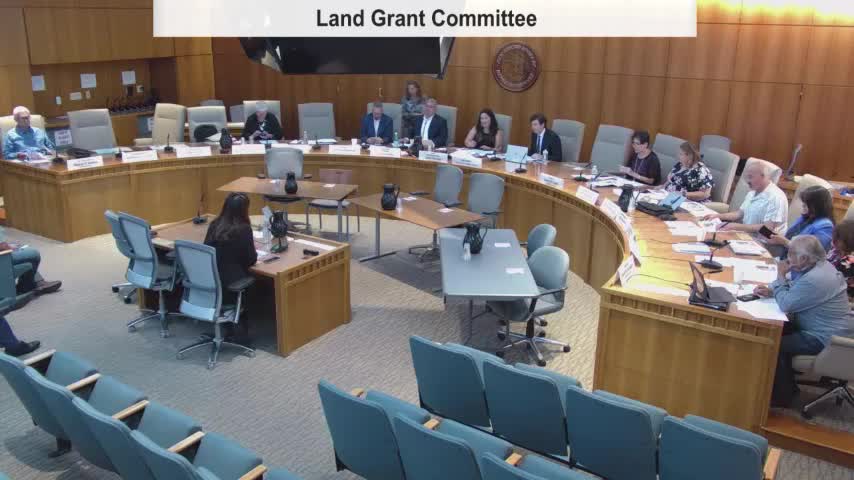
Summary
The New Mexico Acequia Association briefed the Land Grants Interim Committee on acequia history, the arc from communal water governance to 20th‑century adjudication, and current infrastructure and disaster recovery shortfalls, including unmet capital needs and federal cost‑share gaps after wildfire and floods.
Paula Garcia, executive director of the New Mexico Acequia Association, told the Land Grants Interim Committee on May 30 that acequias and land grants share a long, intertwined history and that acequias remain central to irrigation, cultural life and local water governance.
“Water is a community resource,” Garcia said, summarizing the acequia governance tradition and its continuity from indigenous and Spanish colonial practice through the modern era. She told the committee acequias date back to at least 1598 in priority claims and highlighted how the 1907 water code and later adjudication changed water administration in New Mexico.
Why it matters: Acequias deliver and manage non‑Indian surface water across large rural areas; many are volunteer institutions that now must handle technical governance, financial compliance and infrastructure upgrades against a backdrop of wildfire, post‑fire flooding and limited state resources.
Garcia described program funding levels and unmet needs she wants the legislature to address: the Infrastructure Capital Project fund at the Interstate Stream Commission (ISC) has $2.5 million recurring for acequia projects; an adjudication assistance program at the Department of Agriculture (NMDA) was cited at $800,000; the Acequia Commission’s recurring appropriation is about $88,000; and a newer DFA contract for acequia education and technical assistance is roughly $498,000. She said these amounts fall short of capital needs: committee materials estimate about $24 million in FY26 capital outlay requests for acequia projects, with about $4 million funded and an unmet need near $19–20 million.
Garcia also emphasized disaster recovery challenges following fire and post‑fire flooding. Using the 2024 Rio Chama and Upper Hondo floods as an example, she said FEMA data indicates roughly $80 million in damages in some upper‑watershed areas; she noted that most federal disaster and NRCS programs require a 25% local cost share, which many acequias cannot immediately meet. She urged the committee to consider surge engineering capacity, stable funding to meet cost shares, and clearer paths to rapid construction after design phases.
Committee members asked how acequia education and youth programming might connect with school curriculum and requested follow‑up contacts; Representative Diane Torres Velasquez and others expressed interest in curriculum partnerships and Garcia offered to coordinate.
Ending: Garcia offered to provide deeper, programmatic briefings during the interim. Committee members agreed to add infrastructure, disaster recovery and acequia program funding to the interim work plan for additional hearings and analysis.