Get Full Government Meeting Transcripts, Videos, & Alerts Forever!
Get email alerts on the Rural Hospital Finance Malpractice topic
No spam. Unsubscribe anytime.
Rehoboth McKinley hospital warns of rising malpractice costs and insurance gaps; committee seeks documents
Summary
Hospital leaders said malpractice insurance premiums and shrinking excess coverage threaten the stability of Rehoboth McKinley Christian Healthcare Services, and committee members asked the hospital to provide premium documents, staffing and financial details for follow-up.
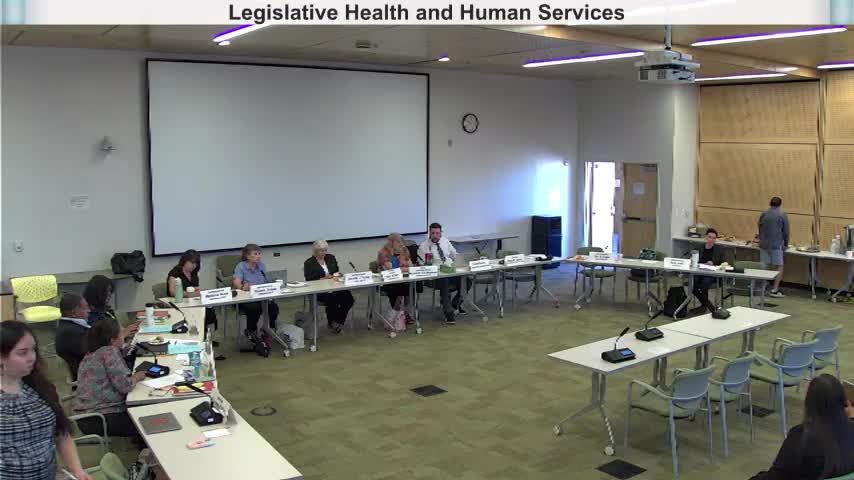
Rehoboth McKinley Christian Healthcare Services (RMCHCS) told the New Mexico Legislative Health & Human Services Committee on Aug. 20 that the hospital faces sharply higher medical-malpractice premiums and shrinking excess-insurance availability that together place a small, rural hospital at financial risk.
Jeff Link, RMCHCS vice president for quality, compliance and risk, and David McGrail, the hospital’s chief financial officer, briefed legislators on malpractice-market changes, the hospital’s current finances and recent flood damage to operating rooms.
Link said the hospital’s excess-insurance structure has eroded: RMCHCS had $34 million of coverage per event in 2024 for a premium of about $1.2 million, but excess carriers reduced layers and in 2025 the hospital paid about $1.4 million for $14 million in coverage. Link said the hospital’s 2026 estimate is roughly $1.8 million for a $6 million policy and that insurers have told the hospital it may be ineligible for typical excess layers. "With a cap of $6,000,000 per event, we are just 1 judgment away from going out of business," Link told the committee.
Why it matters: Committee members said prospective malpractice judgments, rapidly rising premiums and fewer excess carriers threaten rural hospitals’ ability to recruit and retain providers and to remain solvent — a problem with statewide implications for rural health access.
Key points from the presentation - Malpractice market and lawsuits: Link described an emerging national litigation strategy around Depo-Provera claims being pursued by a national law firm with local counsel; RMCHCS was named in related filings in Rio Arriba County. He said New Mexico’s punitive-damages environment and venue rules make the state an attractive forum for plaintiffs’ attorneys. - Insurance numbers reported to the committee (hospital figures): 2024 premium $1,200,000 with $34,000,000 coverage per event; 2025 premium $1,400,000 with $14,000,000 coverage per event; estimated 2026 premium ~$1,800,000 with $6,000,000 coverage per event (final quotes pending). RMCHCS is the only New Mexico hospital in its reciprocal risk-retention group; excess carriers have been withdrawing from the state. - Financial position and operations: CFO David McGrail said cash on hand rose from 4 days (when he started in January) to about 87 days as of July after state aid and operational changes. The hospital has reinvested roughly $2.9 million year-to-date, including purchasing a 3-D mammography unit. - Flood damage and remediation: RMCHCS reported two recent floods that shuttered operating rooms and affected imaging. Remediation contractors are onsite and insurance claims are in process; the hospital asked for additional one-time assistance to cover losses while claims and subrogation are pursued. - Management and staffing: The hospital said it works with a management company, Ovation, under a base advisory fee of roughly $27,000 per month; hospital leaders said Ovation provides subject-matter expertise and does not control day-to-day governance. The hospital reported it had not initiated layoffs in clinical areas and that some workforce adjustments were due to attrition and right-sizing nonclinical functions.
Committee follow-up and requests - Legislators asked RMCHCS to provide documentation: malpractice premium invoices and renewal quotations, communications from excess carriers, the hospital’s insurance placement summaries, and financial statements including CEO compensation and provider pay scales. Representative Chavez and others asked for specific documentation on premiums and the hospital agreed to share records with the committee. - The committee scheduled a broader discussion of medical malpractice at its October meeting in Albuquerque with multiple stakeholders invited.
Discussion and quotes Representative Block asked whether a single large judgment could close the hospital; Link said yes, citing the drop from $34 million to a possible $6 million cap. "Had we had a judgment of $68,000,000 two years ago, that would have shut our doors," Link said.
Limitations and open items - The hospital said it had been named in litigation and that defendants include drug manufacturers and other parties; RMCHCS said it had not yet fully determined which parties will fund defense costs and that subpoenas and discovery are pending. - Hospital leaders requested a review of potential legislative or policy options, including revisiting punitive-damages treatment for nonprofit hospitals or facilitating access to the State Patient Compensation Fund; those remedies would require separate legislative or administrative action.
Public comments at the hearing reinforced the hospital’s concerns. Dr. Connie Liu, an area OB/GYN and community organizer, urged malpractice reform and noted that many rural residents rely on Medicaid; Dr. Valerie Wengler, a family physician and founder of Gallup Community Health, said malpractice premiums limit community clinics’ ability to hire additional staff and provide examples of the public-health consequences of reduced primary care capacity.
Ending The committee asked RMCHCS to provide requested insurance and financial documents and indicated malpractice policy and hospital stability would be a topic at the October meeting. Hospital leaders said they will continue to pursue insurance markets, remediation for flood damage and operational improvements while seeking state support where appropriate.